


Supporting Social Emotional Development in Children Through Everyday Activities
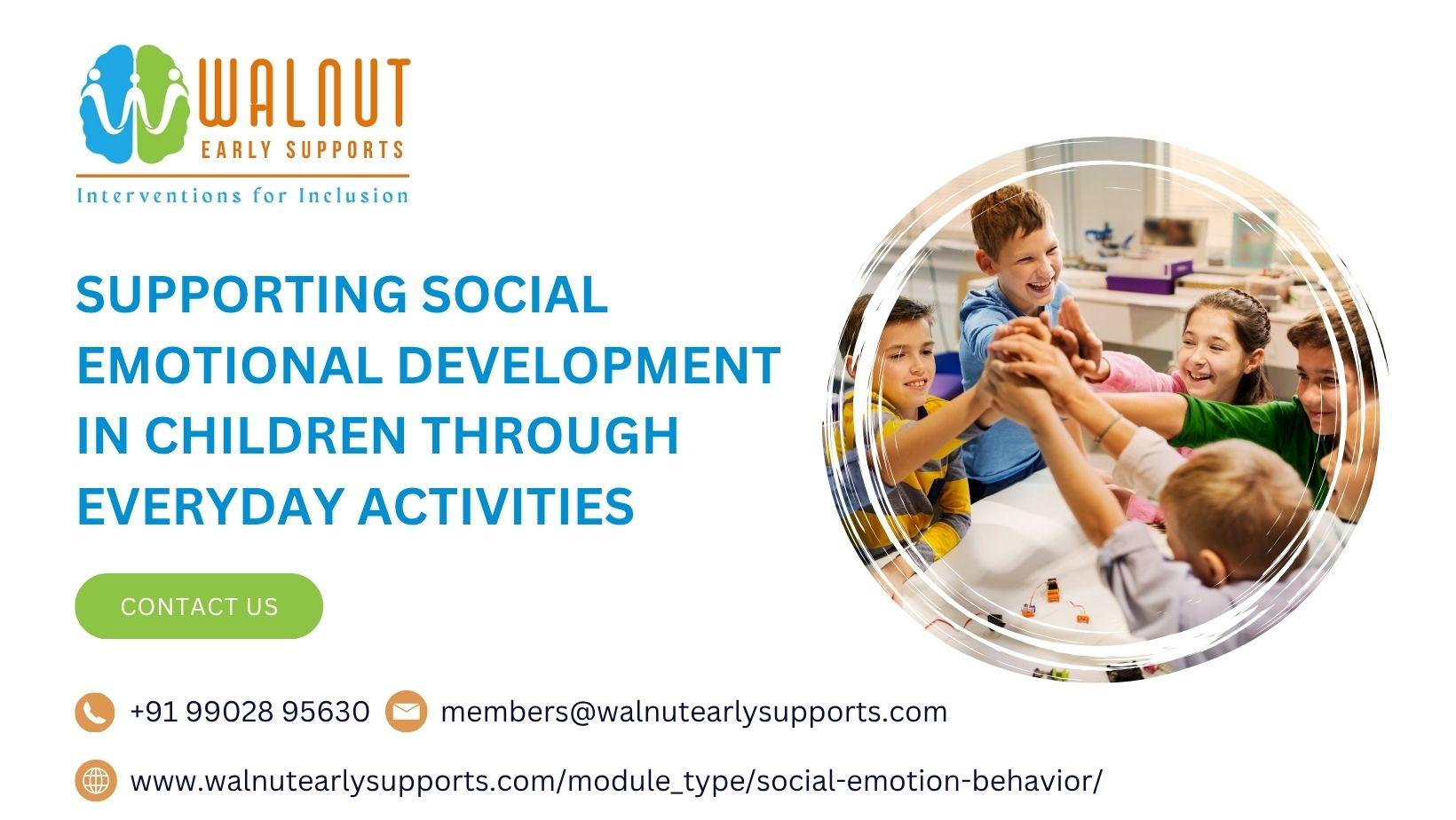
Children develop important social and emotional skills through the experiences they have every day. A conversation at breakfast, playing with a sibling, helping with household tasks, or talking about a story can become an opportunity to learn about feelings and relationships.
Parents do not need to create complicated lessons to support these skills. Simple, repeated interactions can help children understand emotions, communicate their needs, cooperate with others, and handle everyday challenges. This makes daily routines a valuable part of Social Emotional Development in Children.
What Is Social Emotional Development?
Social-emotional development refers to the way children learn to understand their emotions, interact with other people, manage their behavior, and build relationships. These abilities develop gradually and can look different from one child to another.
A child may be learning to name emotions, wait for a turn, ask for help, handle disappointment, or understand how another person feels. Communication plays an important role in many of these situations.
When children have the words to express what they need and how they feel, they may have more appropriate ways to respond to everyday situations.
Turn Daily Conversations Into Learning Opportunities
Talking with your child is one of the simplest ways to support emotional and social skills. You can discuss feelings during ordinary moments rather than waiting for a difficult situation.
For example, if your child is excited about visiting a friend, you could say, “You look excited. What are you looking forward to?” If something does not go as planned, help them describe the experience.
Try asking open-ended questions such as:
- “How did that make you feel?”
- “What happened?”
- “What could we do next?”
- “How do you think your friend felt?”
- “What could you say to them?”
These questions encourage children to describe experiences, consider different perspectives, and use language to communicate their thoughts.
Practice Emotions During Play
Play gives children a natural way to explore social situations. During pretend play, you can create simple scenarios involving sharing, waiting, helping, or solving a disagreement.
For example, pretend that two toys want the same object. Ask your child, “What can they do?” Encourage solutions such as taking turns, sharing, or finding another activity.
You can also use dolls, stuffed animals, or characters to act out different emotions. Ask your child to identify whether a character is happy, worried, angry, surprised, or sad.
These simple social and emotional learning activities can help children connect emotions with situations and practice appropriate responses.
Make Mealtimes a Time for Connection
Family meals provide opportunities for listening and conversation. Instead of asking only questions that require a yes-or-no answer, encourage your child to tell a short story about their day.
You might ask:
“What was something interesting today?”
“Did anything make you laugh?”
“Was anything difficult?”
Encourage everyone to take turns speaking and listening. Younger children may need reminders to wait while another person talks.
These small routines can support conversational skills while giving children a safe space to express their experiences.
Teach Problem-Solving During Everyday Challenges
Children encounter small problems throughout the day. A toy may break, a sibling may take something, or a child may become frustrated when they cannot complete a task.
Instead of immediately fixing the problem, give your child a chance to think. Ask, “What can we try?” or “What could help?”
If they cannot think of a solution, offer two simple choices. For example, “Would you like to try again or ask for help?”
This approach gives children practice with flexible thinking and teaches them that asking for assistance is a useful communication skill.
Support Communication Through Games
Games can provide structured opportunities to practice listening, following directions, turn-taking, and expressing ideas. Choose activities that match your child's age and ability.
Online speech therapy games can also provide additional practice with vocabulary, comprehension, social communication, and other language skills. When using digital activities, parents can stay involved by asking questions and connecting the game to real-life situations.
For example, if a game shows a picture of a child who is upset, ask your child why the character might feel that way and what the character could say.
Use Visual and Digital Support When Helpful
Some children understand information more easily when they can see it. Pictures, emotion cards, visual schedules, and simple story sequences can make social situations easier to understand.
Digital speech therapy materials may also offer visual prompts and structured activities that can support communication practice. These resources can be particularly useful when they are selected according to the child's individual goals.
For children receiving speech-language services, speech and language therapy resources can complement professional guidance and provide additional opportunities for practice at home.
Model the Skills You Want Your Child to Learn
Children learn a great deal by observing adults. Show them how to express emotions, listen carefully, solve disagreements, and apologize when necessary.
For example, if you become frustrated, you can say, “I am feeling frustrated, so I am going to take a moment and calm down.” This shows your child that having strong emotions is normal and that there are healthy ways to manage them.
Parents do not need to respond perfectly every time. What matters is giving children regular examples of respectful communication and emotional regulation.
Be Patient With Progress
Social Emotional Development in Children happens gradually. Some children may be comfortable talking about feelings but struggle with sharing or turn-taking. Others may communicate well but need more support understanding social situations.
Give children time to practice without expecting immediate perfection. Notice small improvements, such as asking for help, waiting for a turn, using an emotion word, or responding kindly to another person.
Consistent social emotional learning support at home can make these skills part of everyday life rather than something children practice only during structured sessions.
Conclusion
Everyday activities can provide meaningful opportunities for children to develop emotional awareness, communication, cooperation, and social skills. Conversations, play, meals, household routines, and simple games can all become moments for learning.
Supporting Social Emotional Development in Children does not require complicated routines. What children often need most is patient guidance, repeated practice, and adults who listen and model positive communication. With time and consistency, these everyday experiences can help children communicate their feelings, understand others, and participate more confidently in daily life.

 Arabic
 French
 Spanish
 Portuguese
 Deutsch
 Turkish
 Dutch
Dutch
 Italiano
 Russian
 Romaian
 Portuguese (Brazil)
 Greek
Greek
 Bengali