


Zuohao Straw Plastic Water Bottle and Leak Control
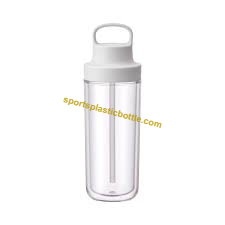
Water leakage can turn a convenient drinking container into a frustrating product, especially when the bottle is carried inside a school bag, sports bag, backpack, or vehicle. A Straw Plastic Water Bottle has several connected components that influence how liquid remains inside the container, including the bottle body, lid, straw opening, sealing elements, and connection points. sportsplasticbottle focuses on plastic water bottle manufacturing and provides different drinkware styles for sports, students, travel, and everyday hydration. When a bottle is expected to move through busy routines without spilling its contents, what design details actually help control leakage?
The first consideration is the relationship between the bottle body and its closure. A lid needs to fit the opening in a way that creates a stable connection during normal handling. If the contact area is uneven or the dimensions do not correspond properly, liquid may find a path through the joint when the container is tilted or moved. A secure closure therefore begins with accurate product design rather than relying only on the appearance of the finished cap.
The sealing structure also has an important role. Depending on the product configuration, a bottle may use silicone or another suitable sealing component around the lid, drinking opening, or straw connection. The seal needs to sit in its intended position and maintain contact with the mating surface during ordinary use. If it shifts, becomes poorly positioned, or does not correspond with the surrounding structure, the protection against leakage can be affected.
A straw system introduces another connection that needs to be considered during development. Unlike a simple bottle opening, a straw lid creates a route through which the user drinks, meaning the interface between the straw and the lid becomes part of the fluid path. The connection should be designed so that the straw remains properly positioned while the lid continues to perform its closing function.
The shape of the lid can influence this relationship as well. A lid with several moving sections requires attention to the way those components interact when opened and closed. Hinges, drinking openings, locks, covers, and sealing areas should work together rather than being treated as unrelated parts. When a user closes the bottle, each component needs to return to its intended position so that the complete structure can function as designed.
Bottle geometry also contributes to leakage control. The neck area, opening, threads, and shoulder transition need to correspond with the selected closure. If the connection between these parts is poorly coordinated, even a visually attractive bottle can experience practical problems during transportation. Product development therefore needs to consider the bottle and cap as a complete system.
Molding precision becomes particularly relevant at this stage. Plastic drinkware depends on accurately formed components because small dimensional differences can affect how parts fit together. The bottle opening needs to correspond with the lid, while the sealing surface must provide an appropriate contact area. Threads also need to engage correctly if a screw-style closure is used.
Manufacturing consistency matters when the same product is produced repeatedly. A sample may demonstrate how a design is intended to work, but production needs to maintain the relevant dimensions and assembly relationships across the order. This is especially important for distributors, retailers, and private-label brands that need their products to maintain a consistent user experience from one production batch to another.
The material characteristics of the bottle and lid should also be considered together. Different plastics have different levels of rigidity, flexibility, impact resistance, and dimensional behavior. A component that needs to maintain a specific shape during closure requires material characteristics that correspond with its intended function. The material decision is therefore connected with the mechanical design of the entire drinking system.
Cleaning should not be ignored when discussing leakage. A reusable bottle is opened, washed, dried, filled, and closed repeatedly. Residue around a sealing surface can interfere with proper contact, while incorrectly positioned components may affect the way a lid closes. A practical product should therefore allow users to access relevant areas during routine cleaning without making maintenance unnecessarily complicated.
Straw maintenance deserves particular attention because the tube can contain internal areas that are not immediately visible. If the drinking system includes removable components, users need to understand how those parts should be separated, washed, and reassembled. The exact care method depends on the construction and material of the individual product, so manufacturers should provide suitable instructions for the finished model.
The way a bottle is carried can also expose weaknesses in its closure system. A container placed upright on a desk experiences different conditions from one lying sideways inside a backpack. A bottle taken to a gym may be moved between equipment, benches, lockers, and bags throughout the day. Outdoor users may experience additional movement while walking, cycling, or traveling.
For this reason, leakage evaluation should consider realistic handling rather than a single static position. A finished product can be examined under different orientations and ordinary movement conditions to determine whether the lid, seal, and straw connection remain secure. Such testing provides useful information during product development because it connects the technical structure with actual user behavior.
The external shape can influence handling too. A bottle that is easy to grip may be less likely to slip from the user's hand during opening or closing. Carry loops, handles, textured sections, and body contours can each affect how the container is handled. These features do not create a leakproof structure by themselves, but they can influence the situations in which the closure system is used.
For brands developing customized drinkware, the visual side of the product needs to work alongside its functional construction. Logo placement, surface decoration, color selection, lid style, straw configuration, handle design, and packaging can all be discussed as part of the product concept. A customized appearance should not require unnecessary compromises in the basic relationship between the bottle body and closure.
This is where communication between a buyer and manufacturer becomes important. Before production begins, a project can define the intended users, drinking method, capacity range, closure structure, decoration requirements, packaging expectations, and intended application. These details give the production team a clearer understanding of what the finished item needs to accomplish.
Zuohao's official website presents plastic straw bottles alongside other plastic drinkware categories and describes customized product services, allowing buyers to explore different bottle concepts according to their market requirements. This approach can be useful for businesses developing products for students, sports users, travel markets, promotional programs, or general daily hydration.
The choice of straw arrangement can also change the product experience. Some users may prefer a simple drinking tube, while others may require a pop-up structure or a lid with additional carrying features. The appropriate configuration depends on how the bottle will be handled and where it will be used. There is no need for every model to follow the same construction when different customer groups have different routines.
Leak control is therefore connected with several stages of development, beginning with the bottle opening and extending through the lid, seal, straw, molding process, assembly procedure, and user care. Each part has its own function, yet the finished product depends on their interaction. A small change to one component can sometimes influence another, which is why these relationships should be considered before tooling and production are finalized.
For wholesalers and private-label buyers, this product-development approach can also make it easier to discuss practical requirements with a factory. Instead of asking only whether a bottle is leak resistant, buyers can examine the closure construction, sealing method, straw connection, component fit, cleaning access, and expected handling conditions. These questions create a clearer technical basis for selecting or developing a suitable model.
A product intended for children may require a different lid arrangement from one designed for gym users, while a travel bottle may need another combination of carrying and closure features. The important point is that the bottle should correspond with its actual application. A design that works well in one setting may not provide the same user experience in another environment.
For distributors, retailers, and private label brands, the right bottle often starts with a clear understanding of where and how it will be used. Zuohao works with buyers on plastic bottle projects covering different shapes, lid styles, straw configurations, colors, and packaging requirements. Its product range can be explored at https://www.sportsplasticbottle.com/ for businesses looking at practical drinkware options for schools, sports activities, travel, or everyday hydration.

 English
 Arabic
 French
 Spanish
 Portuguese
 Deutsch
 Dutch
Dutch
 Italiano
 Russian
 Romaian
 Portuguese (Brazil)
 Greek
Greek
 Bengali