


Why Bushing Anti-Vibration Mounts Matter in Modern Engineering
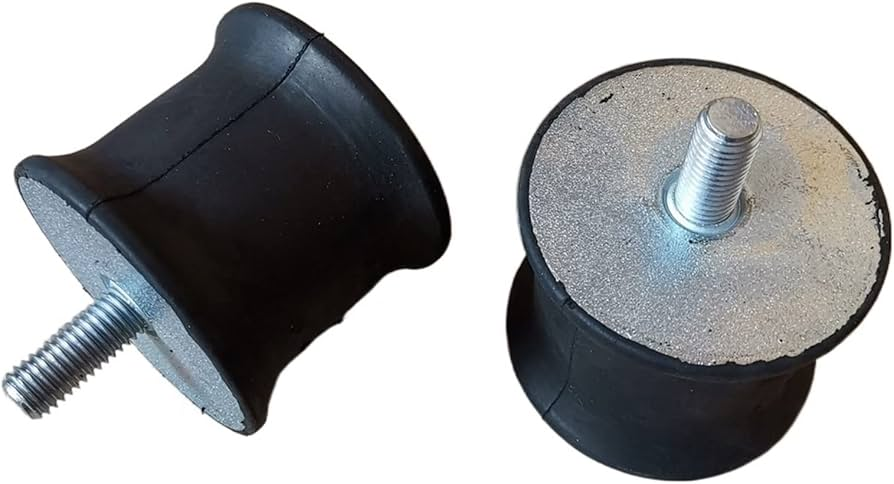
As industries continue to prioritize equipment reliability, workplace safety, and operational efficiency, vibration control has become a critical aspect of engineering design. Components that minimize unwanted movement and absorb shocks help extend machinery lifespan while reducing maintenance costs. Among these solutions, bushing anti-vibration mounts have gained widespread adoption across automotive, industrial, rail, aerospace, and construction applications due to their ability to improve performance under demanding operating conditions.
The bushing anti-vibration mounts market is witnessing steady expansion as manufacturers invest in advanced materials and precision-engineered components to meet rising performance expectations. According to a recent industry analysis on vibration isolation solutions, the market was valued at around USD 2.62 billion in 2025 and is projected to grow from USD 2.83 billion in 2026 to USD 4.45 billion by 2032, registering a CAGR of 7.84% during the forecast period. The market reflects increasing demand for durable vibration-control technologies across multiple industries.
Manufacturers are increasingly focusing on lightweight, durable, and high-performance elastomeric materials capable of withstanding harsh environmental conditions. Continuous innovation in rubber compounds, polyurethane materials, and hybrid designs is enabling improved load-bearing capacity while maintaining excellent vibration damping characteristics for both commercial and industrial equipment.
Industrial Automation Is Increasing Demand
The rapid adoption of industrial automation has significantly increased the need for vibration management systems. Automated production lines, robotic equipment, and high-speed machinery require stable operating environments to maintain precision and reduce wear. Bushing anti-vibration mounts help minimize structural vibrations that can negatively impact manufacturing quality and equipment reliability.
Industries such as mining, power generation, heavy manufacturing, and material handling increasingly depend on vibration isolation technologies to improve equipment uptime. As factories become more automated, investment in vibration control solutions continues to rise alongside broader digital transformation initiatives.
Automotive Manufacturers Continue to Drive Innovation
The automotive sector remains one of the largest consumers of vibration isolation components. Modern passenger vehicles, commercial trucks, and electric vehicles require advanced mounting systems that reduce engine noise, road vibrations, and cabin discomfort. Improved ride quality has become an important competitive differentiator for vehicle manufacturers worldwide.
Electric vehicles introduce new engineering challenges because quieter powertrains make secondary vibrations more noticeable. As a result, manufacturers are investing in more sophisticated mounting technologies that effectively isolate vibrations from electric motors, battery systems, and suspension assemblies while maintaining lightweight vehicle designs.
Material Innovation Improves Product Performance
Material science continues to transform vibration isolation technology. Traditional rubber compounds are increasingly being enhanced with engineered polymers, advanced elastomers, and polyurethane formulations that deliver greater durability, chemical resistance, and thermal stability. These improvements allow vibration mounts to perform effectively under challenging operating environments.
Manufacturers are also developing customized mounting solutions for industry-specific applications where temperature fluctuations, moisture exposure, or heavy mechanical loads require specialized performance characteristics. Product customization has become an important competitive advantage as industrial equipment becomes increasingly application-specific.
Sustainability Is Influencing Manufacturing Strategies
Environmental considerations are encouraging manufacturers to adopt sustainable production methods and recyclable materials wherever possible. Companies are optimizing manufacturing processes to reduce waste while improving product longevity, supporting both environmental objectives and lower lifecycle costs for end users. Industry reports also highlight growing emphasis on sustainable industrial manufacturing practices and circular economy initiatives across global supply chains. International Energy Agency (IEA).
Longer-lasting vibration control components reduce replacement frequency and contribute to lower material consumption over time. These sustainability benefits are becoming increasingly important as industrial customers evaluate both operational performance and environmental responsibility when selecting engineering components.
Emerging Economies Offer Significant Opportunities
Infrastructure expansion, rapid industrialization, and growing automotive production across emerging economies are creating favorable conditions for vibration isolation technologies. Investments in transportation networks, manufacturing facilities, renewable energy projects, and construction equipment continue to generate new demand for reliable vibration management solutions.
At the same time, maintenance-focused industries are placing greater emphasis on predictive maintenance strategies that improve equipment reliability and reduce operational downtime. Vibration control components play a supporting role in extending asset life while improving operational efficiency across various industrial sectors. Research from the American Society of Mechanical Engineers (ASME) highlights the importance of vibration management in enhancing machinery performance and lifecycle reliability.
Future Outlook
The future of vibration isolation technologies will likely be shaped by continued advancements in material engineering, smart manufacturing, electric mobility, and industrial automation. Increasing demand for quieter, safer, and more durable equipment across transportation and industrial applications is expected to sustain long-term investment in advanced mounting solutions.
As engineering requirements become more complex, manufacturers will continue developing highly specialized vibration-control components capable of delivering improved durability, precision, and operational efficiency. The combination of technological innovation, expanding industrial infrastructure, and evolving mobility trends positions vibration isolation solutions as an increasingly important part of modern mechanical system design.

 English
 Arabic
 French
 Spanish
 Portuguese
 Deutsch
 Turkish
 Dutch
Dutch
 Italiano
 Romaian
 Portuguese (Brazil)
 Greek
Greek
 Bengali