


Thermal Resistance Sensors: Core Devices For Temperature Measurement, Working Principles And Application Analysis
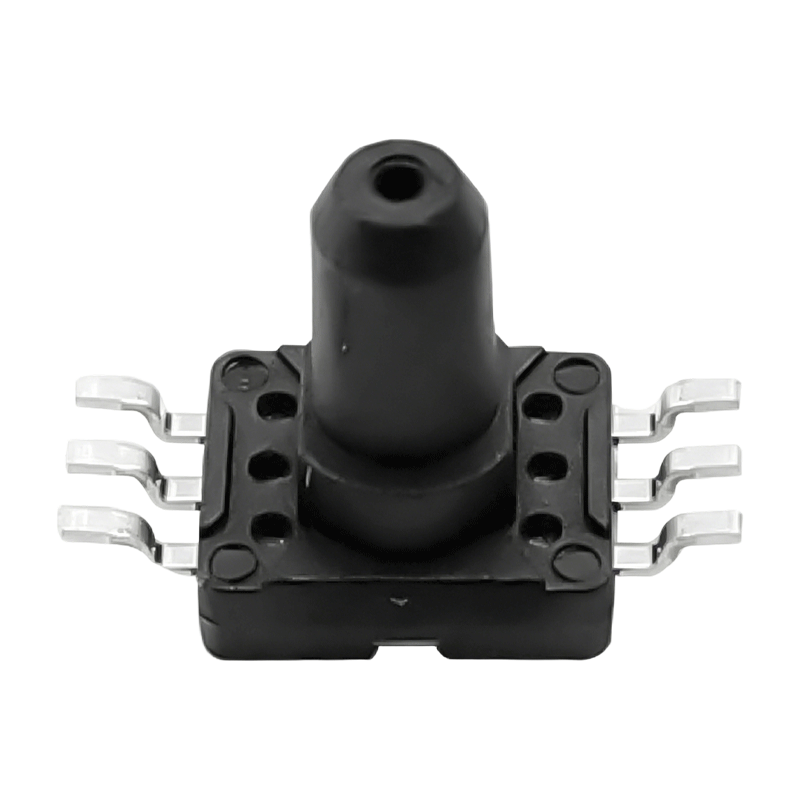
In modern industrial production, scientific research experiments, and even daily life, accurate temperature measurement and control play a crucial role. As a common temperature measurement device, thermal resistance sensors, with their stable performance and reliable measurement results, have become an ideal choice in many scenarios. This article will detailedly introduce the basic concepts, working principles, core characteristics, and main applications of thermal resistance sensors to help you comprehensively understand this key device in the field of temperature measurement.
I. What is a Thermal Resistance Sensor?
A thermal resistance sensor is a device that measures temperature by utilizing the relationship between the resistance characteristics of materials and temperature changes. Simply put, its core function is **to convert temperature changes into resistance changes**, and then through subsequent circuit processing, convert the resistance signal into a readable temperature value. This conversion process is based on the physical properties of materials and does not require complex mechanical structures, thus having high stability and reliability.
II. Working Principle of Thermal Resistance Sensors: The Linkage Between Temperature and Resistance

The working principle of thermal resistance sensors stems from **the characteristic that the resistance of materials changes with temperature**. In nature, the resistance value of many conductors or semiconductor materials changes regularly with the increase or decrease of temperature - for example, the resistance of most metal materials increases with temperature (positive temperature coefficient), while some semiconductor materials may show the opposite characteristic (negative temperature coefficient).
Thermal resistance sensors precisely utilize this characteristic: when the temperature of the environment where the sensor is located changes, the resistance value of its internal temperature-sensing element (usually made of specific materials) changes accordingly. By measuring the resistance change of the temperature-sensing element and combining it with the resistance-temperature relationship curve of the material, the current temperature value can be inversely calculated. This temperature → resistance → temperature conversion process is the core logic for thermal resistance sensors to realize measurement.
III. Core Characteristics of Thermal Resistance Sensors: Why They Become the Preferred Choice for Temperature Measurement?
Compared with other temperature measurement devices, thermal resistance sensors are widely used mainly due to the following significant characteristics:
1. High Measurement Accuracy
Since the resistance-temperature relationship of materials usually has good linearity and repeatability, thermal resistance sensors can achieve high measurement accuracy, especially in the medium and low temperature range (such as -200℃ to 600℃), with errors controllable within a small range.
2. Strong Stability and Reliability
The temperature-sensing element of thermal resistance sensors has a simple structure, is not easily affected by the external environment (such as vibration and impact), and its performance decays slowly during long-term use, which can maintain stable measurement results and is suitable for long-term continuous monitoring scenarios.
3. Wide Applicable Temperature Range
Thermal resistance sensors made of different materials can cover different temperature ranges, from ultra-low temperature to medium and high temperature environments, and corresponding models can be found to meet the temperature measurement needs of various fields such as industry and scientific research.
4. Convenient Signal Processing
The measurement and conversion technology of resistance signals is mature, the subsequent circuit design is simple, and it can be easily integrated with data acquisition systems and control systems to realize real-time temperature monitoring and automatic control.
IV. Typical Application Scenarios of Thermal Resistance Sensors: Temperature Guardians from Industry to Daily Life
With the above advantages, thermal resistance sensors have a wide range of application scenarios, covering almost all fields that require temperature measurement and control:
1. Industrial Production Field
In industries such as chemical engineering, metallurgy, and machinery manufacturing, thermal resistance sensors are often used to monitor the temperature of reaction kettles, pipelines, and equipment to ensure that the production process is carried out within the set temperature range, and to guarantee product quality and production safety.
2. Scientific Research Experiment Scenarios
In laboratories, thermal resistance sensors can be used to accurately measure experimental environment temperature, sample temperature, etc., providing reliable temperature data support for research in physics, chemistry, biology and other disciplines.
3. Environmental Monitoring and Energy Management
In environmental monitoring stations and weather stations, thermal resistance sensors can collect atmospheric temperature, water temperature and other data in real time; in the energy field, such as power and heating systems, they are used to monitor the operating temperature of equipment and optimize energy consumption.
4. Medical and Daily Life
In medical equipment (such as incubators, body temperature monitors), thermal resistance sensors can achieve accurate measurement of human body or environment temperature; household appliances in daily life (such as air conditioners, water heaters) may also integrate thermal resistance sensors to realize automatic temperature adjustment.
V. Summary: Thermal Resistance Sensors - A Reliable Partner for Temperature Measurement
By converting temperature changes into resistance changes, thermal resistance sensors provide a simple, stable and high-precision solution for temperature measurement. Whether in the harsh environment of industrial production, the precise needs of scientific research experiments, or the convenient control of daily life, it has become a core device for temperature monitoring and control with its unique advantages. Understanding the working principle and application of thermal resistance sensors helps us better utilize this technology and bring more convenience and protection to production, scientific research and life.

 English
 Arabic
 French
 Spanish
 Portuguese
 Deutsch
 Turkish
 Dutch
Dutch
 Italiano
 Russian
 Portuguese (Brazil)
 Greek
Greek
 Bengali