


Industrial Fan Manufacturing and Quality Control
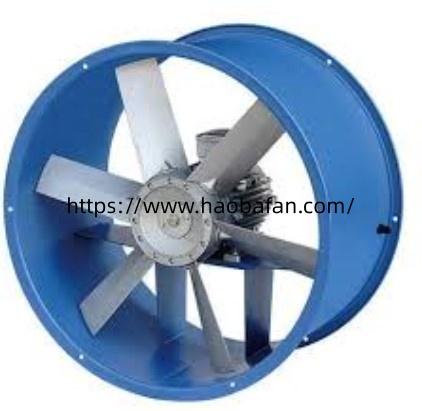
Industrial ventilation systems often require equipment that can move air through defined pathways while maintaining consistent operating conditions. When evaluating a Centrifugal Fan Factory, buyers may look beyond the finished equipment and examine how impellers, housings, motors, bearings, structural components, and quality-control procedures are coordinated during production. Manufacturing consistency can influence how reliably a fan integrates into a complete ventilation system.
A centrifugal fan operates differently from an axial design. Instead of moving air primarily along the rotational axis, the impeller draws air into its center and accelerates it outward through centrifugal force. The housing then guides the moving air toward the discharge path. This operating principle makes centrifugal equipment suitable for applications where airflow needs to be directed through ducts, equipment, filters, or other system components.
The impeller is a central component of this design. Its blades determine how incoming air is captured and redirected toward the outlet. Different blade geometries can be used for different operating conditions, and manufacturers need to maintain consistency in blade shape, positioning, and structural strength. Accurate fabrication helps support predictable rotational behavior and reduces the possibility of unnecessary imbalance.
The housing is equally important because it provides the pathway through which air leaves the rotating assembly. Its internal shape can influence airflow transition and discharge behavior. A properly manufactured housing also provides structural support for the motor and rotating components. Material selection should take into account the installation environment, particularly where equipment may be exposed to dust, humidity, temperature variation, or other industrial conditions.
Motor integration requires careful coordination between electrical and mechanical components. The motor must provide appropriate rotational movement to the impeller while remaining securely positioned within the fan structure. Manufacturers may consider mounting arrangements, heat dissipation, electrical connections, and mechanical alignment during assembly. Proper integration helps reduce unnecessary vibration and supports stable operation.
Balancing is another important manufacturing consideration. Since the impeller rotates continuously, uneven weight distribution can create vibration. Excessive vibration may increase mechanical stress on bearings, mounting structures, and other components. Quality-control procedures that include rotational inspection and balancing can therefore contribute to smoother operation and help identify assembly problems before equipment leaves the production line.
Noise is influenced by several elements within a centrifugal ventilation system. Impeller movement, turbulence, motor operation, vibration, housing structure, and connected ductwork can all contribute to sound. Noise management therefore requires more than focusing on one component. Blade design, mechanical balance, rigid installation, appropriate airflow pathways, and system layout can work together to create a more controlled operating environment.
Maintenance should also be considered when selecting industrial ventilation equipment. Dust accumulation can affect impeller surfaces and airflow pathways, while loose mounting components or worn mechanical parts may contribute to vibration. Regular inspection can help identify abnormal operating conditions at an earlier stage. Cleaning procedures should be appropriate for the equipment and should not damage electrical or mechanical components.
Centrifugal fans are used in many environments, including factories, workshops, warehouses, commercial buildings, agricultural facilities, equipment cooling systems, and process ventilation applications. Their ability to direct air through structured pathways makes them useful when a ventilation system includes ducts or other resistance-producing components. However, equipment selection should always consider the complete airflow system rather than treating the fan as an isolated component.
For procurement teams, manufacturing capability can be an important consideration. A reliable Centrifugal Fan Factory should have organized processes for material preparation, component fabrication, impeller assembly, motor installation, balancing, inspection, and final testing. Consistent production procedures can help maintain repeatability across different orders and reduce variation between individual units.
Supplier communication is also valuable during industrial projects. Buyers may need to discuss installation conditions, airflow direction, environmental exposure, maintenance requirements, and system configuration before selecting suitable equipment. A manufacturer with practical knowledge of ventilation applications can help clarify these considerations without relying solely on general product descriptions.
Taizhou Haoba Electromechanical Co Ltd. develops ventilation equipment for a range of industrial air movement applications, and customers can review additional product information at https://www.haobafan.com/product/mixed-flow-fan/ when assessing suitable fan configurations for their ventilation systems.

 English
 Arabic
 French
 Spanish
 Portuguese
 Deutsch
 Turkish
 Dutch
Dutch
 Italiano
 Russian
 Romaian
 Greek
Greek
 Bengali