


Sealing Systems for Reliable Pipeline Applications
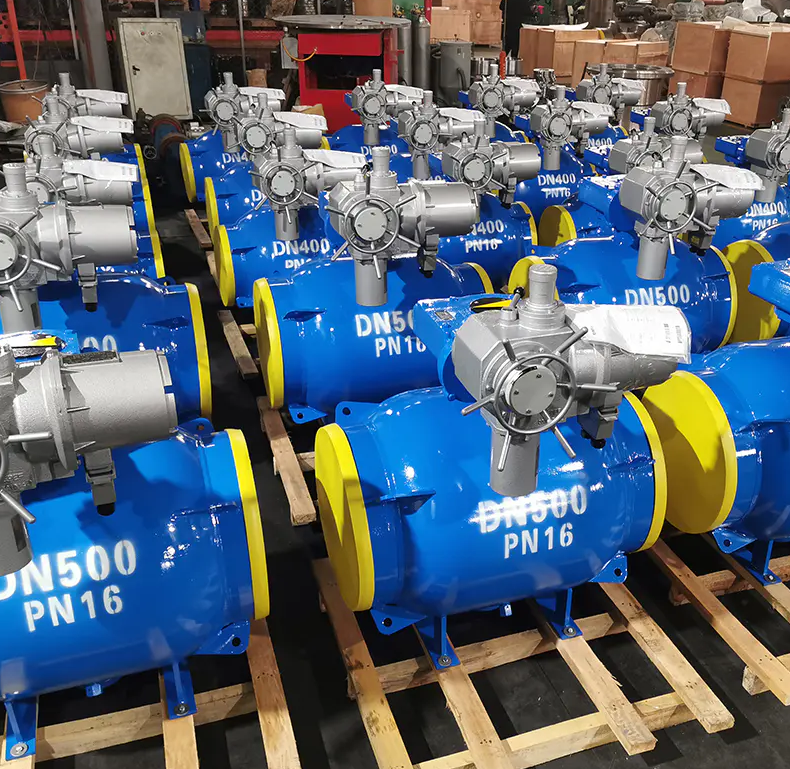
Industrial pipeline systems require valve structures that can provide controlled flow isolation while remaining compatible with the physical and chemical conditions of the process. A Forged Steel Floating Ball Valve uses a floating ball mechanism together with a forged body structure, creating a configuration suitable for a range of industrial fluid-control applications. Understanding how forging, ball movement, sealing components, machining, and material selection interact can help engineers make more appropriate decisions for specific operating environments.
The forged body is one of the key characteristics of this valve configuration. Forging involves shaping metal through controlled mechanical deformation, producing components with a dense material structure. Depending on the application, manufacturers may work with carbon steel, stainless steel, or alloy steel. The appropriate choice depends on factors such as the process medium, operating temperature, corrosion exposure, pressure conditions, and expected service environment.
The floating ball principle differs from supported-ball configurations. In a floating arrangement, the ball is not fixed to a lower trunnion. Instead, pressure from the upstream side can push the ball toward the downstream seat when the valve is closed. This movement contributes to the sealing interaction between the ball and seat. Because the ball mechanism and seat structure work together, the quality and compatibility of these components are important to the overall operating behavior of the valve.
Seat selection requires careful consideration. Soft seat materials can be used in applications where their temperature and chemical compatibility are suitable, while other services may require different sealing materials or configurations. Factors such as fluid composition, temperature changes, pressure, operating frequency, and the presence of particulate matter should be considered when selecting the sealing arrangement. A suitable design should reflect the actual service conditions rather than relying solely on general product classifications.
Precision machining is another major part of production. Forged bodies require accurate machining of internal passages, connection areas, stem openings, and other critical surfaces. Dimensional control helps maintain correct relationships between the body, ball, stem, seats, and sealing components. Consistent machining can also simplify assembly and support predictable operation across multiple production units.
The stem assembly transfers rotational movement to the ball, so its mechanical interface must be manufactured accurately. Stem alignment, surface condition, sealing elements, and connection with the operating mechanism all influence the valve's usability. Depending on system requirements, manual operation or automated actuation may be considered. When an actuator is used, torque requirements and operating conditions should be evaluated together with the valve structure.
Connection design is also relevant during pipeline planning. Flanged, threaded, or welded configurations may be selected according to pipeline construction and maintenance requirements. Installation teams should consider valve orientation, access to operating components, surrounding equipment, and available space. Proper planning can make later inspection and servicing more practical.
Quality inspection should cover both materials and finished assemblies. Before machining, raw materials and forged components can be checked according to applicable production requirements. Machined parts may undergo dimensional inspection, while assembled valves can be examined for operating movement and sealing performance. Pressure testing and other verification procedures may be incorporated according to the intended application and applicable standards.
Maintenance requirements depend heavily on the operating environment. A valve installed in a clean industrial process may experience different service conditions from one handling corrosive, abrasive, or contaminated media. Maintenance teams should consider operating frequency, temperature cycles, pressure conditions, and the condition of sealing components when establishing inspection schedules. Keeping accurate maintenance records can support more consistent equipment management.
From a manufacturing perspective, producing a forged floating-ball valve involves multiple interconnected processes. Forging quality, machining accuracy, component compatibility, assembly control, testing, and documentation all contribute to the finished product. Consistency across these stages is important when valves are intended for industrial systems where equipment reliability and maintainability are significant engineering considerations.
When evaluating a Forged Steel Floating Ball Valve, procurement and engineering teams can therefore look beyond the basic valve category and examine body material, floating-ball structure, seat selection, connection method, operating mechanism, installation environment, testing procedures, and maintenance requirements. Industrial ball valve solutions and related product information are available through https://www.ncevalve.com/product/ for further consideration when matching valve construction with specific pipeline applications.

 English
 Arabic
 French
 Spanish
 Portuguese
 Deutsch
 Turkish
 Dutch
Dutch
 Italiano
 Russian
 Romaian
 Greek
Greek
 Bengali