


The New Intelligence: Inside the Global Augmented Analytics Industry and Its Impact
Defining the Next Wave of Business Intelligence
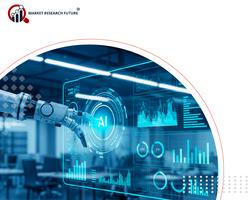
The relentless pursuit of data-driven decision-making has ushered in a revolutionary new paradigm, and the global Augmented Analytics industry is at the vanguard of this transformation. At its core, augmented analytics represents the use of enabling technologies such as machine learning (ML) and artificial intelligence (AI), including Natural Language Processing (NLP), to enhance and automate the entire data analytics workflow. Unlike traditional Business Intelligence (BI), which often requires users to be skilled analysts capable of manually exploring data, slicing and dicing it to find insights, augmented analytics automates this process. It proactively prepares data, uncovers hidden patterns and correlations, and surfaces critical insights without being explicitly asked. This fundamental shift moves the analytical power from a small group of data specialists to a much broader audience of business users, empowering them to ask complex questions and receive intelligent, contextual answers, thereby democratizing data and accelerating the pace of informed decision-making across the entire organization.
Core Technologies Powering the Augmented Revolution
The augmented analytics industry is underpinned by a powerful convergence of several key AI and ML technologies. The first is Machine Learning, which is used to automatically identify significant patterns, trends, correlations, and outliers in vast datasets that would be impossible for a human to spot manually. This is the engine that drives automated insight discovery. The second crucial technology is Natural Language Processing (NLP). This allows users to interact with their data using plain, everyday language. Through Natural Language Query (NLQ), a user can simply type or speak a question like, "What were our top 5 products by sales in the northeast last quarter?" and the system will understand the intent and generate the appropriate visualization. The third component is Natural Language Generation (NLG). This technology automatically creates written narratives and summaries that explain the key findings in a dashboard or report. Instead of just showing a chart with a declining sales trend, NLG can generate a sentence like, "Sales in the western region decreased by 15% in Q3, primarily driven by a 40% drop in the 'widgets' category," providing instant context and understanding.
Key Players and the Competitive Ecosystem
The augmented analytics industry is a dynamic and competitive space, featuring a mix of established BI giants and innovative pure-play vendors. The major Business Intelligence platform providers have aggressively integrated augmented capabilities into their flagship products. Microsoft's Power BI, for instance, includes features like "Quick Insights" and a Q&A function that leverages NLP. Salesforce-owned Tableau has incorporated its "Ask Data" and "Explain Data" features to automate analysis. Qlik uses its unique associative engine combined with AI to suggest insights and highlight hidden relationships in data. Alongside these behemoths, a new class of "augmented-native" vendors has emerged, with companies like ThoughtSpot and Tellius building their entire platforms around a search-based, NLP-first user experience. These players are challenging the incumbents by offering a more intuitive and conversational approach to analytics from the ground up. The intense competition within this ecosystem is a major benefit to customers, as it drives rapid innovation and makes these powerful capabilities more accessible and affordable.
The Shift from "What" to "Why": The Fundamental Business Impact
The most profound impact of the augmented analytics industry is its ability to shift the focus of business analysis from "what happened" to "why it happened" and even "what will happen next." Traditional BI dashboards are excellent at showing historical data—the "what." An analyst could see that sales went down. However, discovering the "why" required a manual, time-consuming process of drilling down, applying filters, and testing hypotheses. Augmented analytics automates this diagnostic process. It can automatically analyze all related variables and surface the key drivers behind a change, such as a specific marketing campaign ending, a competitor's price drop, or a supply chain issue. This dramatically accelerates the time-to-insight. Furthermore, by integrating predictive models, augmented platforms can move into forecasting, helping businesses anticipate future trends. This shift empowers organizations to be more proactive and less reactive, using data not just to report on the past but to intelligently shape their future, which is the ultimate promise of this transformative industry.
➤ In-Depth Market Studies by Market Research Future:

 English
 Arabic
 French
 Spanish
 Portuguese
 Deutsch
 Turkish
 Dutch
Dutch
 Italiano
 Romaian
 Portuguese (Brazil)
 Greek
Greek
 Bengali