


How Bar Screens Support Effective Wastewater Screening
Understanding the Role of Bar Screens
Wastewater may contain large solids, rags, refuse, and other material which may cause interference with the treatment process and even cause damage to mechanical devices. The installation of a bar screen will aid in the removal of this material prior to its passing into the treatment plant. The use of the bar screen is typical of preliminary treatment in a wastewater facility.
How a Wastewater Bar Screen Works
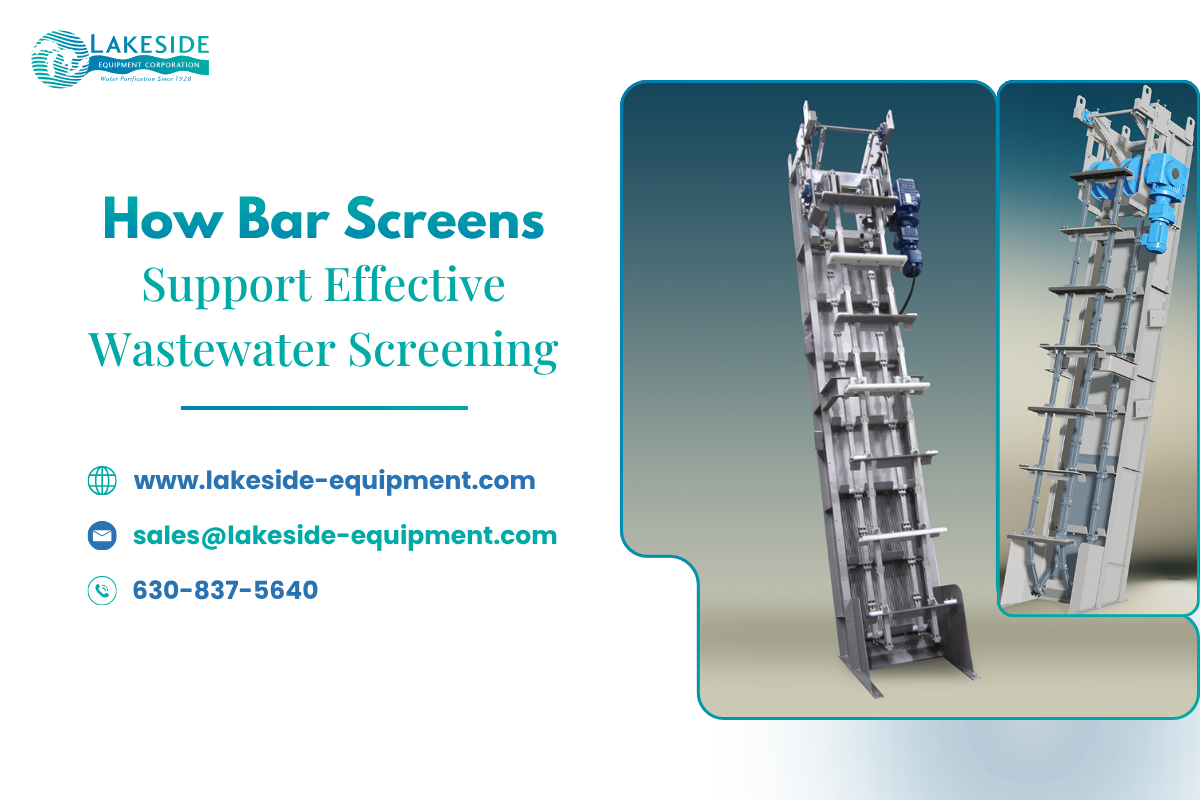
A wastewater bar screen uses closely spaced bars to capture unwanted solids from the wastewater flow. Mechanically cleaned versions use rakes to remove the collected material from the screen. Continuous cleaning helps prevent excess accumulation, clogging, and backwater level increases. The size of screen openings may differ from application to application depending on what kind of matter has to be removed.
Choosing the Right Wastewater Screens
Different wastewater screens are designed for different removal needs. Coarse screens are generally used for larger solids and debris, while fine screens remove smaller materials that could create operational or maintenance problems. Screen selection can depend on factors such as channel width, depth, screen angle, approach velocity, discharge height, and expected solids loading.
Supporting Treatment Plant Operations
Lakeside Equipment Corporation provides screening equipment designed for demanding municipal and industrial applications. Its FalconRake Bar Screen uses multiple rakes to continuously clean the screen and remove captured material. Stainless steel construction, low headloss, minimal headroom requirements, and bar spacing options make screening equipment an important part of managing solids before downstream treatment.

 English
 Arabic
 French
 Spanish
 Portuguese
 Deutsch
 Turkish
 Dutch
Dutch
 Italiano
 Russian
 Portuguese (Brazil)
 Greek
Greek
 Bengali