


Material Selection in High-Accuracy Gear Production
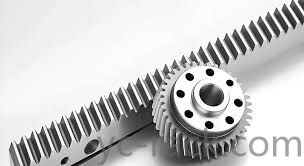
In industrial transmission systems, Ground Gear components are manufactured to support consistent engagement and controlled mechanical power transfer. Their quality depends on several connected factors, including material selection, tooth geometry, machining stability, grinding accuracy, surface treatment, and inspection. A complete engineering approach is important because the final behavior of a gear is influenced by both its own manufacturing quality and its interaction with mating components.
Material selection provides the foundation for production. Transmission parts experience repeated contact and mechanical loading, so engineers need to consider strength, toughness, machinability, and dimensional stability. Material response during cutting and heat treatment can also influence the final result. Zhejiang Yuchen Transmission Technology Co., Ltd. connects material management with machining and finishing decisions to support a more stable production process.
Tooth geometry directly affects engagement. Tooth profile, spacing, alignment, and surface consistency determine how a gear transfers mechanical forces to its mating component. Small variations may create uneven contact or influence movement behavior during repeated operation. Precision machining is therefore necessary to maintain the intended geometry and reduce production variation.
CNC machining supports repeatability by using digitally controlled tool paths and workpiece positioning. Digital models can provide accurate information for production, while automated equipment helps maintain consistency between manufacturing cycles. However, reliable results still require control of tool condition, fixture stability, cutting parameters, material behavior, and machining sequence. Production technology must be supported by effective process management.
Grinding can refine tooth surfaces after earlier machining operations. This stage is important when the application requires controlled geometry and consistent surface characteristics. Grinding quality depends on equipment condition, process stability, workpiece positioning, and thermal control. If these factors are not managed properly, the finishing process may introduce unwanted variation instead of improving accuracy.
Surface engineering influences the relationship between mating components. Working surfaces repeatedly experience contact, so surface irregularities may affect friction, wear, and mechanical smoothness. A controlled finishing process can help create more consistent interaction. The selected surface treatment should reflect the material, operating environment, lubrication conditions, and intended application.
Heat treatment may be used to modify material characteristics. Depending on the production strategy, thermal processing can influence hardness, structural stability, and resistance to mechanical wear. However, thermal treatment may also change dimensions. Manufacturers therefore need to coordinate heat treatment with machining allowances, grinding, and final inspection to ensure that the working geometry remains consistent.
Inspection is essential for verifying manufacturing quality. Measurement procedures may examine tooth dimensions, pitch, alignment, straightness, and surface condition. Inspection can be performed during production as well as after finishing. When measurement results are analyzed systematically, manufacturers can identify recurring process variation and determine whether improvements are needed in material preparation, machining, thermal treatment, or grinding.
A gear also depends on the wider transmission system. It may operate with a rack, motor, bearing arrangement, coupling, guide mechanism, and control equipment. Alignment between these elements influences contact conditions and force distribution. A high-quality component cannot fully compensate for unsuitable assembly or incorrect system alignment. Engineers should therefore evaluate component interfaces during the design stage.
Noise and vibration may provide useful indications of contact consistency. Uneven engagement can cause changes in transmitted forces, especially during acceleration, deceleration, or repeated changes in direction. Accurate tooth geometry, controlled finishing, suitable lubrication, and careful assembly can support smoother mechanical interaction. These considerations are valuable in industrial machinery that operates continuously or requires repeatable movement.
Digital engineering tools can improve the connection between design and production. Three-dimensional models allow engineers to review component relationships, while simulation can help identify potential interference or movement issues. Computer-aided manufacturing connects design data with machining equipment, and digital inspection systems provide structured records for quality analysis. This integrated workflow supports better communication between engineering and production teams.
Zhejiang Yuchen Transmission Technology Co., Ltd. applies an integrated approach to material management, machining, grinding, finishing, and inspection. This manufacturing perspective supports the needs of industrial applications such as automation equipment, packaging machinery, machining systems, and mechanical positioning platforms. Considering each production stage as part of one connected process can help improve consistency and support more predictable transmission behavior.
Maintenance and installation also influence service performance. Correct alignment, appropriate lubrication, contamination control, and periodic inspection can help preserve the condition of mating surfaces. Preventive maintenance may identify unusual wear before it develops into a wider mechanical issue. Component manufacturing and operating discipline should therefore be considered together.
For industrial buyers, evaluating a supplier involves more than reviewing one machining method. Material control, precision production, grinding capability, inspection systems, engineering experience, and manufacturing consistency all contribute to the final result. Zhejiang Yuchen Transmission Technology Co., Ltd. combines these areas within its production approach, while further information at https://www.yc-rack.com/product/spur-gear-rack/ can support customers evaluating Ground Gear solutions for industrial transmission.

 English
 Arabic
 French
 Spanish
 Portuguese
 Deutsch
 Turkish
 Dutch
Dutch
 Italiano
 Russian
 Romaian
 Portuguese (Brazil)
 Bengali