


Commercial Biogas Plant: Turning Organic Waste into Clean Energy
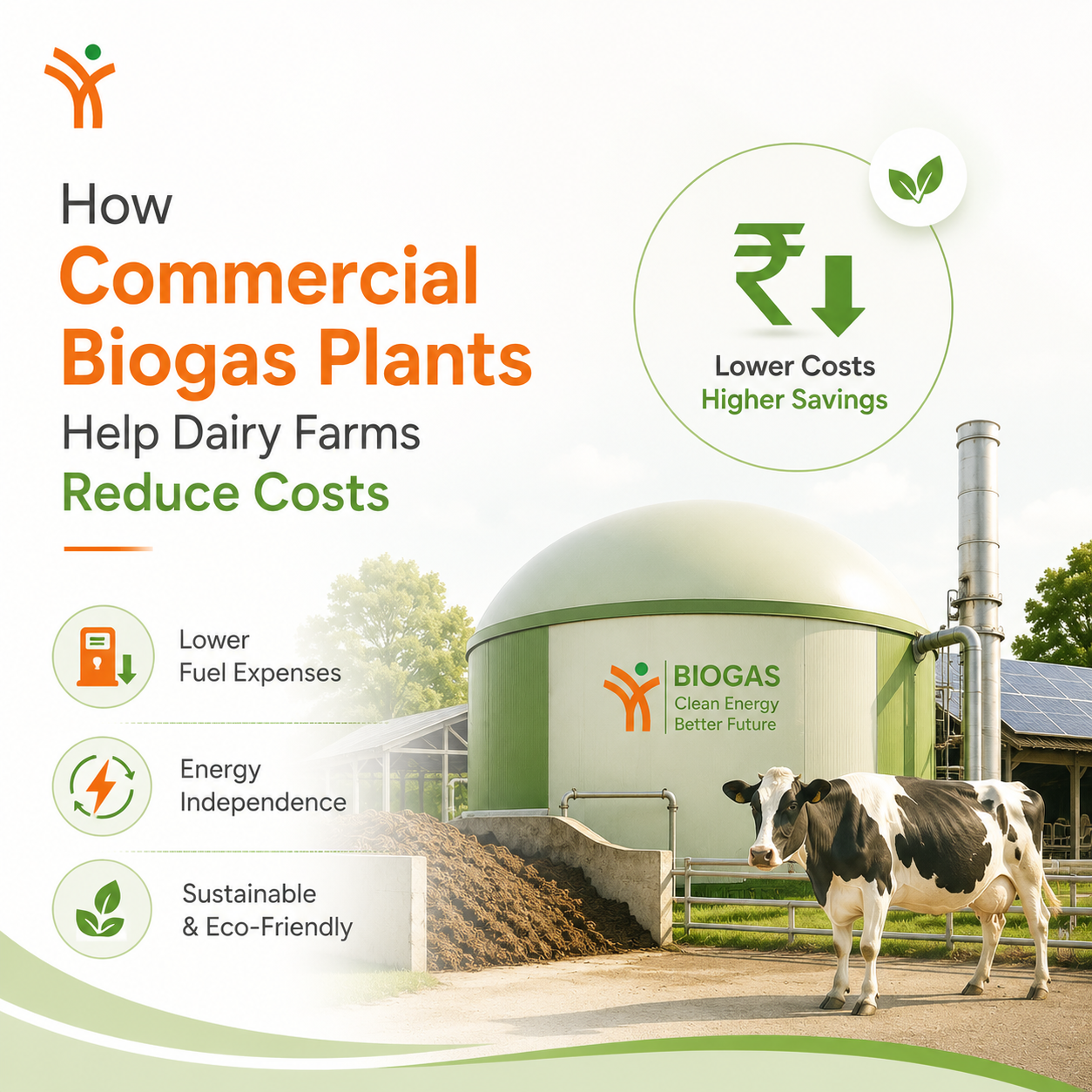
Businesses, farms, hotels, restaurants, food processing units, and institutions generate a large amount of organic waste every day. Managing this waste properly can be a challenge, especially when traditional disposal methods increase costs and environmental problems. A commercial biogas plant provides a practical way to manage organic waste while producing renewable energy.
A commercial biogas plant uses organic materials such as food waste, agricultural residue, animal dung, poultry litter, and other biodegradable waste to produce biogas through a natural process called anaerobic digestion. The generated biogas can be used for cooking, heating, electricity generation, and other commercial applications. The remaining slurry can also be used as nutrient-rich organic fertilizer.
What Is a Commercial Biogas Plant?
A commercial biogas plant is a large-scale system designed to process significant quantities of organic waste. Unlike small domestic systems, commercial plants are designed according to the daily waste availability, required gas production, available space, and energy requirements of a business or organisation.
The process takes place inside an airtight digester where microorganisms break down organic waste in the absence of oxygen. This produces biogas, which mainly contains methane and carbon dioxide. The gas is collected, stored, and supplied for different energy applications.
How Does a Commercial Biogas Plant Work?
The process starts with the collection and preparation of organic waste. The prepared waste is then fed into an anaerobic digester. Inside the digester, microorganisms naturally break down the material and produce biogas.
The biogas is collected through a gas storage system and can be purified when required before being used for cooking, heating, boilers, generators, or other applications. After digestion, the remaining bio-slurry is collected and can be used as organic manure because it contains useful nutrients.
5 Key Benefits of a Commercial Biogas Plant
1. Effective Organic Waste Management
A commercial biogas plant provides a systematic way to process large quantities of biodegradable waste. Food waste, agricultural residue, animal dung, and poultry litterd can be converted into useful resources instead of being disposed of through conventional methods.
2. Renewable Energy Generation
The biogas produced from organic waste can be used as a renewable source of energy. Depending on the plant design, businesses can use it for cooking, heating, steam generation, or electricity production.
3. Reduction in Energy Costs
Generating energy from waste can reduce dependence on conventional fuels. For example, a commercial biogas project at Downtown University uses biogas generated from food waste for cooking, helping reduce its dependence on commercial LPG.
4. Production of Organic Fertilizer
Biogas production also creates bio-slurry as a by-product. This nutrient-rich material can be used as organic fertilizer for agriculture, landscaping, and gardens, creating additional value from the waste.
5. Supports Sustainable Business Practices
By converting organic waste into renewable energy and useful fertilizer, commercial biogas systems can support waste reduction, resource recovery, and broader sustainability and ESG objectives.
Who Can Use a Commercial Biogas Plant?
Commercial biogas systems can be suitable for different sectors that generate substantial quantities of organic waste. These include poultry farms, dairy farms, cattle farms, hotels, restaurants, food processing units, institutions, and industrial facilities.
The right plant size and technology depend on factors such as the type and quantity of waste available, daily feedstock supply, energy requirements, land availability, and the intended use of the biogas.
Conclusion
A commercial biogas plant can turn an organic waste problem into a useful energy resource. By processing food waste, agricultural residue, animal dung, and other biodegradable materials, businesses can generate renewable biogas while also producing organic fertilizer.
With proper planning, plant sizing, waste management, and regular operation, commercial biogas technology can become an important part of a business's approach to renewable energy, waste management, and sustainable growth.
Domestic Biogas , Commercial Biogas , BioGas , Sewage Water Treatment Plant , Effluent Water Treatment Plant , Zero Liquid Discharge Water Treatment Plant

 English
 Arabic
 French
 Spanish
 Portuguese
 Deutsch
 Turkish
 Dutch
Dutch
 Italiano
 Russian
 Romaian
 Greek
Greek
 Bengali