


Build with Confidence: A Practical Guide to Consent to Establish in India
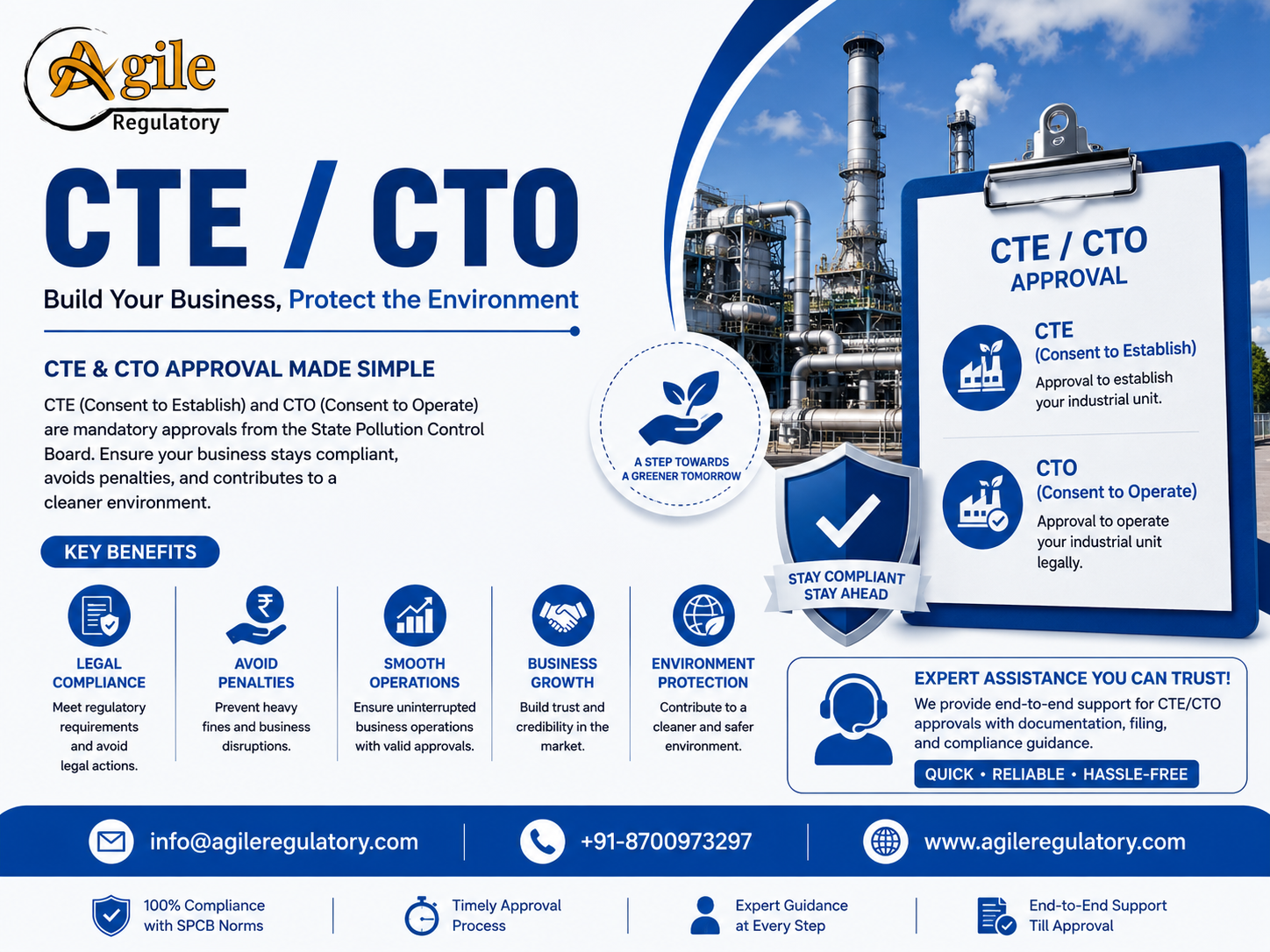
Starting an industrial project involves several decisions before the first machine is switched on. Land, building plans, machinery, utilities, manpower, raw materials, and environmental safeguards all need to be planned together. One environmental approval that can become particularly important during this stage is Consent to Establish.
For eligible industries and activities in Uttar Pradesh, environmental consent is generally addressed before the actual establishment of the project or activity. The Uttar Pradesh Pollution Control Board's online consent system explains that industries and activities requiring consent must obtain Consent to Establish before commencing the work of establishing the industry or activity.
Understanding when this consent applies, what information is required, and how the application moves through the online system can help businesses avoid expensive compliance mistakes.
What Does Consent to Establish Mean?
Consent to Establish, commonly called CTE, is an environmental approval considered at the pre-establishment stage of an eligible industrial project or activity.
Its purpose is to allow the pollution-control authority to evaluate the proposed activity and its potential environmental impact before the project is established. Information such as the proposed manufacturing process, production capacity, water consumption, emissions, wastewater, waste generation, and pollution-control measures can become relevant to the assessment.
It should not be confused with permission to start commercial production. After establishment, an eligible unit may need Consent to Operate before beginning production or operations, depending on the applicable requirements.
Why Is Pre-Establishment Approval Important?
Environmental compliance is easier to manage when it is incorporated into project planning from the beginning. A business that waits until construction or production is substantially complete may discover that its proposed pollution-control arrangements do not adequately address the applicable requirements.
The pre-establishment stage gives businesses an opportunity to consider environmental safeguards alongside the project design. This can include wastewater treatment, air-emission control, solid or hazardous waste management, water-use planning, and other measures relevant to the activity.
The applicable approval route depends on the industry's nature, scale, location, and pollution potential. Therefore, businesses should determine their requirements before beginning project establishment.
What Is a Pollution NOC Certificate?
Businesses often search for a Pollution NOC Certificate when they actually need environmental consent. The terminology can vary in everyday business communication, but applicants should identify the precise approval required for their project.
In Uttar Pradesh, the official pollution-control system separately identifies Consent to Establish and Consent to Operate. The government also lists Consent to Establish under the Air and Water Acts as a pre-establishment approval for applicable activities.
This distinction matters because submitting the wrong application can result in unnecessary delays.
When Do You Need an NOC from Pollution Control Board?
Whether an NOC from Pollution Control Board is required depends on the proposed activity and the applicable environmental framework. Businesses should not assume that every company requires the same approval.
Industrial units, manufacturing facilities, and other activities capable of generating emissions, effluents, or regulated waste may fall within consent requirements. The applicable category should be determined based on the actual business activity and relevant regulatory classification.
For a new project, environmental requirements should ideally be checked before construction and installation activities begin.
How to Apply for Consent to Establish
The application process in Uttar Pradesh is integrated with the state's digital single-window framework. Nivesh Mitra currently provides a sequence that includes identifying approvals, checking the comprehensive list, registering an account, completing the common application, applying for the relevant NOC or licence, and paying applicable fees.
The UP Pollution Control Board's online system also directs industry users to Nivesh Mitra for industry registration and application filing.
A typical application journey involves:
-
Identifying the applicable environmental approval.
-
Registering the business or unit on the relevant online system.
-
Completing the common application information.
-
Selecting the applicable pollution-control service.
-
Entering project and technical details.
-
Uploading supporting documents.
-
Paying the applicable consent fee.
-
Responding to departmental queries, if raised.
-
Completing scrutiny or inspection requirements where applicable.
-
Receiving or downloading the final approval through the designated system.
The exact workflow can vary according to the project and service.
Application for NOC from Pollution Control Board: What Information Is Needed?
An Application for NOC from Pollution Control Board should reflect the actual proposed project rather than generic information. The authority may require technical and financial details that allow it to assess the proposed activity.
Depending on the project, information can include:
-
Applicant and company details
-
Site address and location
-
Land-use information
-
Project report
-
Manufacturing process
-
Raw material details
-
Proposed products
-
Production capacity
-
Capital investment
-
Water consumption
-
Wastewater generation
-
Air-emission sources
-
Fuel consumption
-
Pollution-control equipment
-
Waste-management arrangements
-
Site and layout plans
-
Environmental safeguards
-
Applicable supporting certificates or permissions
The current UP SOP for Consent to Establish, for example, lists items such as land-use classification, capital investment certification, pollution-control financial provisions, consent fee, groundwater clearance where applicable, and STP proposals where applicable.
What Happens After Submission?
Submitting an application does not necessarily mean approval is automatic. The authority may scrutinize the information and supporting documents and may raise queries or require additional clarification.
This makes consistency particularly important. The production capacity mentioned in the project report should correspond with the application. Similarly, proposed pollution-control equipment should be realistic for the wastewater, emissions, or waste generated by the activity.
If a query is raised, the applicant should respond through the prescribed online process within the applicable timeframe.
Clearance from Pollution Control Board and Project Planning
A Clearance from Pollution Control Board should be treated as one component of a broader project-compliance strategy. Depending on the project, other permissions may also be required from different departments.
For example, a business may separately need approvals relating to land use, factory establishment, fire safety, electricity, groundwater, hazardous waste, or other sector-specific requirements.
Nivesh Mitra is designed as a single-window system for multiple business approvals in Uttar Pradesh, although the exact approvals required depend on the project.
Therefore, businesses should prepare a complete approval checklist rather than focusing on environmental consent in isolation.
Air Pollution Board and Water Pollution Requirements
Searches for Air Pollution Board or Air Pollution Control Board can sometimes create confusion about which authority handles environmental consent.
In India, state pollution-control boards administer consent mechanisms under the relevant water and air pollution laws. The UP Pollution Control Board explains that consent relates to discharge of effluent and emission of air pollutants and identifies separate consent provisions under the Water and Air Acts.
This means an applicant should evaluate both water-related and air-related pollution aspects of the proposed activity where applicable.
For example, a manufacturing unit may need to consider wastewater from its process as well as emissions from boilers, furnaces, generators, or other equipment.
Consent to Establish and Consent to Operate: The Difference
The phrase Consent to Establish and Consent to Operate refers to two different stages of environmental compliance.
CTE relates to the establishment stage. It addresses the proposed project before the industry or activity is established.
CTO, or Consent to Operate, is relevant at the operational stage. The UP Pollution Control Board states that Consent to Operate is required before actual commencement of production, including trial production, for activities requiring consent.
A business should therefore avoid treating CTE as a replacement for CTO. Both stages should be planned according to the applicable requirements.
Common Reasons for CTE Delays
Even when the project itself is eligible for consent, an application can encounter delays because of incomplete or inconsistent information.
Common issues include:
-
Incorrect industry category
-
Incomplete project report
-
Incorrect capital investment figures
-
Missing land or site documents
-
Inadequate pollution-control proposals
-
Incorrect production capacity
-
Missing water or wastewater details
-
Incomplete emission information
-
Improper waste-management details
-
Failure to answer online queries
-
Applying for the wrong service
A technical pre-check before submission can help reduce many of these issues.
What Happens After Consent to Establish?
Once the project is established according to the applicable approved conditions, the business should review its next environmental compliance requirements before commencing production.
For eligible activities, this may include applying for Consent to Operate and obtaining other authorizations related to waste or environmental management.
The business should also ensure that the pollution-control systems described in the application are actually installed and functional. Differences between the approved project and the facility ultimately established can create compliance problems.
Can a Consultant Help With the Process?
Environmental applications often combine technical, financial, legal, and project information. A business owner may understand the manufacturing process but still find it difficult to translate that information into the format required for an environmental application.
A professional consultant can help identify the appropriate consent, prepare a documentation checklist, review project information, coordinate the online filing process, and assist in responding to regulatory queries.
However, businesses should ensure that the information submitted is accurate and reflects the actual project. Professional assistance should improve compliance preparation rather than replace the applicant's responsibility for correct information.
Agile Regulatory assists businesses with regulatory registrations and compliance processes, helping applicants organize documentation and navigate applicable approval procedures.
Conclusion
Obtaining Consent to Establish at the correct stage can help businesses address environmental compliance before an industrial project becomes operational. The approval is focused on the establishment stage and should be distinguished from Consent to Operate, which applies to the operational stage for activities requiring it.
From identifying the correct category to preparing project information, submitting the application online, paying applicable fees, and responding to queries, careful preparation can make the process more manageable.
Businesses planning a project in Uttar Pradesh should review their environmental requirements early and use the current government procedures rather than relying on outdated application guides. This approach can reduce avoidable delays and create a stronger compliance foundation before commercial operations begin.
FAQs
1. What is Consent to Establish?
Consent to Establish is an environmental consent for eligible activities at the pre-establishment stage. It allows the pollution-control authority to assess the proposed project and its pollution-control arrangements.
2. Is Consent to Establish required before construction?
For activities requiring consent, the applicable CTE should be obtained before the actual establishment of the industry or activity, according to the relevant requirements.
3. Is CTE the same as Consent to Operate?
No. CTE relates to establishing the project, while CTO is associated with operating the facility after establishment.
4. Can I apply for CTE online in Uttar Pradesh?
Yes. Uttar Pradesh provides online mechanisms for pollution-control consent applications through its single-window system and associated online consent system.
5. What documents are needed for CTE?
Requirements vary by project, but may include project details, site information, land-use documents, investment details, manufacturing information, pollution-control proposals, and other applicable documents.
6. Is a Pollution NOC the same as CTE?
The term Pollution NOC is often used informally, but applicants should identify the exact environmental approval applicable to their project. In Uttar Pradesh, CTE is a specific consent category.
7. Can CTE be obtained after production starts?
CTE is intended for the establishment stage. Businesses should determine and obtain applicable approvals before starting activities that require prior consent.
8. Does CTE eliminate the need for other environmental approvals?
Not necessarily. Additional authorizations may apply depending on the project's waste streams, activities, location, and applicable environmental rules.

 English
 Arabic
 French
 Spanish
 Portuguese
 Deutsch
 Turkish
 Dutch
Dutch
 Italiano
 Romaian
 Portuguese (Brazil)
 Greek
Greek
 Bengali