


Types of Web & Mobile App Development for Modern Businesses
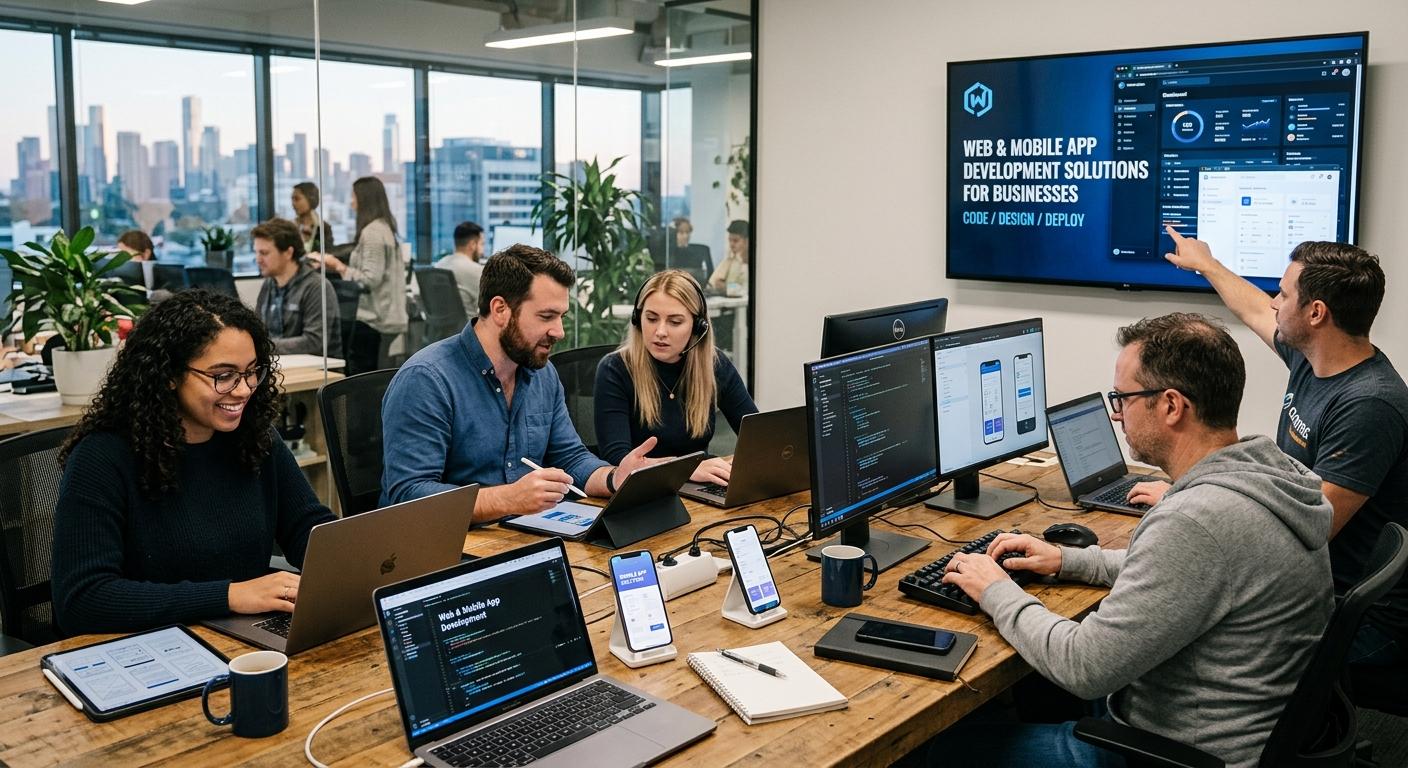
Businesses today depend on digital platforms to connect with customers and manage their services. Websites and mobile applications have become common tools for shopping, banking, communication, education, healthcare, entertainment, and business management. Different businesses have different needs, so there is no single type of application that works for everyone. Web & Mobile App Development includes several approaches that can be selected based on the purpose, users, features, and budget of a project.
Understanding the different types of development can help businesses choose the right solution. Web applications can provide services through browsers, while mobile applications are designed for smartphones and tablets. Modern projects may also include cloud systems, Network & Cloud Security, and Blockchain App Development when these technologies support the business goal.
Static Web Development
Static websites are one of the simplest types of web development. They usually contain fixed pages with information such as company details, services, contact information, and basic product descriptions. The content does not change based on user actions or stored data.
Static websites are useful for businesses that mainly need an online presence. They can be fast, simple, and easy to maintain. Since they do not normally require complex databases or user accounts, development can also be more straightforward.
However, static websites are not suitable for services that require regular user interaction, online payments, customer dashboards, or large amounts of changing information.
Dynamic Web Development
Dynamic websites provide content that can change based on user activity, stored information, or other conditions. These websites usually connect with databases and a back-end system.
Examples include online stores, news websites, customer portals, and business platforms. Users may create accounts, submit forms, search information, or manage their personal details.
Dynamic web development is useful for businesses that need more interaction than a basic website can provide. The system can also be updated and expanded as business needs change.
Web Applications
Web applications are more interactive than standard websites. Users can perform specific tasks through the browser, often without needing to install software on their devices.
Examples include online banking systems, project management platforms, booking systems, customer relationship tools, and SaaS products. Users can log in, manage information, complete tasks, and interact with other features.
Web applications can work across different devices as long as users have a supported browser and internet connection. This makes them useful for businesses that want to provide services to a large audience.
E-Commerce Application Development
E-commerce applications are designed for buying and selling products or services online. They can be developed for websites, mobile devices, or both.
These applications usually include product catalogs, search features, shopping carts, payment systems, customer accounts, order tracking, and administration tools. Businesses can also connect them with inventory and delivery systems.
A good e-commerce platform should be easy to navigate and should provide a safe checkout process. Security is especially important because these systems may handle customer and payment information.
Native Mobile App Development
Native mobile applications are created specifically for a particular operating system, such as Android or iOS. Developers use technologies designed for the target platform.
One major benefit of native development is that applications can make strong use of device features. They can provide good performance and can work closely with functions such as cameras, GPS, notifications, and biometric systems.
Native development can be a good choice for applications that require high performance or deep access to mobile hardware. However, businesses may need separate development work for different operating systems.
Cross-Platform App Development
Cross-platform development allows developers to create applications that can run on multiple operating systems using a shared codebase. This approach can reduce the time and effort needed to create separate applications.
It is useful for businesses that want to launch an application on Android and iOS while keeping development more manageable. The final application can still provide a mobile-friendly experience across different devices.
The choice between native and cross-platform development depends on the application's features, performance needs, target audience, and available budget.
Progressive Web Applications
Progressive Web Applications, often called PWAs, combine some features of websites and mobile applications. They can be accessed through a browser but can also provide features such as offline access, home-screen installation, and notifications on supported devices.
PWAs can be useful for businesses that want a mobile-friendly experience without building fully separate native applications. They can also load quickly and work across different screen sizes.
This type of development is suitable for services where browser access and mobile convenience are both important.
Hybrid App Development
Hybrid applications combine web technologies with a mobile application structure. They allow developers to reuse web-based code while packaging the application for mobile devices.
This approach can make development more efficient when a business needs similar features across multiple platforms. Hybrid applications can work well for many business services, although performance requirements should be considered before choosing this method.
Enterprise Application Development
Enterprise applications are built for larger organizations and are designed to support internal business processes. They can manage areas such as employee records, sales, finance, inventory, communication, and project work.
These applications often connect with existing business systems. They may also have different access levels so employees can see only the information needed for their roles.
Enterprise systems need careful planning because they can involve large amounts of data and many users. Reliability, performance, and security are important parts of this type of development.
Cloud-Based Application Development
Cloud-based applications use cloud platforms to host software, databases, and other services. Users can access these applications through the internet, while businesses can manage their systems through cloud infrastructure.
Cloud development can provide flexibility because resources can be increased as user demand grows. It can also support remote access, backups, and easier deployment.
However, businesses must protect cloud systems against unauthorized access and other online risks. Network & Cloud Security should therefore be included during planning and development.
API-Based Application Development
APIs allow different applications and services to communicate with each other. API-based development is useful when a business application needs to connect with external platforms.
For example, an application may connect with a payment service, map provider, email platform, accounting system, or customer management tool. APIs can help transfer information between these systems without requiring users to enter the same data multiple times.
A well-designed API structure can also make future integrations easier. Security controls are important because APIs can provide access to business data and functions.
Secure Web and Mobile Development
Security is an important part of every digital application. Websites and mobile applications may store customer information, business data, passwords, payment details, and other valuable information.
Network & Cloud Security focuses on protecting networks, servers, cloud systems, and connected services. Developers can use secure connections, encryption, access controls, monitoring, and regular testing to reduce security risks.
Security should not be treated as a final step. It should be included throughout the development process, from system design to testing and ongoing maintenance.
Blockchain App Development
Blockchain App Development is another specialized area of modern application development. It focuses on applications that use blockchain networks, smart contracts, digital assets, or distributed records.
Blockchain can be useful when a business needs a shared record of transactions that can be verified by different participants. Possible uses include digital payments, supply chain tracking, identity systems, asset management, and decentralized applications.
Blockchain is not necessary for every project. Businesses should first identify a clear need before choosing this technology. When used for the right purpose, it can provide useful features that traditional application systems may not offer.
Artificial Intelligence-Based Applications
Artificial intelligence can also be included in modern web and mobile applications. AI-powered systems can analyze data, answer questions, provide recommendations, automate tasks, or improve search functions.
For example, an online store can use AI to recommend products, while a customer service application can use an AI assistant to answer common questions.
AI-based applications require careful planning because they may process large amounts of data. Businesses should focus on useful features rather than adding AI without a clear purpose.
Choosing the Right Development Type
Choosing the right development type depends on what the business needs to achieve. A simple company website may only require static web development, while an online marketplace may need a full web and mobile platform.
Businesses should consider their target users, required features, budget, timeline, security needs, and future growth before selecting a technology. It is also important to think about maintenance because applications need regular updates after launch.
A clear development plan can reduce unnecessary costs and help ensure that the final application solves the intended business problem.
Conclusion
There are many types of Web & Mobile App Development, and each approach has its own purpose. Static websites, dynamic websites, web applications, native apps, cross-platform apps, PWAs, hybrid applications, enterprise systems, and cloud-based platforms can all serve different business needs.
Modern technologies can further expand what applications can do. Network & Cloud Security can help protect digital systems, while Blockchain App Development can support applications that need verified and shared records.
The best development approach is not always the most advanced one. It is the one that matches the business goal, user needs, budget, security requirements, and future plans. With proper planning and development, businesses can create digital platforms that are useful, secure, and ready to grow.

 Arabic
 French
 Spanish
 Portuguese
 Deutsch
 Turkish
 Dutch
Dutch
 Italiano
 Russian
 Romaian
 Portuguese (Brazil)
 Greek
Greek
 Bengali