


The Connection Between Scalp Inflammation, Dysbiosis, and Hair Loss
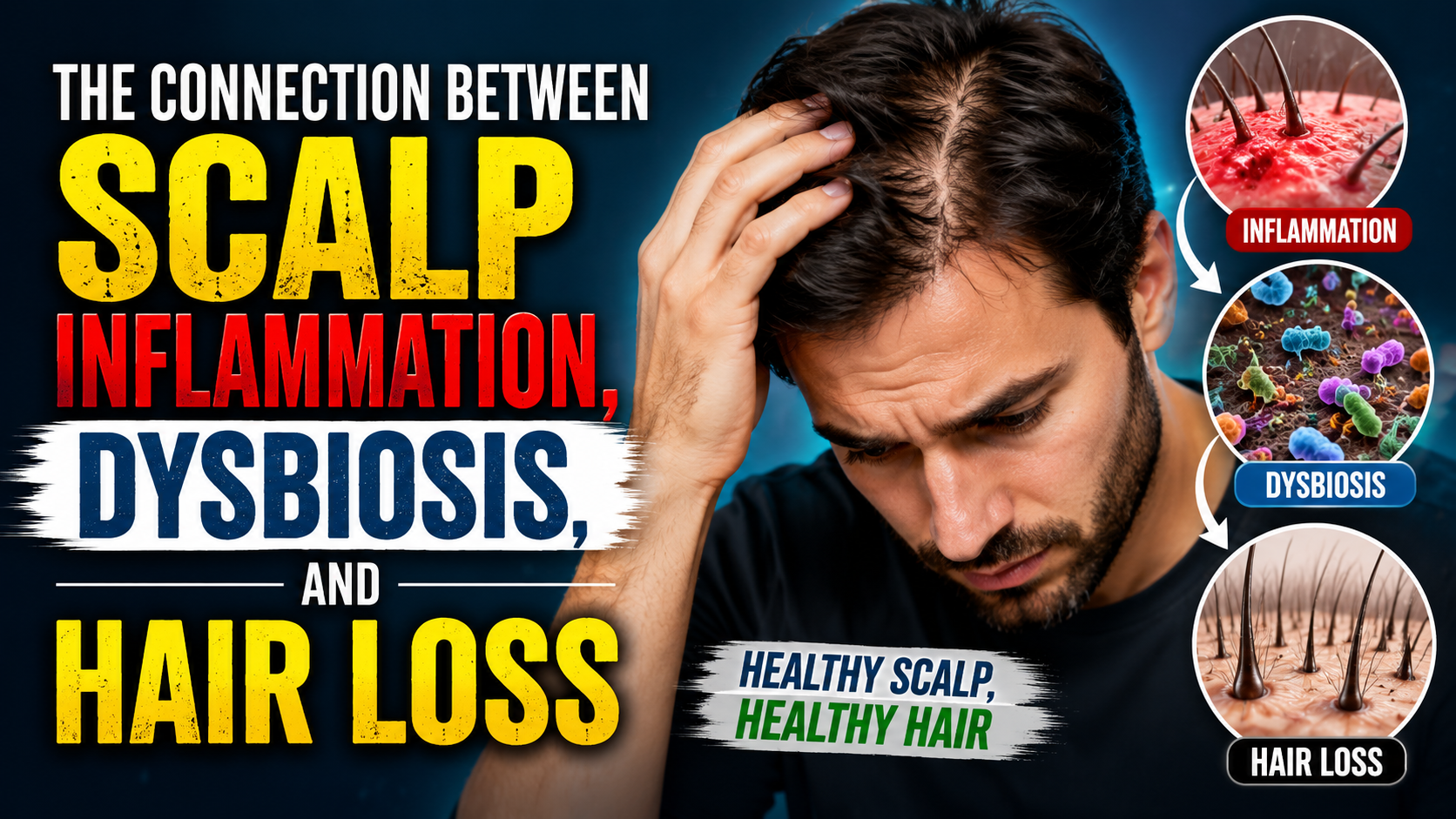
Have you ever wondered why your scalp becomes itchy, oily, irritated, or uncomfortable—and whether your scalp health could be connected to hair loss?
Your scalp is home to a complex microbiome, made up of bacteria, fungi, and other microorganisms. These microorganisms are not necessarily harmful. In fact, a healthy scalp depends on maintaining a balanced microbial environment.
The problem can occur when this balance is disrupted. This condition is commonly referred to as scalp dysbiosis.
What Is Scalp Dysbiosis?
Scalp dysbiosis means that the normal balance of microorganisms living on the scalp has changed. Common microorganisms found on the scalp include bacteria from groups such as Cutibacterium, Corynebacterium, and Staphylococcus, along with fungi such as Malassezia.
Having these microorganisms is normal. The concern is when changes in the scalp environment allow certain organisms to become disproportionately abundant or contribute to inflammation.
Think of your scalp microbiome as a small ecosystem. When the ecosystem remains balanced, the scalp can function normally. When that balance changes, scalp irritation and other problems may develop.
What Can Disturb the Scalp Microbiome?
Several factors can affect the scalp environment.
1. Excessive Use of Harsh Hair Products
Some chemical treatments and harsh hair-care products can irritate the scalp or alter its normal barrier function.
Frequent use of strong products, excessive coloring, chemical treatments, or inappropriate scalp products may contribute to dryness, irritation, or inflammation in sensitive individuals.
However, not every chemical product automatically causes dysbiosis. The effect depends on the product, concentration, frequency of use, and individual scalp sensitivity.
2. Heat and Excessive Sweating
Hot and humid weather can increase sweating and oil production. A warm, oily, and moist scalp can create an environment in which certain microorganisms thrive. For some people, this may contribute to dandruff, itching, or inflammatory scalp conditions. This is one reason scalp hygiene can become especially important during hot weather.
What Is the Role of Malassezia?
Malassezia is a yeast that naturally lives on human skin, including the scalp. Under certain conditions, changes in sebum and the scalp environment can encourage Malassezia to contribute to inflammation. It is particularly associated with conditions such as dandruff and seborrheic dermatitis.
Malassezia can metabolize components of sebum and produce fatty acids, including oleic acid. In susceptible individuals, these substances can contribute to irritation and disruption of the skin barrier.
This can lead to symptoms such as:
-
Itching
-
Redness
-
Flaking
-
Excessive oiliness
-
Scalp sensitivity
-
Inflammation
Can Scalp Inflammation Cause Hair Loss?
Scalp inflammation can affect the hair-growth environment. When the scalp barrier is irritated or inflamed, the surrounding hair follicles may be affected. Inflammatory scalp disorders can sometimes be associated with increased shedding or worsening of existing hair loss. However, it is important not to assume that Malassezia or scalp bacteria are the direct cause of every case of hair loss.
Hair loss can have many different causes, including:
-
Genetic hair loss
-
Hormonal changes
-
Nutritional deficiencies
-
Thyroid or other medical conditions
-
Stress or illness
-
Certain medications
-
Inflammatory scalp disorders
-
Aging
Proper diagnosis is therefore essential.
What About Free Radicals and Hair Follicles?
Inflammation can increase oxidative stress in tissues. Excessive oxidative stress may affect cellular structures, including cells involved in hair-follicle function.
Rather than thinking of the scalp as literally being "eaten away," it is more accurate to understand the process as an unhealthy scalp environment potentially contributing to inflammation and oxidative stress.
This distinction is important because treating the underlying scalp condition can be more effective than simply trying to cover up symptoms.
Signs Your Scalp May Need Attention
Pay attention if you regularly experience:
-
Persistent dandruff
-
Severe itching
-
Red or irritated skin
-
Excessive scalp oiliness
-
Burning or tenderness
-
Sudden increase in hair shedding
-
Visible thinning or a receding hairline
If these symptoms continue despite basic scalp care, a dermatologist or qualified hair-loss specialist can help identify the underlying cause.
How Can You Support a Healthy Scalp?
A few simple habits can help maintain a healthier scalp environment:
Keep your scalp clean: Wash regularly according to your scalp type and level of oiliness.
Avoid unnecessary harsh treatments: Don't repeatedly expose your scalp to irritating products if they cause burning, redness, or discomfort.
Manage dandruff properly: Persistent dandruff may require a medicated shampoo or other treatment recommended by a healthcare professional.
Protect your scalp from excessive heat and sun: Hats or other appropriate head coverings can reduce direct exposure.
Don't ignore progressive hair loss: If your hair density continues to decrease, professional evaluation is more useful than relying solely on home remedies.
When Should You Consider Professional Hair-Loss Treatment?
If you have progressive thinning or a receding hairline, identifying the cause should come before considering a hair transplant.
For people researching the best hair transplant in Tehran, look beyond marketing claims. Consider the surgeon's qualifications, experience, diagnosis process, donor-area assessment, surgical technique, and evidence of natural-looking results.
For those searching for the Best Hair Transplant in Ludhiana, the same approach is important. A responsible consultation should determine whether you are a suitable candidate and whether your donor hair can support the desired result.
A hair transplant can restore hair in appropriate candidates, but it does not necessarily treat the underlying cause of ongoing hair loss. Medical management may also be recommended depending on the diagnosis.
Conclusion
Your scalp is a living ecosystem containing many microorganisms, and maintaining a healthy balance is important for scalp health.
Changes in the scalp environment can contribute to inflammation and conditions such as dandruff or seborrheic dermatitis. In some people, scalp inflammation may also contribute to increased shedding or worsen existing hair concerns.
So, instead of thinking that your scalp is literally being "eaten," think of it as an ecosystem that needs the right balance.
Healthy scalp care starts with understanding the cause—not simply treating the symptoms.

 Arabic
 French
 Spanish
 Portuguese
 Deutsch
 Turkish
 Dutch
Dutch
 Italiano
 Russian
 Romaian
 Portuguese (Brazil)
 Greek
Greek
 Bengali