


Engineering Adaptability of Double Wall Fabric
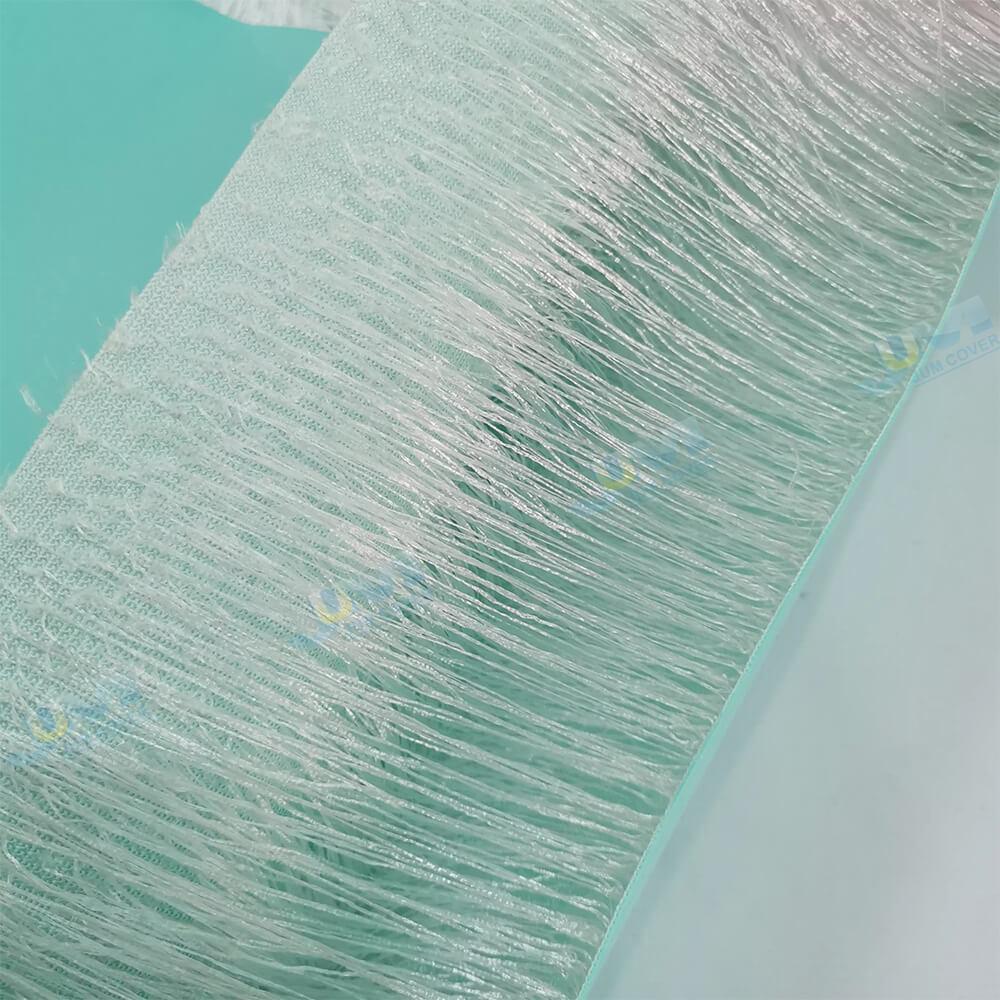
As technical textiles continue to expand into diverse engineering environments, material adaptability across application scenarios becomes increasingly important. Double Wall Fabric demonstrates strong application flexibility by offering a woven structure that can be engineered to meet distinct functional demands across architectural, industrial, transportation, and protective uses, without requiring fundamentally different material systems.
In architectural and spatial design applications, double wall fabric is valued for its ability to maintain form while allowing controlled flexibility. The integrated dual-layer structure supports large-format installations such as flexible partitions, spatial enclosures, and tension-supported elements. The internal connections between layers help stabilize geometry over wide surface areas, reducing sagging or distortion. This makes the fabric suitable for designs where dimensional consistency and visual uniformity are critical under variable environmental conditions.
Industrial applications often prioritize structural reliability and resistance to repeated mechanical stress. Double wall fabric meets these requirements by distributing load across its interconnected layers, improving performance in environments where materials are subjected to vibration, movement, or pressure variation. The fabric can be engineered to support reinforcement functions, protective barriers, or flexible housings without compromising handling efficiency. Shanghai Ming Shida International Trading Company works with industrial clients to align fabric structure with operational requirements, ensuring consistent performance in demanding settings.
In transportation-related uses, material weight, durability, and adaptability are key considerations. Double wall fabric offers a balance between structural support and lightweight construction, making it suitable for interior components, protective covers, and flexible containment solutions. The woven-in internal structure reduces the need for additional reinforcement layers, helping manage overall material weight while maintaining functional integrity. The fabric’s ability to accommodate motion and vibration further supports its use in dynamic environments.
Protective and safety-oriented applications benefit from the fabric’s capacity to absorb and distribute energy. The internal spacing between layers can act as a buffer zone, reducing the impact of external forces. This characteristic is useful in applications where cushioning, separation, or controlled deformation is required. By adjusting weave density and connection frequency, the fabric can be tailored to specific protective functions without altering the basic material concept.
Application-specific testing plays a central role in ensuring suitability across different environments. Load-bearing evaluations, vibration resistance tests, and deformation recovery assessments help validate performance under realistic conditions. Environmental exposure testing further ensures that the fabric maintains stability when subjected to temperature changes, humidity, or mechanical wear. These evaluations support informed material selection for each application scenario.
From an engineering perspective, the versatility of double wall fabric simplifies design and manufacturing workflows. A single material platform can be adapted to multiple uses through structural adjustments rather than material substitution. This reduces complexity in sourcing and production while supporting consistent quality control. Shanghai Ming Shida International Trading Company emphasizes this adaptable approach, helping clients deploy textile solutions that align with both functional and operational goals.
Fabrication compatibility is another advantage across application sectors. Double wall fabric maintains internal stability during cutting, joining, and shaping processes, allowing integration into complex assemblies without compromising performance. This supports efficient manufacturing across architectural installations, industrial components, and transport-related products, where precision and reliability are essential.
Shanghai Ming Shida International Trading Company continues to support diverse application needs by coordinating material structure, processing standards, and performance evaluation for double wall fabric solutions. Through careful alignment of textile engineering and real-world requirements, the fabric can be effectively adapted to a wide range of functional environments. More information on application-driven double wall fabric solutions is available at https://www.shanghaimsd.com/news/why-is-double-wall-fabric-an-ideal-choice-for-multiple-applications.html .

 English
 Arabic
 French
 Spanish
 Portuguese
 Deutsch
 Turkish
 Dutch
Dutch
 Italiano
 Russian
 Romaian
 Greek
Greek
 Bengali