


Custom Metal Grinders: Precision Tools Built for Your Workflow
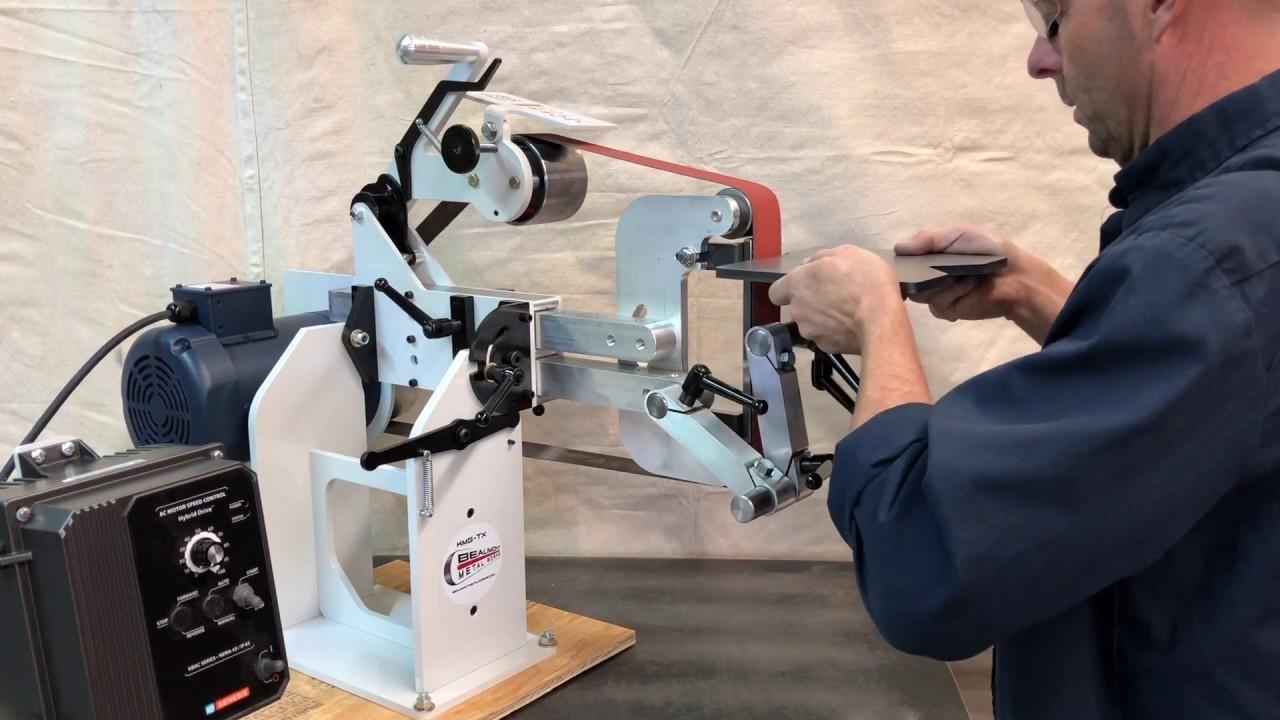
In modern manufacturing, efficiency isn’t just a competitive advantage, it’s a necessity. Whether shaping aerospace components, finishing automotive parts, or preparing surfaces for high-precision assemblies, metal grinding plays a critical role in turning raw material into a refined product.
But as manufacturing evolves, so too does the need for tools that adapt. Enter custom metal grinders, precision machines engineered not just to grind metal, but to fit perfectly into your workflow.
The Role of Grinding in Precision Manufacturing
Grinding is one of the final steps in many production processes. It removes small amounts of material to achieve exact dimensions, smoother surfaces, and tight tolerances that milling or turning can’t reliably deliver. Impressively, grinding can achieve surface finishes and dimensional accuracy within microns — making it indispensable for:
· High-speed machinery components
· Aerospace and defense parts
· Medical implants and instruments
· Precision tools and dies
· Automotive engine and transmission components
Standard grinders work well for common applications. But when you need exact performance, integrated workflow automation, or specialized geometries, custom solutions start to shine.
What Makes a Grinder “Custom”?
At its core, a custom metal grinder is engineered to meet the specific needs of a workflow or part design. Unlike off-the-shelf machines, which follow a one-size-fits-many approach, custom grinders are designed with your process in mind.
Key customization options include:
1. Machine Configuration
Custom grinders can be horizontal, vertical, or even multi-axis. Some applications require linear grinding, others contour grinding, or simultaneous multi-axis motion. A custom solution lets you choose the best geometry to match your part profile.
2. Grinding Wheel Design
Grinding wheels aren’t all the same. They come in different compositions — aluminum oxide, silicon carbide, cubic boron nitride (CBN), and diamond — each suited to specific metals or hardness levels. Custom grinders allow wheel selection based on:
· Workpiece material
· Required surface finish
· Production speed
Wheel life optimization
3. Automation and Integration
In automated production lines, manual loading and unloading add cycle time and labor cost. Custom grinders can be designed with automated part handling, robotic arms, conveyors, and sensors that integrate directly with CNC machining cells or ERP systems.
4. Software and Controls
Modern grinding relies heavily on precision motion control. Custom machines can be programmed with proprietary software tailored to your operations, enabling:
· Adaptive grinding paths
· Real-time feedback loops
· Process monitoring dashboards
· Seamless communication with factory networks
· Advantages of Custom Metal Grinders
· Precision That Standard Machines Can’t Match
Because custom grinders are tailored to part geometry and material, they deliver greater accuracy and repeatability. Standard machines, while versatile, often compromise on performance for flexibility. A custom machine eliminates the guesswork, delivering consistent results batch after batch.
Increased Throughput and Efficiency
A machine designed for a specific task often runs faster and with fewer adjustments. Custom grinders reduce setup time, minimize scrap, and ensure that each cycle adds value — boosting overall throughput without sacrificing quality.
Lower Long-Term Cost of Ownership
At first glance, custom equipment may seem more expensive than generic grinders. However, long-term savings often exceed the initial investment through:
· Less rework and waste
· Reduced labor costs
· Longer wheel and tooling life
· Higher uptime due to optimized processes
· Safety and Ergonomics
By integrating guards, sensors, and automation, custom grinders can reduce operator exposure to hazards. Ergonomic design also minimizes repetitive strain on workers, improving workplace safety and satisfaction.
How Custom Grinders Are Designed
Designing a custom grinding solution is a collaborative process that typically includes the following phases:
1. Workflow Analysis
Engineers begin by understanding your production goals, current bottlenecks, part complexities, and throughput targets. This step ensures the solution aligns with real-world needs rather than hypothetical specs.
2. CAD and Simulation
Using advanced Computer-Aided Design (CAD) and simulation software, designers build a virtual prototype of the grinder. Simulations validate motion paths, wheel contact, heat generation, and other critical variables before physical build starts.
3. Prototype and Testing
A prototype or pilot machine is often constructed for testing. Engineers validate key performance indicators (KPIs) such as:
· Surface finish quality
· Dimensional accuracy
· Cycle time
· Tool wear rates
· Integration with existing equipment
Feedback loops at this stage allow fine-tuning before full production deployment.
4. Production and Deployment
Once finalized, the custom grinder is built, tested, and installed. Technicians provide training, and many suppliers offer ongoing support and maintenance plans to ensure long-term success.
Key Considerations Before Ordering a Custom Grinder
If you’re considering a custom metal grinding solution, here are important questions to ask:
What Are Your Precision Requirements?
Define tolerance goals clearly. Are you grinding to ±0.005 mm tolerances, or is ±0.05 mm sufficient? The precision target impacts machine design, wheel choice, and control systems.
What Materials Are You Grinding?
Different metals respond differently to grinding. Hardened steels, titanium, aluminum, and exotic alloys all require specific wheel types and spindle speeds.
What Is Your Production Volume?
Low annual volumes may favor flexible machines with easier setup, while high-volume production justifies investment in high-speed, fully automated grinders.
How Will It Integrate With Your Workflow?
Consider the whole process — loading/unloading, inspection stations, data capture, and networking. A custom grinder should enhance your workflow, not sit in a silo.
Industry Applications: Real Examples
Aerospace
Aircraft parts often require extremely tight tolerances and smooth finishes for safety and performance. Custom grinders can handle complex profiles on landing gear, turbine blades, and structural components — balancing precision with heat control to prevent metallurgical damage.
Automotive
In high-volume automotive lines, custom cylindrical grinders can grind crankshafts, camshafts, and transmission gears to exact dimensions — often with integrated inspection systems to maintain quality at scale.
Medical Devices
Medical implants, like hip joints and dental tools, require precision surface finishing and biocompatible surfaces. Custom grinders help achieve the necessary smoothness and geometry for both function and regulatory compliance.
Tool & Die
Toolmakers demand repeatability and surface quality. Custom solutions can grind punches, dies, and jigs with exact fits that extend tool life and improve assembly accuracy.
Future of Custom Grinding Technology
Looking ahead, trends in custom metal grinders include:
AI-assisted process control that adapts grinding parameters in real time
Integrated metrology, where measurement and correction happen in one pass
Advanced automation with machine vision
Edge computing and predictive maintenance to minimize downtime
These advancements reinforce the value of custom grinders as more than machines — they become intelligent partners in manufacturing.

 English
 Arabic
 French
 Spanish
 Portuguese
 Deutsch
 Turkish
 Dutch
Dutch
 Russian
 Romaian
 Portuguese (Brazil)
 Greek
Greek
 Bengali