


Time in Tokyo Guide Check Japan Time Zone and Current Time
Time in Tokyo Guide to Understanding Japan Time Clearly
Understanding the time in Tokyo matters more than many people expect. Whether you are planning a video call, booking a flight, following live events, or working with a team in Japan, time confusion can cause real problems. Missed meetings, late messages, and wrong assumptions often start with a simple misunderstanding.
The time in Tokyo follows clear rules, but those rules differ from many other countries. Tokyo local time stays consistent all year, yet it often feels confusing to people outside Japan. This guide explains Japan current time in plain language, using practical examples and real-world context so you can rely on it with confidence.
What time zone does Tokyo use?
Tokyo uses Japan Standard Time, often shortened to JST. The time in Tokyo is always nine hours ahead of Coordinated Universal Time, also known as UTC+9.
This means Tokyo local time does not change with seasons. There is no summer clock shift. Once you understand this rule, calculating Japan current time becomes much easier.
Here is what people often miss. Japan uses one single time zone across the entire country. From Tokyo to Osaka to Sapporo, the time stays the same.
Does Tokyo observe daylight saving time?
No, Tokyo does not observe daylight saving time. The time in Tokyo remains stable throughout the year.
This surprises many visitors from North America and Europe. In those regions, clocks often move forward or backward once or twice a year. Japan stopped using daylight saving time decades ago and has not returned to it.
Now, this is where things change. Even though Tokyo local time never shifts, your local time might. This means the time difference between your location and Japan current time can change during the year.
Why does the time difference with Tokyo change?
The time in Tokyo stays fixed, but many other countries adjust their clocks. When your country enters or exits daylight saving time, the gap between your clock and Tokyo local time changes.
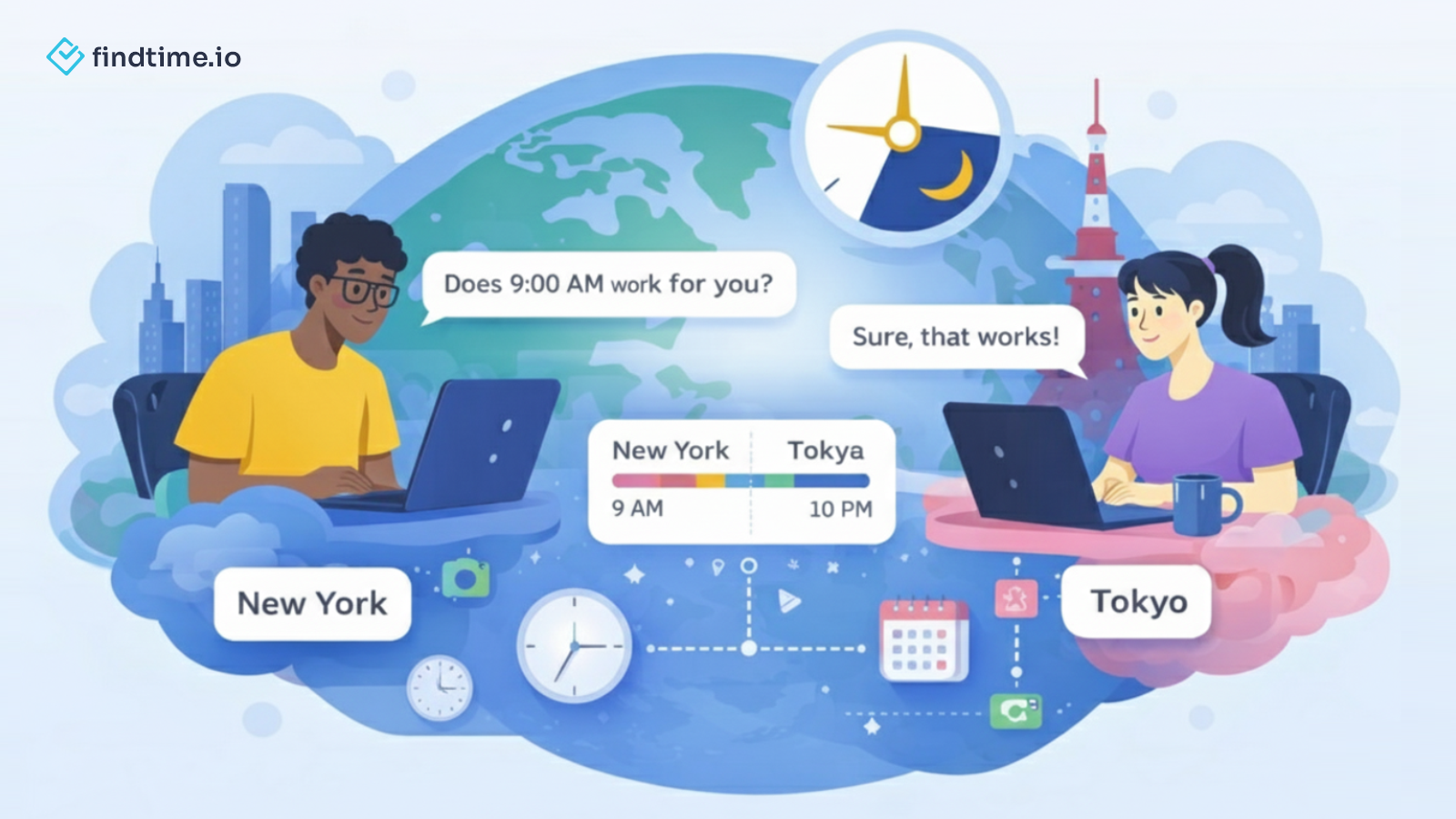
For example, Tokyo is usually 14 hours ahead of Eastern Time in the United States. During parts of the year, that gap becomes 13 hours. The same pattern applies to Europe, Australia, and other regions.
Here is what most people miss. The confusion often comes from assuming Japan follows the same clock rules as other countries. It does not.
How to calculate the current time in Tokyo
Calculating the time in Tokyo starts with knowing your local time zone and whether daylight saving applies to you.
If you are in UTC, add nine hours. If you are in London, add either nine or eight hours depending on the season. If you are in New York, add either 14 or 13 hours depending on the month.
A simple way to avoid mistakes is to think in UTC first. Once you know Japan current time is always UTC+9, everything else becomes a conversion step.
Why accuracy matters when dealing with Japan time
The time in Tokyo plays a role in many professional and personal situations. Business calls, online classes, live streams, and financial markets often depend on precise timing.
Japanese work culture values punctuality. Being late, even by a few minutes, can feel careless. This makes understanding Tokyo local time more than a technical detail.
Here is a subtle point. Many scheduling errors happen when people assume midnight boundaries incorrectly. Japan current time may already be on the next day when it is still evening where you live.
Common mistakes people make with time in Tokyo
One common mistake is assuming Japan uses multiple time zones. It does not. The time in Tokyo matches the entire country.
Another mistake is forgetting date changes. A meeting at 9 a.m. Tokyo time might be scheduled for the previous evening in another country. The date difference matters as much as the hour.
Some people also rely on outdated daylight saving assumptions. Japan current time has stayed stable for years, and that stability is intentional.
How time in Tokyo affects travel planning
Travel planning often depends on understanding the time in Tokyo accurately. Jet lag, hotel check-ins, and transportation schedules all follow local time.
Flights arriving in Tokyo may land early in the morning local time, even if you departed the previous day. This can feel disorienting without a clear time reference.
Here is what helps. Start adjusting your mental clock before departure. Knowing Tokyo local time during the flight makes arrival smoother.
Time in Tokyo for remote work and global teams
Remote work has made the time in Tokyo more relevant than ever. Teams often stretch across continents, and Japan sits far from many major business hubs.
Tokyo local time often overlaps briefly with Europe and more comfortably with parts of Asia and Australia. For the Americas, meetings often fall early in the morning or late at night.
A practical insight is to rotate meeting times. This avoids always burdening one region and shows respect for Japan current time and work hours.
How events and broadcasts use Japan time
Major events in Japan announce schedules using the time in Tokyo. Sports, concerts, product launches, and conferences usually list Japan Standard Time first.
Viewers outside Japan must convert carefully. A small error can mean missing a live event entirely.
Here is the pattern to remember. If an event is listed for the evening in Tokyo, it may happen earlier the same day in Europe and even earlier in the Americas.
Is Tokyo time the same as other Asian cities?
The time in Tokyo matches some Asian cities but not all. Seoul shares the same UTC+9 offset. Beijing, Shanghai, and Singapore are one hour behind.
This difference matters when coordinating across Asia. Assuming all Asian cities share Japan current time often leads to mistakes.
A careful check of Tokyo local time compared to nearby regions saves confusion, especially in regional business or travel planning.
How technology handles time in Tokyo
Most modern devices handle the time in Tokyo correctly when set to automatic time zones. Phones, computers, and tablets usually adjust without user input.
Problems appear when devices are set manually or when software uses outdated rules. Always confirm the time zone setting if accuracy matters.
Behind the scenes, systems rely on time databases that define Japan current time as UTC+9 with no seasonal changes. That consistency is a strength.
FAQ: Common questions about time in Tokyo
What is the current time in Tokyo right now?
The time in Tokyo is always nine hours ahead of UTC. Japan current time does not change with seasons. To find it, add nine hours to UTC or convert from your local time zone.
Does Tokyo ever change clocks during the year?
No. Tokyo local time stays the same all year. Japan does not use daylight saving time, which makes the time in Tokyo predictable.
Is the time in Tokyo the same across Japan?
Yes. The time in Tokyo applies to the entire country. Japan uses a single time zone from north to south.
How far ahead is Tokyo compared to the US?
The time in Tokyo is usually 14 hours ahead of US Eastern Time and 17 hours ahead of Pacific Time. During daylight saving periods, this difference may shrink by one hour.
Why does Japan not use daylight saving time?
Japan ended daylight saving time many years ago. Stability, simplicity, and cultural preference all played a role. As a result, Japan current time remains constant.
Can the date be different in Tokyo?
Yes. The time in Tokyo may already be on the next day when it is still the previous day elsewhere. Date changes are a common source of confusion.
Is Tokyo time the same as Korea?
Yes. Tokyo local time and Seoul time both follow UTC+9. This makes coordination between Japan and South Korea simpler.
How reliable are online time converters for Tokyo?
Most are accurate if they use updated time zone data. Always check that the time in Tokyo is shown as UTC+9 with no daylight changes.
What is the best way to avoid time mistakes with Japan?
Start by anchoring on UTC, then convert to Tokyo local time. Double-check dates and remember that Japan current time never shifts seasonally. Learn More...

 English
 Arabic
 Spanish
 Portuguese
 Deutsch
 Turkish
 Dutch
Dutch
 Italiano
 Russian
 Romaian
 Portuguese (Brazil)
 Greek
Greek
 Bengali