


Isostatic Pouch Cell Testing Vessel for Battery Research
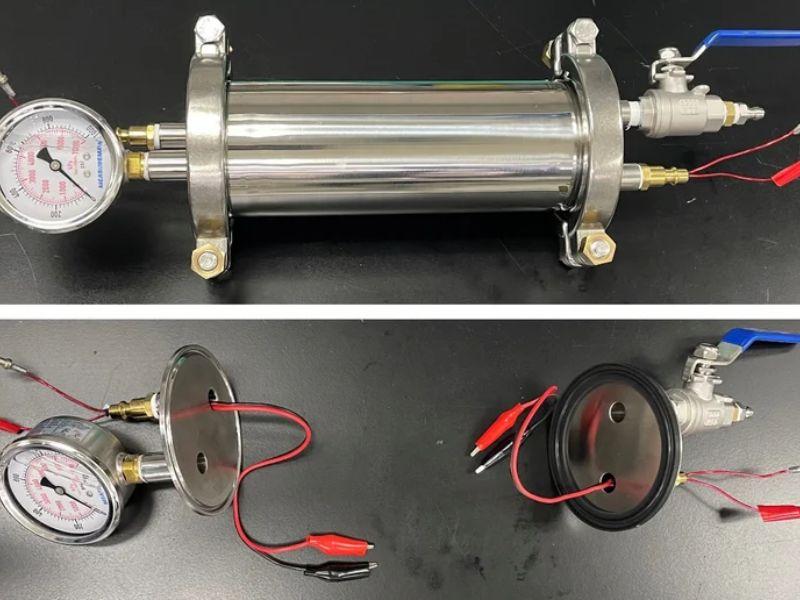
Battery research needs reliable tools for safe and repeatable testing. The Isostatic Pouch Cell Testing Vessel is designed for researchers who need to study pouch cells under controlled pressure and temperature conditions. Ampcera supports advanced battery research by providing materials, technologies, and solutions for next generation energy storage. As battery designs become more complex, testing equipment must also support accurate experiments. A well-designed testing vessel can help researchers study cell behavior, pressure effects, thermal performance, and safety during controlled laboratory tests.
What Is an Isostatic Pouch Cell Testing Vessel?
An Isostatic Pouch Cell Testing Vessel is a specialized pressure vessel used to test pouch battery cells under controlled conditions. The system can provide a controlled environment around the cell while researchers monitor its performance. Pouch cells are widely used in battery research because their flexible format allows engineers to study different materials and cell designs. However, their flexible structure can also make pressure management important during testing. A suitable testing vessel can help researchers control test conditions and collect useful data.
Why Pouch Cell Testing Matters?
Battery cells can behave differently when pressure, temperature, and other operating conditions change. Controlled testing helps researchers understand these effects before moving to larger prototypes or production.
Important test factors may include:
-
Cell pressure
-
Temperature
-
Charge and discharge conditions
-
Cycle life
-
Capacity retention
-
Safety behavior
-
Mechanical changes
-
Gas or swelling behavior
How an Isostatic Pouch Cell Testing Vessel Supports Research?
An Isostatic Pouch Cell Testing Vessel can create a controlled test environment around a pouch cell. Isostatic pressure means pressure is applied more evenly around the test area rather than being focused on a single point. This can be useful when researchers want to study how a pouch cell behaves under controlled mechanical conditions. For example, a research team may want to compare two cell designs while keeping pressure and temperature conditions as consistent as possible. A controlled vessel can make these experiments easier to repeat.
Controlled Pressure Testing
Pressure can affect contact between battery layers and influence cell behavior. Researchers can use controlled pressure conditions to study how a cell responds during charging, discharging, and cycling. The goal is not simply to apply pressure. The goal is to understand how pressure interacts with the cell design and its materials.
Temperature Control
Temperature is another important factor in battery testing. Battery performance can change as temperature rises or falls. A controlled testing system can help researchers perform experiments under defined thermal conditions and compare results more effectively.
Key Features Researchers May Need
When selecting an Isostatic Pouch Cell Testing Vessel, researchers should consider the requirements of their battery project.
Useful features may include:
-
Controlled pressure range
-
Suitable temperature range
-
Reliable sealing
-
Pressure monitoring
-
Temperature monitoring
-
Safety controls
-
Compatible cell dimensions
-
Easy sample loading
-
Data collection options
The right specifications depend on the type of pouch cell being tested and the research objective.
Battery Research With Ampcera
Ampcera works in advanced battery materials and next generation energy storage technologies. Its focus includes materials and solutions that support battery research and development. Testing is an important part of this work. Even when a material looks promising in laboratory analysis, it must be evaluated inside a complete battery cell. Researchers need to understand how materials behave together, how cells respond to operating conditions, and how performance changes over time.
From Material Research to Cell Testing
Battery development often follows a step-by-step process:
-
Select materials.
-
Prepare electrodes.
-
Assemble a test cell.
-
Establish testing conditions.
-
Measure electrical performance.
-
Study mechanical and thermal behavior.
-
Analyze the results.
-
Improve the cell design.
A controlled testing vessel can become useful during the later stages of this process.
Why Controlled Pressure Is Important?
Pressure can influence the physical contact between battery layers. In some battery designs, maintaining suitable contact can affect resistance and electrochemical performance. Researchers can use controlled pressure testing to study these relationships. An Isostatic Pouch Cell Testing Vessel may be especially useful when the research goal involves comparing cell performance at different pressure levels.
Studying Cell Swelling
Pouch cells can change in thickness during charging, discharging, and aging. This behavior may provide useful information about the internal processes taking place inside the cell. Researchers can monitor swelling and other physical changes while controlling the surrounding test conditions. This information can help teams improve cell design, materials, and operating procedures.
Applications of an Isostatic Pouch Cell Testing Vessel
An Isostatic Pouch Cell Testing Vessel can support different types of battery research.
Potential applications include:
-
Lithium ion battery testing
-
Solid state battery research
-
Advanced electrolyte studies
-
Electrode development
-
Pouch cell prototype testing
-
Cycle life experiments
-
Pressure performance studies
-
Thermal testing
-
Battery safety research
The exact application depends on the vessel design and the requirements of the test.
Pouch Cell Prototype Development
Prototype cells allow researchers to test new ideas before larger-scale production. A controlled vessel can help teams evaluate prototype performance under defined conditions. This can be useful for universities, battery startups, research laboratories, and established battery manufacturers.
Benefits of Using a Controlled Testing System
A well-designed testing system can improve the quality of battery experiments.
Better Repeatability
When pressure and temperature are controlled, researchers can repeat experiments under similar conditions. This makes it easier to compare results.
More Useful Data
Controlled testing can provide clearer information about how a cell responds to different operating conditions.
Improved Safety
Battery testing can involve high temperatures, pressure, and electrical energy. Appropriate laboratory equipment and safety procedures are essential. A suitable vessel can provide a controlled environment for specific tests when used according to its design and safety requirements.
Faster Development
Better test data can help researchers identify problems earlier. This may reduce unnecessary development cycles and help teams focus on promising cell designs.
Choosing the Right Isostatic Pouch Cell Testing Vessel
Before selecting a vessel, researchers should review the technical requirements of their project.
Check Cell Size
The vessel should accommodate the dimensions of the pouch cells being tested. Space for sensors, connections, and safe operation should also be considered.
Review Pressure Requirements
Different experiments may require different pressure levels. Researchers should choose equipment that can safely operate across the intended test range.
Consider Temperature
Temperature requirements should match the planned experiments. A suitable system should provide the required thermal control without compromising safety.
Review Monitoring Options
Pressure and temperature monitoring can help researchers understand what happens during a test. Data recording can also make later analysis easier.
Ampcera and Advanced Battery Testing
Ampcera supports the development of advanced energy storage technologies through its work in battery materials and research. Its focus on battery innovation makes testing an important part of the broader development process. For teams working on new battery materials, pouch cell testing can provide practical information that material-level experiments cannot provide alone. A complete cell test can reveal how the cathode, anode, electrolyte, separator, and other components work together.
Connecting Materials With Real Cell Performance
Battery materials may perform well in isolation but behave differently inside a complete cell. Testing helps researchers identify these differences. An Isostatic Pouch Cell Testing Vessel can support this type of research when pressure-controlled testing is part of the experimental plan.
Safety Considerations
Battery testing should always follow appropriate laboratory procedures. Researchers should understand the limits of their equipment and battery cells before starting an experiment.
Important considerations include:
-
Maximum pressure limits
-
Temperature limits
-
Electrical isolation
-
Proper sealing
-
Sensor calibration
-
Emergency procedures
-
Cell chemistry
-
Operator training
Equipment should never be used outside its specified operating conditions.
Future of Pouch Cell Testing
As battery technology develops, testing methods will also continue to improve. Researchers are studying new chemistries, solid electrolytes, advanced electrodes, and different cell formats. More detailed control of pressure and temperature can help researchers understand how these technologies behave under realistic operating conditions. The Isostatic Pouch Cell Testing Vessel can be part of this broader testing approach by giving research teams a controlled environment for selected pouch cell experiments.
Supporting Next Generation Battery Development
Future battery development will depend on accurate data. Researchers need to understand not only how much energy a cell stores, but also how it behaves during repeated cycling, temperature changes, pressure changes, and other conditions. Better testing can help turn laboratory concepts into practical battery technologies.
Frequently Asked Questions
What Is an Isostatic Pouch Cell Testing Vessel Used For?
It is used to test pouch battery cells under controlled pressure and, depending on the system, controlled temperature conditions. It can help researchers study cell performance and physical behavior.
Why Test Pouch Cells Under Pressure?
Pressure can influence layer contact, cell thickness, resistance, and overall behavior. Controlled pressure testing allows researchers to study these effects in a repeatable way.
Can It Be Used for Advanced Battery Research?
Yes. Suitable systems may support research involving lithium ion cells, solid state batteries, advanced electrolytes, and other pouch cell technologies.
What Should Researchers Check Before Buying One?
They should review pressure range, temperature range, cell size, sealing method, monitoring features, safety requirements, and compatibility with the planned experiment. The Isostatic Pouch Cell Testing Vessel can be a useful tool for battery researchers who need controlled conditions for pouch cell experiments. By managing pressure and temperature, researchers can study cell performance, swelling, cycling behavior, and other important characteristics. Ampcera continues to support advanced battery research through its focus on materials and next generation energy storage technologies. Reliable testing is an important part of turning promising materials into practical battery cells. As battery designs continue to evolve, controlled testing tools will remain valuable for researchers seeking better performance, safety, and reliability.

 English
 Arabic
 French
 Spanish
 Portuguese
 Deutsch
 Turkish
 Italiano
 Russian
 Romaian
 Portuguese (Brazil)
 Greek
Greek
 Bengali