


How Cognitive Games Can Support Children With Learning and Developmental Challenges
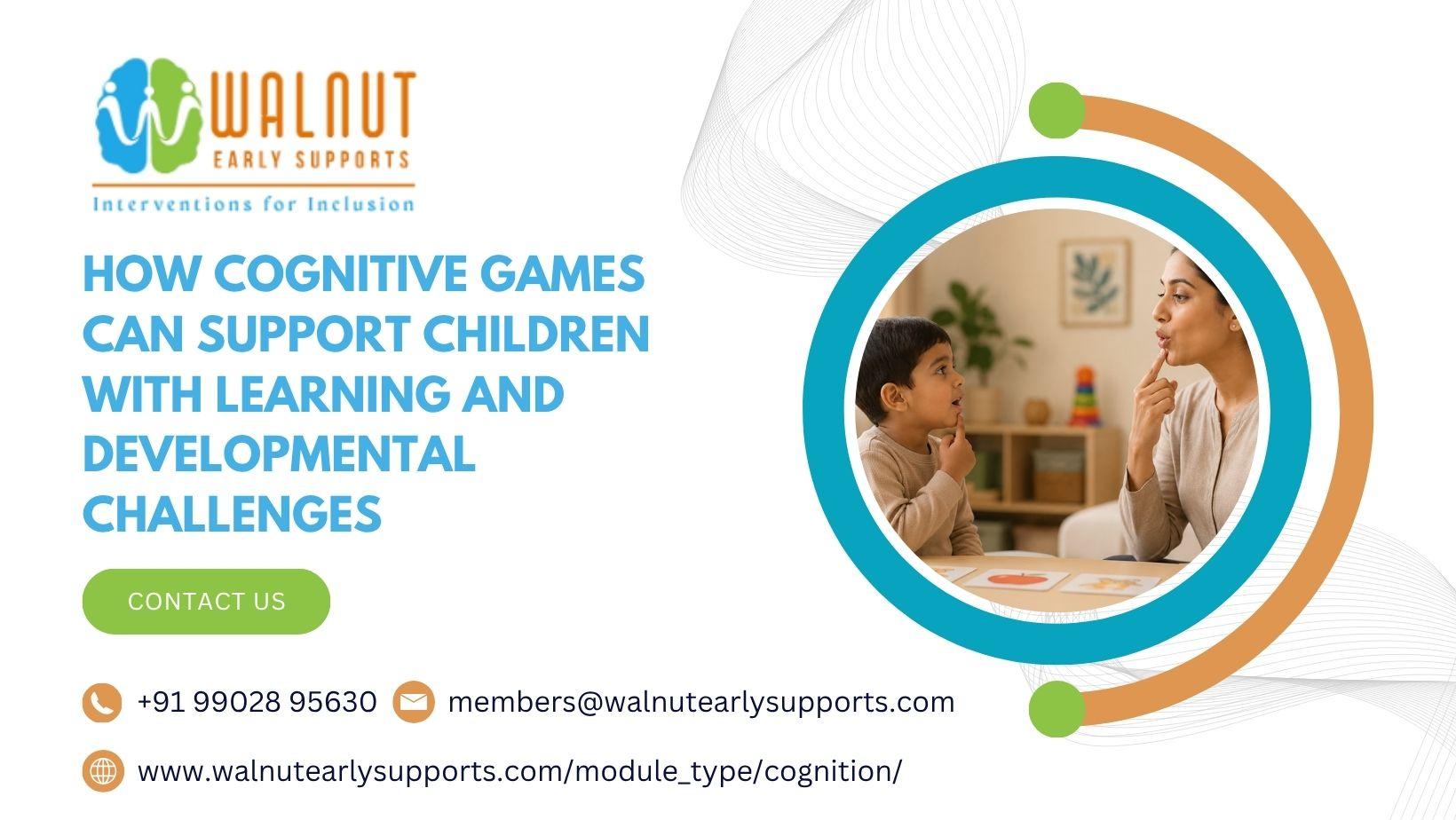
Every child learns in their own way. Some children may need extra time to understand instructions, remember information, stay focused, solve problems, or complete a task. These differences can sometimes make classroom learning and everyday activities more challenging.
Supportive, age-appropriate activities can give children additional opportunities to practice important thinking skills without making learning feel overwhelming. Cognitive Games can be one useful approach because they turn skill practice into interactive activities that encourage children to participate, think, and try different solutions.
Understanding Cognitive Skills in Children
Cognitive skills are the mental processes children use to take in, understand, remember, and use information. These skills include attention, memory, reasoning, problem-solving, processing information, and making decisions.
Cognitive Development in Children happens gradually and is influenced by many factors, including experiences, learning opportunities, interaction, and individual development. Children who experience learning or developmental challenges may benefit from activities that provide additional practice and appropriate support.
It is important to remember that a game is not a replacement for professional assessment or therapy. Instead, structured activities can complement a child's broader learning and developmental support when they are selected appropriately.
How Cognitive Games Can Help
1. Encourage Attention and Focus
Staying focused on an activity can be difficult for some children. Activities that involve matching, identifying objects, finding differences, or following simple instructions can encourage children to direct their attention toward a specific task.
The activity can start with a small number of items and become gradually more challenging as the child becomes comfortable. This allows the child to practice focusing without immediately facing a task that feels too difficult.
2. Provide Opportunities to Practice Memory
Memory plays an important role in learning. Children use memory when they recall instructions, recognize familiar information, remember sequences, and connect new information with previous experiences.
Memory activities can involve remembering pictures, objects, patterns, or short sequences. Repeated practice in a playful setting can give children opportunities to use these skills while keeping the activity engaging.
3. Encourage Problem-Solving
Problem-solving involves identifying a challenge, thinking about possible solutions, and deciding what to try. Children use this skill when completing puzzles, working with patterns, organizing objects, and figuring out what comes next.
Games that improve cognitive function can provide structured situations where children can explore different solutions. Instead of immediately correcting a mistake, adults can offer a simple clue or encourage the child to try another approach.
This can help children understand that making mistakes is a normal part of learning.
4. Support Reasoning and Flexible Thinking
Some children may find it difficult to understand relationships between objects, ideas, or events. Sorting and categorizing activities can provide opportunities to practice these skills.
For example, a child might group pictures according to their function, size, color, or category. As the child becomes more comfortable, adults can introduce activities with more than one possible way to organize the information.
This encourages children to look at information from different perspectives.
5. Build Confidence Through Small Successes
Children who regularly experience difficulty with learning tasks may become hesitant to participate. Activities that are appropriately matched to their abilities can provide achievable challenges.
Completing a small task, finding a correct match, remembering a sequence, or solving part of a puzzle can give children positive experiences. Encouragement should focus on effort, strategy, and persistence rather than simply getting the correct answer.
Adapting Activities to Individual Needs
There is no single activity that works equally well for every child. Parents, teachers, and therapists can adapt activities according to the child's age, abilities, communication skills, attention span, and specific learning goals.
For example, an activity can be simplified by reducing the number of choices. Visual cues can be added when verbal instructions are difficult to understand. Additional time can be provided when a child needs longer to process information.
As skills develop, the activity can be gradually adjusted to provide a new level of challenge.
Using Games at Home and in Therapy
Cognitive Games can be used in different environments. Parents can introduce short activities during playtime, while educators can incorporate them into classroom learning. Therapists may use structured activities as part of sessions designed around a child's individual goals.
Activities can also support communication alongside thinking skills. A child might name pictures, describe an object, answer questions, explain a choice, or follow directions while completing a cognitive activity.
At Walnut Early Supports, resources are designed to support children's developmental, communication, and learning needs. Structured materials can give parents, educators, and professionals practical options for engaging children in purposeful activities.
A Supportive Approach Matters
Children benefit most when adults create a positive environment around learning. Keep activities enjoyable, give clear instructions, allow enough processing time, and avoid comparing one child's progress with another's.
If a child continues to experience significant difficulties with learning, communication, attention, or development, parents should consider discussing their concerns with an appropriate qualified professional. Professional guidance can help identify individual needs and suitable support strategies.
Conclusion
Learning and developmental challenges do not mean that a child cannot learn new skills. With appropriate opportunities, encouragement, and individualized support, children can continue developing important cognitive abilities.
Cognitive Games can make practice more engaging by giving children opportunities to work on attention, memory, reasoning, problem-solving, and flexible thinking through interactive activities. When used alongside appropriate educational or professional support, these activities can become a meaningful part of a child's learning journey.

 English
 Arabic
 French
 Spanish
 Portuguese
 Deutsch
 Turkish
 Dutch
Dutch
 Italiano
 Russian
 Portuguese (Brazil)
 Greek
Greek
 Bengali