


The Risks and Realities of Migrating Piercings
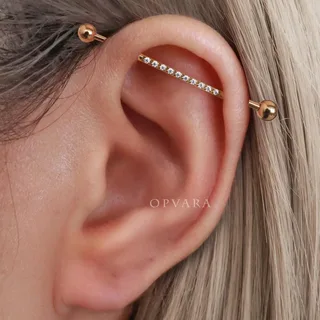
The Risks and Realities of Migrating Piercings
For those who have invested time and care into an Ear Piercing in Riyadh, the goal is always a permanent, stable addition to their personal style. However, sometimes a piercing does not "stay put." Migration—where a piercing slowly moves from its original placement toward the surface of the skin—is a phenomenon that every piercing enthusiast should understand. By recognizing the signs early and identifying the causes, you can often intervene before a piercing becomes permanent history.
Defining Migration vs. Rejection
It is important to distinguish between the two:
-
Migration: This occurs when the jewelry slowly shifts its position. It might not be leaving your ear, but the angle has changed, or it has moved a few millimeters from the original dot.
-
Rejection: This is the body’s final response to a foreign object it deems "unacceptable." The skin thins out, the jewelry moves closer and closer to the surface, and eventually, the tissue "pushes" the jewelry out entirely, leaving a scar.
Why Do Piercings Migrate?
Migration is rarely random; it is almost always a response to a specific stressor. In Riyadh’s climate and lifestyle, common culprits include:
-
Constant Mechanical Trauma: This is the most common cause. If you have a habit of touching, rotating, or accidentally snagging your jewelry, you are creating micro-trauma that keeps the tissue "active" and prevents it from settling.
-
Improper Angle: As discussed previously, if a piercing is not performed at the correct anatomical angle, the jewelry will naturally exert pressure on the surrounding tissue. The body will often attempt to "correct" this by pushing the jewelry out.
-
Jewelry Issues: Using jewelry that is too heavy, the wrong shape, or made of a material that triggers a low-level allergic reaction can cause the body to attempt to expel the item.
-
Excessive Swelling: If a piercing is chronically swollen, the tissue becomes soft and lacks the structural integrity to hold the jewelry in place. Over time, this allows the jewelry to shift.
Identifying the Signs of Migration
You are the best monitor of your own piercing. Keep an eye out for these red flags:
-
Changing Angles: If your jewelry used to sit perfectly flat but now seems to be "tilting" or leaning, it is likely migrating.
-
Thinning Skin: Look at the skin between the two exit points of the piercing. If it appears to be getting thinner, redder, or more translucent, the jewelry is moving toward the surface.
-
Visible Jewelry Post: If you notice significantly more of the jewelry's post becoming visible than when it was first pierced, the piercing is likely shifting.
Can Migration Be Stopped?
In some cases, yes—but only if you act immediately.
-
Identify the Stressor: If you realize you are sleeping on that side, stop immediately. If you are wearing headphones that press on it, ditch them.
-
Downsize Properly: If the jewelry is too long, the "lever" action is causing the shift. A prompt trip to your piercer for a shorter, fitted post can often stabilize the piercing and stop the migration in its tracks.
-
The "Hands-Off" Approach: Often, the best way to stop migration is to stop touching it entirely. Let your body rest.
When to Let It Go
Sometimes, despite your best efforts, the body simply decides it does not want the piercing. If the skin between the entry and exit points becomes paper-thin, the most responsible decision is to visit your professional piercer and have the jewelry removed. Trying to "save" a rejecting piercing often results in permanent, unnecessary scarring.
By removing it early, you allow the area to heal cleanly, which may open the door for you to have it re-pierced once the tissue has fully recovered (usually after several months).
The reality is that while we want every piercing to be a permanent fixture, body art is a partnership with your biology. By staying observant and acting quickly when you notice changes, you can protect your anatomy and maintain the integrity of your curated ear.
Would you like to move on to the twentieth article, focusing on "The Etiquette and Importance of Scheduling Follow-Up Consultations"?

 English
 Arabic
 French
 Spanish
 Portuguese
 Deutsch
 Turkish
 Dutch
Dutch
 Italiano
 Russian
 Romaian
 Greek
Greek
 Bengali