


The Anatomy of Immersion: Deconstructing the Modern AR and VR Solution
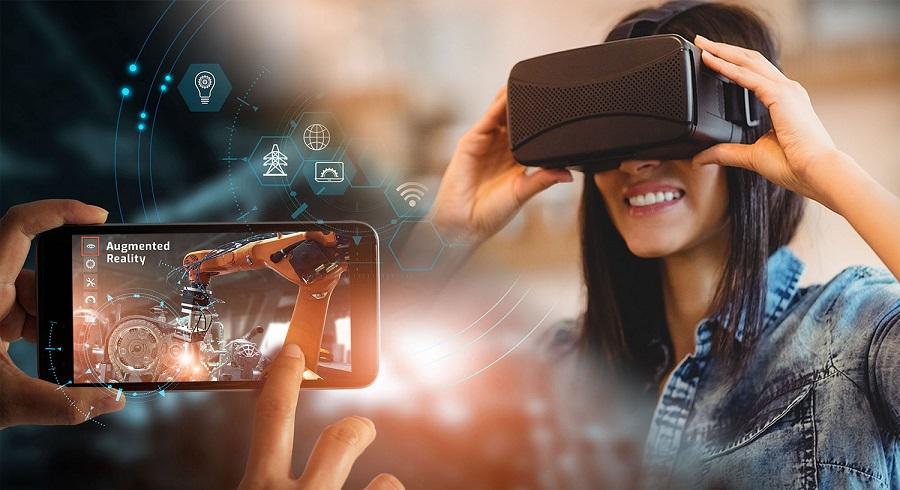
A modern, compelling immersive experience is not the product of a single technology but the result of a complex and tightly integrated system of hardware and software working in perfect harmony. A complete Augmented Reality and Virtual Reality Market Solution can be understood as a multi-layered technology stack designed to track a user's movements, render a virtual world in real-time, and allow for natural interaction. This end-to-end solution is composed of several key components: the display and optics, the tracking and sensor systems, the core computing platform, and the software development engine. Understanding the anatomy of this solution is essential to appreciating the immense technical challenges involved in creating a convincing and comfortable sense of presence in a digital world, a challenge that the industry's brightest minds are working to solve.
The foundation of any AR/VR solution is the display and optics layer. This is the hardware that presents the digital world to the user's eyes. In a VR headset, this consists of two high-resolution micro-displays (one for each eye) and a set of lenses that magnify and focus the image to fill the user's field of view. The quality of these components determines the visual fidelity and the sense of immersion. In an AR headset, the challenge is even greater. The optics must be transparent, allowing the user to see the real world, while also precisely projecting a digital image onto their retina. This is often achieved using complex "waveguide" technology, which pipes the light from a micro-display across the lens. The quality of this display and optics system is the single most important factor in the user's experience.
The next critical layer is the tracking and sensor system. This is what allows the user's real-world movements to be translated into the virtual world. The core of this system is the "6 Degrees of Freedom" (6DoF) head tracking. This is achieved using a combination of an Inertial Measurement Unit (IMU) inside the headset to track rotation, and a set of cameras on the headset that perform "inside-out" tracking by visually analyzing the features of the surrounding room to track the user's position. This same camera-based system is also used for hand tracking, allowing the user to interact with the virtual world with their bare hands. In AR, this layer also includes sensors for "spatial mapping," where the device scans the room to create a 3D mesh of the environment, allowing digital objects to realistically interact with physical surfaces.
Finally, the entire experience is powered by the core computing and software engine. This can be a powerful PC with a high-end GPU for tethered VR, or, increasingly, a powerful and efficient mobile System-on-a-Chip (SoC) integrated directly into a standalone headset. This computing platform is responsible for running the application and, most importantly, rendering the complex 3D graphics in real-time at a very high frame rate (typically 90fps or more) to ensure a smooth and nausea-free experience. The applications themselves are almost always built using a real-time 3D game engine, such as Unreal Engine or Unity. These engines provide the complete software development kit (SDK) for creating interactive 3D content, managing physics, and integrating all the hardware components into a single, cohesive immersive experience.
Top Trending Reports:

 English
 Arabic
 French
 Portuguese
 Deutsch
 Turkish
 Dutch
Dutch
 Italiano
 Russian
 Romaian
 Portuguese (Brazil)
 Greek
Greek
 Bengali