


Uninterrupted Transit Wi-Fi: Enabling Seamless Rail Connectivity with Dual SIM Technology
Passenger expectations for rail travel have changed significantly over the last decade. Commuters no longer view transit time as dead time. They expect to work, stream video, and communicate during their journeys.
According to global transport surveys, over 75% of passengers consider reliable Wi-Fi a critical factor when choosing rail travel over personal vehicles. For business travelers, this number rises to 92%.
Providing this service is not easy. High-speed trains travel through remote landscapes, deep tunnels, and urban valleys. These environments create severe challenges for wireless networks.
When a train moves at 180 miles per hour, maintaining a steady connection to a cellular tower becomes difficult. Single-network solutions fail constantly under these conditions.
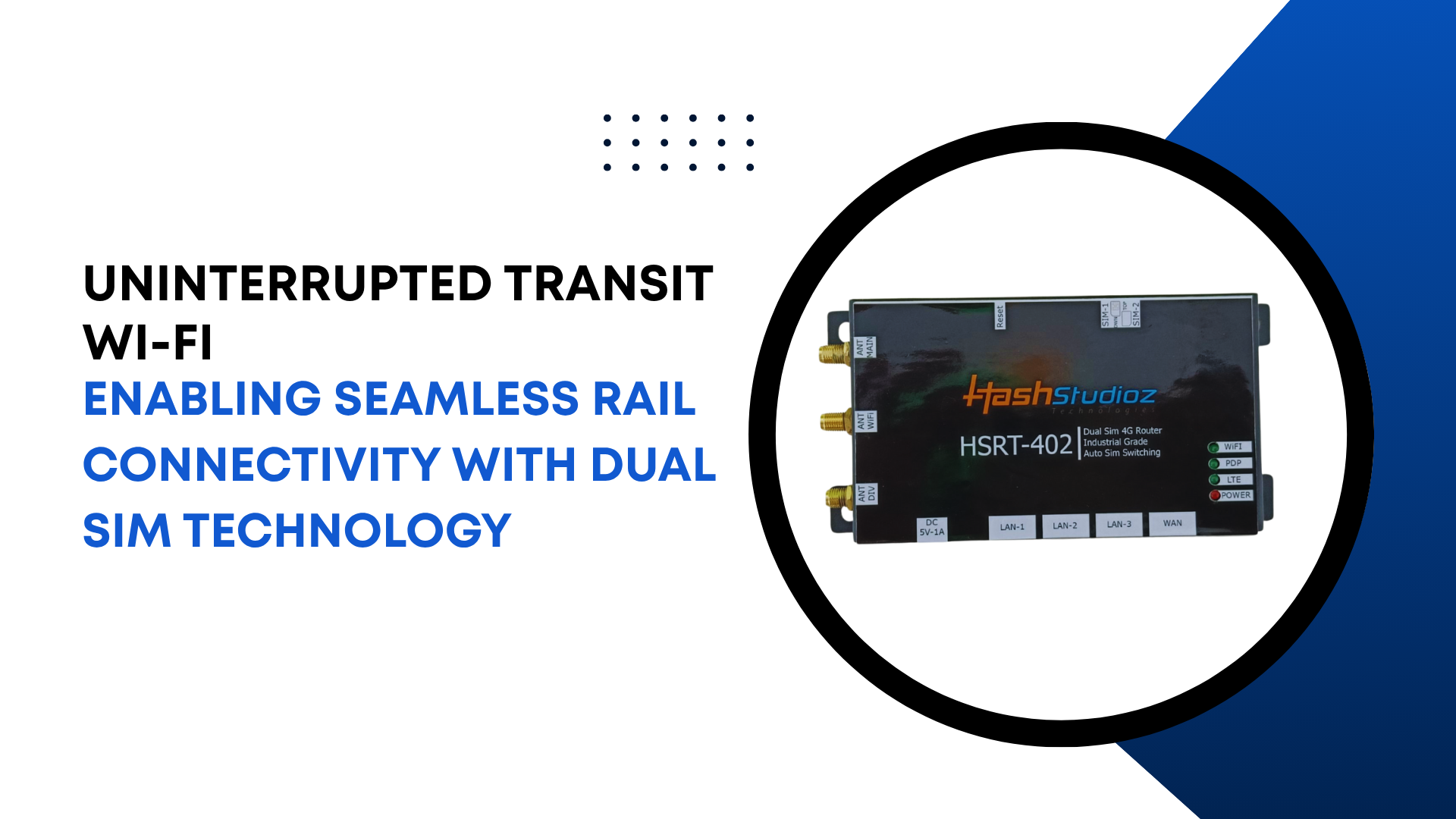
To solve this problem, transit agencies are adopting advanced onboard cellular hardware. This article explores how rail operators maintain seamless connectivity using a Dual Sim Industrial Router and intelligent network switching.
The Technical Challenges of Rail Wi-Fi
Rail corridors present some of the most difficult environments for wireless communication. Engineers must design systems that overcome multiple physical and electronic hurdles.
1. High-Speed Handovers
As a train moves down the track, it passes through different cellular tower coverage zones. The onboard router must disconnect from one tower and connect to the next. This process is a handover. At high speeds, handovers happen every few minutes. A standard consumer router cannot handle this frequency. It drops the connection during the switch.
2. Cellular Dead Zones
Cellular carriers do not build towers with trains as their only priority. They focus on highways and towns. Consequently, rail tracks often cut through cellular dead zones. A single carrier might have excellent coverage in the city but zero signal in rural valleys.
3. Signal Attenuation from Train Bodies
Modern train carriages resemble metal tubes. Manufacturers build them with reinforced steel and tinted glass. These materials block radio frequencies. This effect is Faraday cage attenuation. Signal strength drops by up to 30 decibels when passing through the carriage walls. This drop makes it impossible for passenger phones to get a reliable direct signal inside the train.
The Role of an Industrial Router
Passenger trains cannot use standard office networking equipment. They require specialized hardware built for extreme environments.
1. Physical Ruggedness
An Industrial Router must withstand constant vibration and physical shock. Rail hardware must comply with the EN 50155 standard. This European standard specifies the performance requirements for electronic equipment used on rolling stock. The router must operate reliably in temperatures ranging from -40 degrees to +70 degrees Celsius. It also features M12 connectors instead of standard RJ45 ports. M12 connectors screw tightly into place, which prevents cables from shaking loose.
2. Advanced RF Front Ends
Industrial-grade routers feature high-performance Radio Frequency (RF) front ends. They connect to roof-mounted external antennas via low-loss coaxial cables. These roof antennas sit outside the metal body of the train. This placement eliminates the Faraday cage effect and captures the maximum available signal from distant towers.
Understanding Dual SIM Technology
Single SIM routers can only connect to one cellular network provider at a time. If that specific provider has a dead zone, the train loses internet access entirely. Dual SIM technology solves this vulnerability.
1. True Hardware Redundancy
A Dual Sim Industrial Router holds two separate subscriber identity module (SIM) cards. These cards connect to two completely different cellular network providers.
For example, SIM A connects to Carrier 1, while SIM B connects to Carrier 2. This setup ensures the train always has an alternative network path available.
2. Active-Passive vs. Active-Active Modes
There are two main ways to utilize a dual SIM setup.
-
Active-Passive (Failover Mode): The router uses SIM A as its primary connection. It monitors link quality metrics like signal strength and packet loss. If the Carrier 1 signal drops below a set threshold, the router switches to SIM B. This switch takes a few seconds, which can cause a brief pause in passenger data flow.
-
Active-Active (Dual Radio Mode): Advanced routers feature two independent cellular modems inside one chassis. Both SIM cards maintain active connections simultaneously. The router sends data across both networks at the same time. This mode eliminates connection drops completely.
Network Bonding and Aggregation
To provide true uninterrupted Wi-Fi, modern trains go beyond basic failover. They use a technique called network bonding.
1. How Packet Bonding Works
Network bonding splits a single data stream into individual packets. The router sends half of the packets over Carrier 1 and the other half over Carrier 2. A specialized bonding server in a data center recombines these packets into the original data stream before sending them to the internet.
2. Bandwidth Aggregation
Bonding does more than increase reliability. It also increases total bandwidth. If Carrier 1 provides 40 Megabits per second and Carrier 2 provides 30 Megabits per second, bonding combines them. The train now has a total capacity of 70 Megabits per second. This extra bandwidth is necessary to support hundreds of passengers browsing simultaneously.
3. Dynamic Load Balancing
The router constantly measures the performance of each cellular link. If Carrier 1 becomes congested, the router automatically shifts traffic to Carrier 2. This process happens on a packet-by-packet basis. Passengers do not notice any drop in video stream quality.
Onboard Network Architecture
Building a reliable transit Wi-Fi system requires a complete infrastructure layout across the train.
1. The Roof Antenna Array
Engineers mount multi-element MIMO (Multiple-Input Multiple-Output) antennas on the roof of each carriage. These antennas capture signals across various frequency bands, including 4G LTE and 5G. They use rugged domes to protect against weather and overhead high-voltage power lines.
2. The Core Communication Switch
The main Industrial Router sits in a central control cabinet, usually in the middle carriage. It connects to the roof antennas. This router acts as the primary gateway for the entire train.
3. The Ethernet Backbone
High-speed Ethernet cables run through the couplings between carriages. This backbone connects the central router to local network switches in each individual car.
4. Access Points per Carriage
Each carriage contains one or two industrial Wi-Fi Access Points (APs). These APs distribute the Wi-Fi signal to the passenger seats. They utilize the latest Wi-Fi standards to handle high device density within a small space.
Step-by-Step Implementation Guide
Transit authorities use a structured methodology to deploy dual SIM systems successfully.
Step 1: Conduct a Corridor Signal Survey
Before buying hardware, engineers map the cellular coverage along the entire rail line. They measure signal strength for all available carriers. This data determines which two carriers offer the best complementary coverage.
Step 2: Choose the Hardware
Select a Dual Sim Industrial Router that meets the rail certification requirements of your region. Ensure the device includes dual active modems for true zero-downtime switching.
Step 3: Install the Antenna Infrastructure
Drill the required access holes in the train roof. Mount the MIMO antennas and apply industrial sealants to prevent water leaks. Run low-loss RF cables from the roof to the electronics cabinet.
Step 4: Configure Routing Policies
Program the router configuration via its management console. Define the switching criteria based on specific key performance indicators (KPIs). These KPIs include:
-
Reference Signal Received Power (RSRP)
-
Signal-to-Interference-plus-Noise Ratio (SINR)
-
Round-Trip Time (RTT) latency
Step 5: Implement Captive Portal and Bandwidth Caps
Set up a passenger landing page. Implement bandwidth throttling rules. For example, limit each user to 2 Megabits per second. This prevents a single passenger from consuming all the train's bandwidth with large file downloads.
Business Benefits for Rail Operators
Investing in high-grade communication technology provides clear financial returns for transit agencies.
1. Increased Ridership
When commutes become productive, people choose trains over cars. Studies show that installing reliable Wi-Fi boosts off-peak ridership by up to 8%. Passengers prefer to answer emails on a train rather than sit in highway traffic.
2. Operational Data Integration
The same Industrial Router providing passenger Wi-Fi can carry operational data. Modern trains have hundreds of sensors monitoring brakes, engines, and door systems.
The router sends this diagnostic data to the maintenance yard in real time. This allows engineers to spot mechanical problems before the train breaks down on the tracks.
3. New Revenue Channels
Rail operators can monetize their Wi-Fi networks. They can show local advertisements on the captive portal page. Alternatively, they can offer a basic free tier of internet alongside a paid premium tier for high-speed access.
Technical Comparison of Onboard Networking Solutions
|
Connectivity Metric |
Single SIM Consumer Router |
Single SIM Industrial Router |
Dual SIM Industrial Router (Bonded) |
|
Vibration Resistance |
Low (Fails quickly) |
High (EN 50155 certified) |
High (EN 50155 certified) |
|
Carrier Redundancy |
None |
None |
Full (Two distinct networks) |
|
Dead Zone Downtime |
High |
Medium |
Very Low |
|
Average Bandwidth |
15 - 30 Mbps |
30 - 60 Mbps |
80 - 150 Mbps |
|
Handover Drop Rate |
Over 15% |
Around 5% |
Less than 1% |
Overcoming Specific Operational Failures
Even advanced systems face unique issues that require smart software programming.
1. The Tunnel Problem
Long tunnels block all cellular signals from the surface. A dual SIM router cannot find a network if no signal penetrates the mountain.
-
The Solution: Rail operators install leaky feeder cables or distributed antenna systems (DAS) inside long tunnels. These systems broadcast a cellular signal inside the tunnel. The router switches to these specialized infrastructure networks seamlessly as it enters the tunnel.
2. Carrier Roaming Costs at Borders
International trains cross country borders frequently. If a router continues to use a home SIM card in a foreign country, roaming charges escalate rapidly.
-
The Solution: Industrial routers use geofencing algorithms. The router tracks its location via built-in GPS modules. When the train crosses a border, the router automatically deactivates the domestic SIM and activates a local, pre-installed SIM for the new country.
3. High Passenger Density Overload
During rush hour, a train might carry 1,000 passengers. If 400 users connect to the Wi-Fi at once, the local wireless spectrum becomes overcrowded.
-
The Solution: Access points use band steering technology. This feature forces newer passenger phones onto the less congested 5 Gigahertz Wi-Fi band. It leaves the older 2.4 Gigahertz band open for older devices, which balances the local wireless load.
Future Developments in Transit Connectivity
Rail connectivity continues to advance alongside global telecommunication updates.
1. 5G Standalone Deployment
Many industrial routers now feature 5G modems. 5G networks provide lower latency and higher bandwidth than older 4G systems. 5G Standalone networks include a feature called network slicing. This allows carriers to reserve a specific portion of their cellular capacity exclusively for transit infrastructure, ensuring guaranteed data speeds for trains.
2. Satellite Internet Integration (LEO)
Low Earth Orbit (LEO) satellite constellations, like Starlink, are changing rural connectivity. Future rail network designs combine cellular dual SIM hardware with an onboard satellite terminal. The router will use cellular networks in cities and switch to satellite coverage when traversing completely remote areas.
Final Insights
Providing reliable transit Wi-Fi requires a technical approach that eliminates single points of failure. High speeds, metal train bodies, and geographic obstacles make single-carrier solutions obsolete.
Deploying a Dual Sim Industrial Router allows rail operators to merge two distinct cellular networks into a single connection. This system utilizes rugged hardware to survive the harsh rail environment.
The combination of dual SIM redundancy, packet bonding, and external antennas keeps passengers connected throughout their journey. This infrastructure investment improves customer satisfaction, enhances operational safety, and prepares transit agencies for the future of digital transportation.

 Arabic
 French
 Spanish
 Portuguese
 Deutsch
 Turkish
 Dutch
Dutch
 Italiano
 Russian
 Romaian
 Portuguese (Brazil)
 Greek
Greek
 Bengali