


Why Do Grinding Discs Wear Differently?
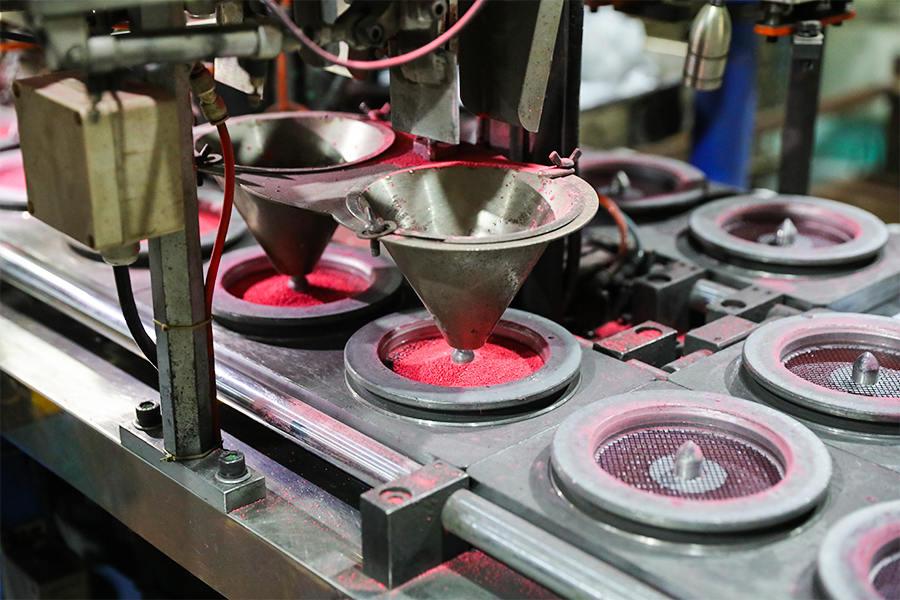
Industrial metal processing depends on abrasive tools that can maintain stable performance under high-speed rotation and mechanical stress. The Metal Grinding Disc Grinding Wheel is widely used due to its ability to remove material efficiently while maintaining predictable wear characteristics.
Unlike cutting tools that rely on continuous edges, grinding discs function through countless microscopic cutting points distributed across the disc surface. These points are abrasive grains bonded together in a structured matrix.
Abrasive Material Engineering
The performance of a Metal Grinding Disc Grinding Wheel is heavily influenced by abrasive composition:
Aluminum oxide: general steel grinding applications
Zirconia alumina: high-pressure grinding and stainless steel
Ceramic alumina: enhanced self-sharpening under load
Silicon carbide: non-ferrous metals and softer alloys
Each abrasive type is selected based on hardness compatibility and thermal resistance requirements.
Bonding System and Mechanical Strength
The bonding matrix holds abrasive grains in place while allowing controlled release during operation. Resin bonding is widely used in portable grinding discs due to its balance between flexibility and durability.
Key bond functions include:
Grain retention stability
Controlled wear rate
Impact resistance during high RPM operation
Heat dissipation support
A properly engineered Metal Grinding Disc Grinding Wheel maintains structural integrity even under heavy load conditions.
Grinding Mechanism on Metal Surfaces
Grinding occurs through repeated micro-fracturing of the metal surface. Each abrasive grain removes a small portion of material, creating a controlled erosion effect.
This mechanism results in:
Surface leveling
Weld seam reduction
Edge refinement
Rust and coating removal
The continuous rotation ensures that fresh abrasive edges are constantly engaged.
Speed and Performance Control
Typical operating speeds for angle grinder discs range between:
6,500 RPM for larger diameter discs
11,000–13,300 RPM for standard 115–125 mm discs
Exceeding rated speed can cause structural stress and reduce operational safety margins.
Heat Generation and Surface Impact
Friction between abrasive grains and metal produces heat. Excessive heat can cause:
Surface burn marks
Material softening or hardening
Dimensional distortion in thin materials
Disc design incorporates airflow channels and open structures to help regulate temperature during continuous grinding.
Wear Distribution and Lifespan Behavior
Wear patterns depend on:
Contact pressure consistency
Grinding angle stability
Workpiece hardness variations
Abrasive grain distribution uniformity
Even wear improves balance and reduces vibration during high-speed rotation.
Industrial Applications
The Metal Grinding Disc Grinding Wheel is widely applied in:
Structural steel fabrication
Automotive repair and maintenance
Shipbuilding surface treatment
Metal machining cleanup processes
Each application requires specific grit selection and bonding strength for stable results.
Summary
The Metal Grinding Disc Grinding Wheel operates through engineered abrasive interaction and controlled wear mechanics. Its efficiency depends on material composition, bond structure, and operational stability. Proper usage ensures consistent performance across a wide range of metalworking tasks.

 Arabic
 French
 Spanish
 Portuguese
 Deutsch
 Turkish
 Dutch
Dutch
 Italiano
 Russian
 Romaian
 Portuguese (Brazil)
 Greek
Greek
 Bengali