


The Productivity Revolution: A Deep Dive into the Global AI Meeting Assistants Industry
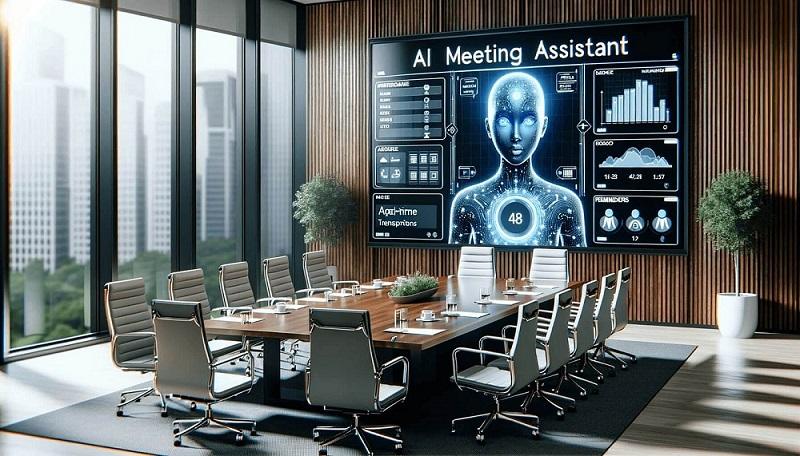
In the modern knowledge economy, meetings have become both the central nervous system of collaboration and a notorious drain on productivity. The endless cycle of discussions, note-taking, and follow-ups has created a significant administrative burden, pulling focus away from high-value strategic work. In response to this challenge, the burgeoning Ai Meeting Assistants industry has emerged as a transformative force, offering a suite of intelligent tools designed to automate and augment the entire meeting lifecycle. These platforms are not mere recording devices; they are sophisticated AI-powered agents that join virtual or in-person meetings to listen, transcribe, summarize, and extract actionable insights. By offloading the cognitive load of documentation and recall, this industry is fundamentally changing the nature of professional collaboration, aiming to make every meeting more productive, inclusive, and impactful, while creating a searchable, intelligent archive of an organization's conversational knowledge.
The Technological Core: The Brains Behind the Digital Meeting Assistant
The magic behind the AI meeting assistant industry is a powerful convergence of several mature and rapidly advancing technologies. At its foundation is speech-to-text transcription, which uses advanced algorithms to convert spoken words into a written log with remarkable accuracy. This is enhanced by speaker recognition (diarization), which can identify and label who is speaking, creating a clear and readable transcript. Layered on top of this is Natural Language Processing (NLP) and Natural Language Understanding (NLU), the "brain" that allows the assistant to comprehend the context, intent, and sentiment of the conversation. This is what enables the software to distinguish between a casual remark and a critical decision. Most recently, the integration of Large Language Models (LLMs) and Generative AI has been a game-changer. These models are responsible for creating the concise, human-like summaries, identifying key topics, and automatically drafting action items, transforming a lengthy transcript into a digestible and actionable brief that captures the essence of the meeting.
The Competitive Arena: Key Players and Platforms Shaping the Market
The industry's competitive landscape is a dynamic mix of specialized startups, integrated features within major collaboration platforms, and even hardware-based solutions. On one end are the standalone specialists like Otter.ai, Fireflies.ai, and Fathom, who have built their entire business around providing a best-in-class meeting assistant experience. These platforms are known for their rich feature sets, deep integrations with various calendar and CRM systems, and their focus on serving a wide range of use cases, from sales calls to university lectures. On the other end are the integrated giants. Companies like Microsoft (with Copilot for Microsoft Teams), Zoom (with its AI Companion), and Google (with Duet AI for Meet) are embedding AI assistant capabilities directly into their massively popular video conferencing platforms. Their strategy is to leverage their enormous user base and offer these features as a seamless, built-in part of the existing workflow. A third category includes hardware-centric solutions like the Owl Labs meeting camera, which combines a 360-degree camera with AI software to intelligently focus on the speaker and provide a more inclusive experience for remote participants.
The Foundational Purpose: Creating a System of Record for a Company's Voice
The ultimate purpose of the AI meeting assistant industry extends far beyond simply saving time on note-taking. It is about creating an entirely new type of corporate asset: a structured, searchable, and intelligent system of record for conversational knowledge. For decades, the valuable insights, decisions, and action items discussed in meetings were ephemeral, existing only in the scattered notes and fallible memories of the participants. This led to information silos, misaligned teams, and a loss of institutional knowledge when employees left an organization. AI meeting assistants solve this problem by capturing these conversations and transforming them into a permanent, accessible digital archive. A new team member can get up to speed by reviewing the AI-generated summaries of past project meetings. A sales manager can search across all their team's calls for mentions of a specific competitor. This creates a "collective memory" for the organization, democratizing access to information and ensuring that the value generated in every meeting is preserved and leveraged for future success.
Explore More Like This in Our Reports:

 Arabic
 French
 Spanish
 Portuguese
 Deutsch
 Turkish
 Dutch
Dutch
 Italiano
 Russian
 Romaian
 Portuguese (Brazil)
 Greek
Greek
 Bengali