


What Is Inside Aluminum Alloy Frame?
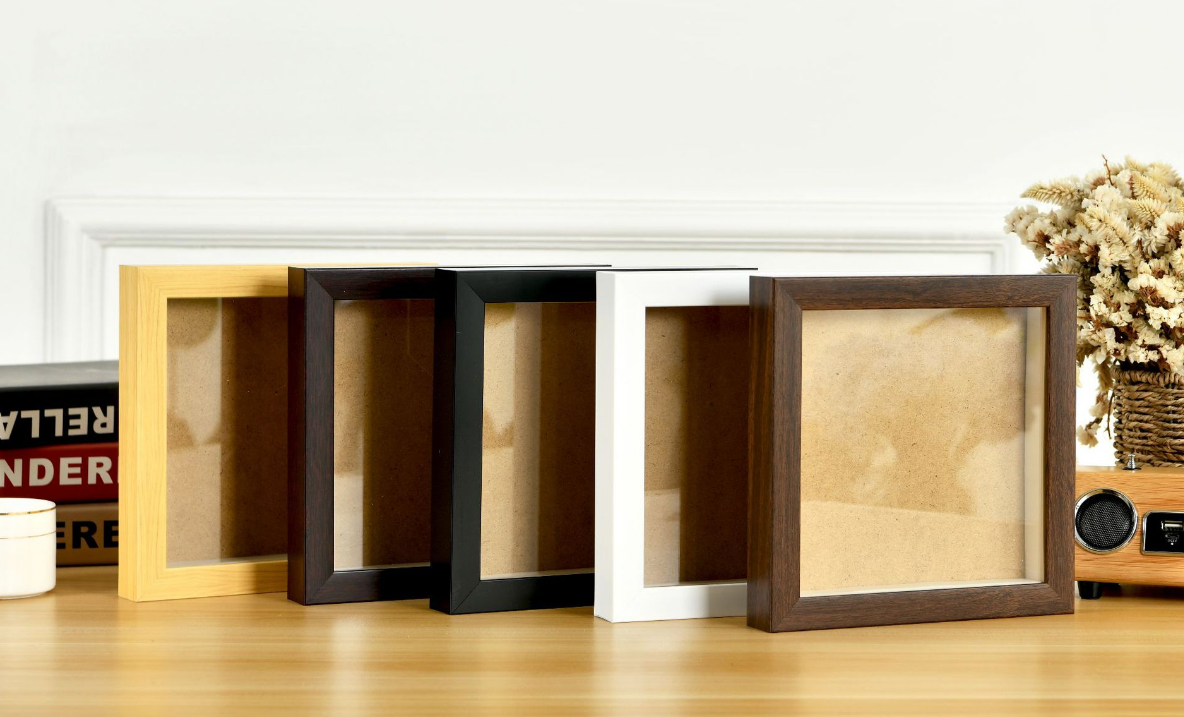
The production process of modern framing systems is based on precision metal forming and controlled surface engineering. An Aluminum Alloy Photo Frame is manufactured through a sequence of extrusion, machining, surface treatment, and assembly operations, each contributing to its final structural and aesthetic performance.
The process begins with aluminum billet preparation. Common alloy grades include 6063 and 6061 series, selected for their balance of extrudability and mechanical strength. The billets are heated to approximately 450°C–500°C before extrusion. At this stage, aluminum becomes malleable enough to be forced through a shaped die.
Extrusion is the core forming method. The molten-like aluminum is pushed through a steel die that defines the frame cross-section. This creates continuous profiles with consistent geometry. Dimensional accuracy is typically controlled within ±0.1 mm to ensure uniform assembly during later stages. After extrusion, the profiles are cooled rapidly using air or water quenching systems.
Once cooled, straightening is performed to correct any deformation caused during cooling. The profiles are then cut into standard or custom lengths, commonly ranging from 200 mm to 3000 mm depending on frame size requirements. CNC cutting equipment is often used to maintain precise 45-degree miter angles for corner assembly.
Surface treatment is a critical stage in production. Most Aluminum Alloy Photo Frame products undergo anodizing, an electrochemical process that forms an aluminum oxide layer on the surface. This layer typically measures 8–25 microns in thickness and improves corrosion resistance and surface hardness. Hardness values can reach 200–300 HV depending on processing conditions.
Alternatively, powder coating may be applied. In this process, electrostatically charged powder is sprayed onto the aluminum surface and then cured at 180°C–200°C. The resulting coating thickness ranges from 60–120 microns, providing decorative color options and additional surface protection.
After surface finishing, assembly begins. Frame profiles are joined using corner connectors made of aluminum alloy, steel, or reinforced polymer. Internal spring mechanisms or screw-fastened joints ensure tight corner alignment. Assembly tolerance at the joint is typically maintained within 0.2 mm to prevent visible gaps.
A standard Aluminum Alloy Photo Frame structure includes:
Extruded aluminum perimeter profile
Transparent protective layer (acrylic or glass, 1.5–3 mm)
Back panel (MDF or composite board, 2–5 mm)
Internal sealing strip to prevent dust entry
Mounting hardware such as hooks or brackets
Some advanced designs incorporate snap-open mechanisms, allowing front-loading of images. These systems use spring-loaded aluminum hinges that can withstand repeated opening cycles without significant wear.
Quality inspection is performed at multiple stages. Dimensional checks ensure profile accuracy, while surface inspection verifies uniform anodizing or coating. Load testing may also be conducted to evaluate frame rigidity under weight stress, especially for large-format applications.
The final product is designed for easy installation. Mounting systems may include wall brackets, cable suspension kits, or tabletop stands. The modular nature of aluminum extrusion allows compatibility across multiple installation methods without redesigning the base structure.
Through this controlled manufacturing process, aluminum alloy frames achieve a balance of structural precision, aesthetic flexibility, and long-term stability suitable for a wide range of display environments.

 Arabic
 French
 Spanish
 Portuguese
 Deutsch
 Turkish
 Dutch
Dutch
 Italiano
 Russian
 Romaian
 Portuguese (Brazil)
 Greek
Greek
 Bengali