


How Does a Linear Guide CNC Machine Improve High-Speed Feed Stability?
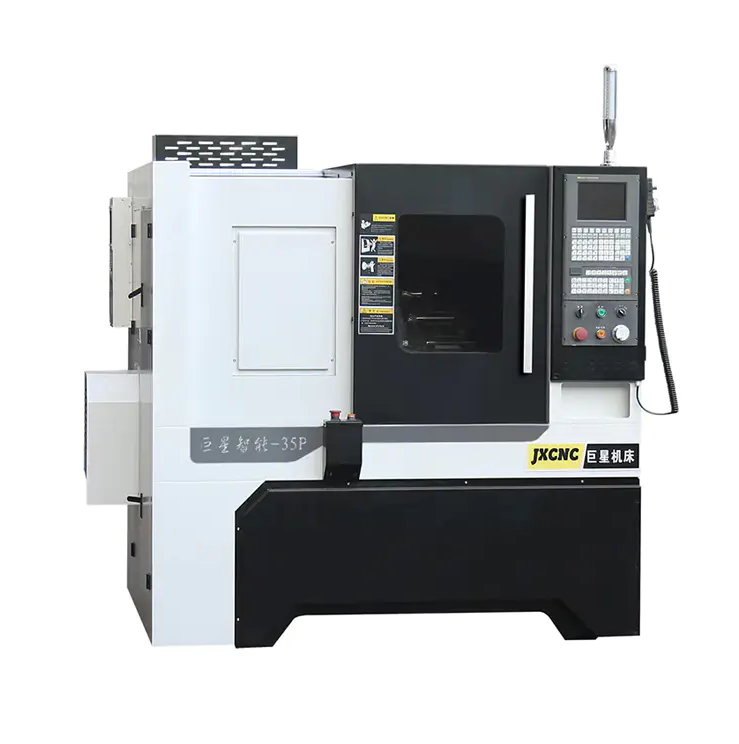
Aluminum machining is widely used in industries such as aerospace, electronics, automotive, and consumer products. The material requires high-speed cutting, stable feed control, and efficient chip evacuation. A Linear Guide CNC Machine is commonly selected for aluminum processing due to its low friction motion system and fast dynamic response.
Unlike heavy cutting steel operations, aluminum machining focuses on speed, surface quality, and thermal control.
Low Friction Movement for High-Speed Cutting
Linear guide systems use rolling contact elements that reduce resistance during axis movement. This makes them suitable for high-speed machining environments.
Typical structural features include:
Precision linear rails with hardened steel raceways
Ball or roller-type carriage blocks
Preloaded guide assemblies for reduced clearance
Lightweight moving components for faster acceleration
Machine performance parameters:
Rapid traverse: 36–48 m/min
Cutting feed rate: up to 15,000 mm/min
Acceleration: 0.6–1.2 G depending on model
Positioning accuracy: ±0.005–0.01 mm
These specifications allow efficient aluminum material removal while maintaining dimensional stability.
Spindle Optimization for Aluminum Workpieces
Aluminum requires higher spindle speeds and stable rotation.
A Linear Guide CNC Machine often uses:
High-speed spindle: 12,000–24,000 rpm
BT30 or BT40 taper systems
Direct drive or belt-driven spindle units
Ceramic hybrid bearings for reduced heat generation
Motor power typically ranges from:
5.5 kW for compact machines
11 kW for medium systems
18.5 kW for industrial machining centers
High-speed spindles help produce smooth chip formation and reduce burr generation.
Axis Coordination and Feed Stability
Fast machining requires precise coordination between X, Y, and Z axes.
Ball screw and guide integration typically includes:
Ground ball screws with C3/C5 accuracy
Screw diameters between 25–40 mm
Lead values optimized for speed (10–20 mm)
Double support bearing configurations
This structure ensures smooth acceleration without overshooting during directional changes.
Chip Evacuation in Aluminum Cutting
Aluminum chips are lightweight but can accumulate quickly.
Common machine solutions include:
High-flow coolant flushing system
Large chip conveyor design
Internal spiral chip removal paths
Air blast assistance near cutting zone
Efficient chip removal prevents re-cutting and surface scratches.
Thermal Control During Continuous Operation
High-speed machining generates heat in spindle and ball screw systems.
A Linear Guide CNC Machine may include:
Spindle cooling circulation
Oil-air lubrication for guide rails
Heat compensation system in CNC controller
Symmetrical machine structure design
These features help maintain dimensional stability during long production cycles.
Surface Finish Advantages
Aluminum components often require smooth surfaces for anodizing or assembly.
Surface quality is influenced by:
Tool sharpness and coating
Feed rate consistency
Spindle vibration control
Guide rail precision
Machine rigidity
Linear guide systems help maintain consistent tool paths, reducing surface marks and tool chatter.
Industrial Applications
Aluminum machining using Linear Guide CNC Machine includes:
Aerospace brackets and housings
Automotive engine components
Electronic device enclosures
Heat sinks and cooling plates
Lightweight structural parts
These applications require fast cycle time and consistent dimensional accuracy.
Conclusion
Aluminum machining demands speed, stability, and precision. A Linear Guide CNC Machine provides low-friction axis motion, high-speed spindle compatibility, and stable feed control. These features support efficient production while maintaining surface quality and dimensional consistency across different aluminum component designs.

 Arabic
 French
 Spanish
 Portuguese
 Deutsch
 Turkish
 Dutch
Dutch
 Italiano
 Russian
 Romaian
 Portuguese (Brazil)
 Greek
Greek
 Bengali