


Do You Need a Water Filter for Hard Water?
You use water daily, and you don't even think about the type of water that comes out of your plumbing. And you don't even consider getting a water filter for hard water until you see the signs. Soap with no lather, white scale on faucets, or cloudy buildup inside kettles and showerheads. But why does this happen? You need to look at what’s actually in your water supply first.
Hard and Soft Water
Water becomes “hard” mainly because of dissolved minerals, especially calcium and magnesium. These minerals come from natural rock formations. As water moves through soil and underground stone, it slowly picks up these elements along the way. The longer it stays underground, the more minerals it absorbs. That’s why groundwater and private wells are often much harder than surface water like rivers or lakes.
Hard water is most common in regions that rely heavily on groundwater or well systems, especially areas with limestone or chalk-based geology. These environments naturally contain higher levels of dissolved minerals, which makes scale buildup a long-term issue rather than a temporary inconvenience.
Soft water usually comes from rainfall or treated surface sources. Rain starts off nearly free of dissolved minerals. It only becomes “harder” when it travels through the ground and interacts with mineral-rich rock. This is also why hardness can change so much from one town to another, or even from one street to the next if different water sources are used.
The Evidence in Your Home
The difference shows up quickly inside a home. Hard water leaves behind mineral scale deposits. These deposits build layer by layer inside pipes and appliances. That buildup slowly narrows water flow and forces systems like water heaters, dishwashers, and washing machines to work harder than they should. It’s not just a cleaning issue; it becomes a maintenance problem that affects the whole house.
You also notice it in daily routines. Soap reacts poorly with calcium in hard water, forming a sticky residue instead of a clean lather. That’s why skin can feel dry or coated after showering, and why glassware often comes out of the dishwasher with spots or film. Even coffee makers and kettles need regular descaling because minerals stick and accumulate on these surfaces.
The real issue is that these effects are not limited to one faucet or one room. Hard water moves through every pipe in the home. That’s where a whole-house solution becomes important. A properly designed whole-house system treats water at the entry point, before it spreads through plumbing. Instead of dealing with the problem in small pieces, it addresses it at the source.
What a Whole House Water Filter for Hard Water Can Do
A central system typically uses ion exchange or similar softening processes to reduce calcium and magnesium levels before water reaches taps, showers, and appliances. It removes or reduces these minerals early, so the system prevents scale from forming in the first place. That means fewer blockages, less wear on appliances, and fewer cleaning issues. A whole-home setup ensures every drop of water entering the house is treated the same way. That includes bathroom water, kitchen water, laundry water, and even outdoor connections.
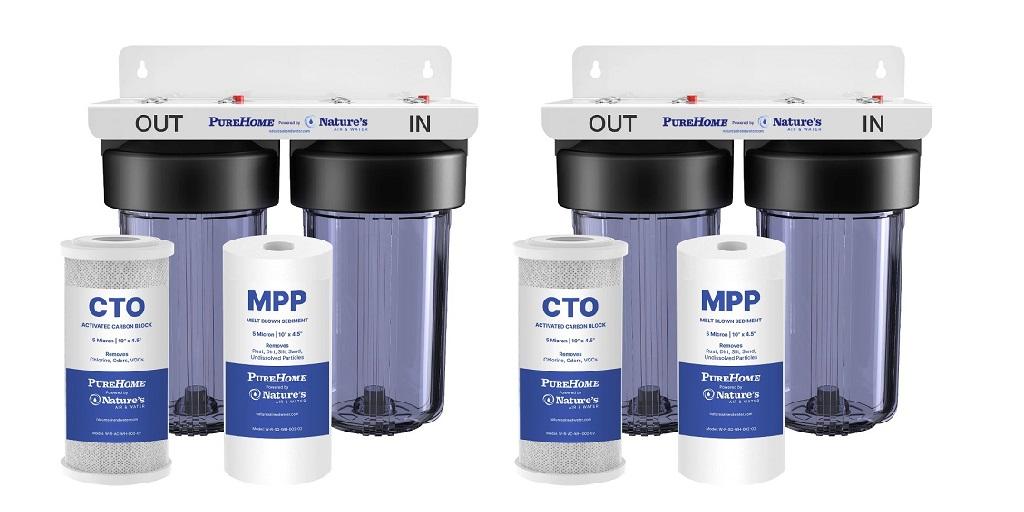
A well-designed home filtration system like these from Nature's Air & Water improves comfort and protects your home's infrastructure. That’s why many homeowners eventually choose a centralized solution rather than patchwork fixes. A properly installed water filter for hard water keeps water running smoothly in your entire home.

 Arabic
 French
 Spanish
 Portuguese
 Deutsch
 Turkish
 Dutch
Dutch
 Italiano
 Russian
 Romaian
 Portuguese (Brazil)
 Greek
Greek
 Bengali