


Residential Architectural Photography
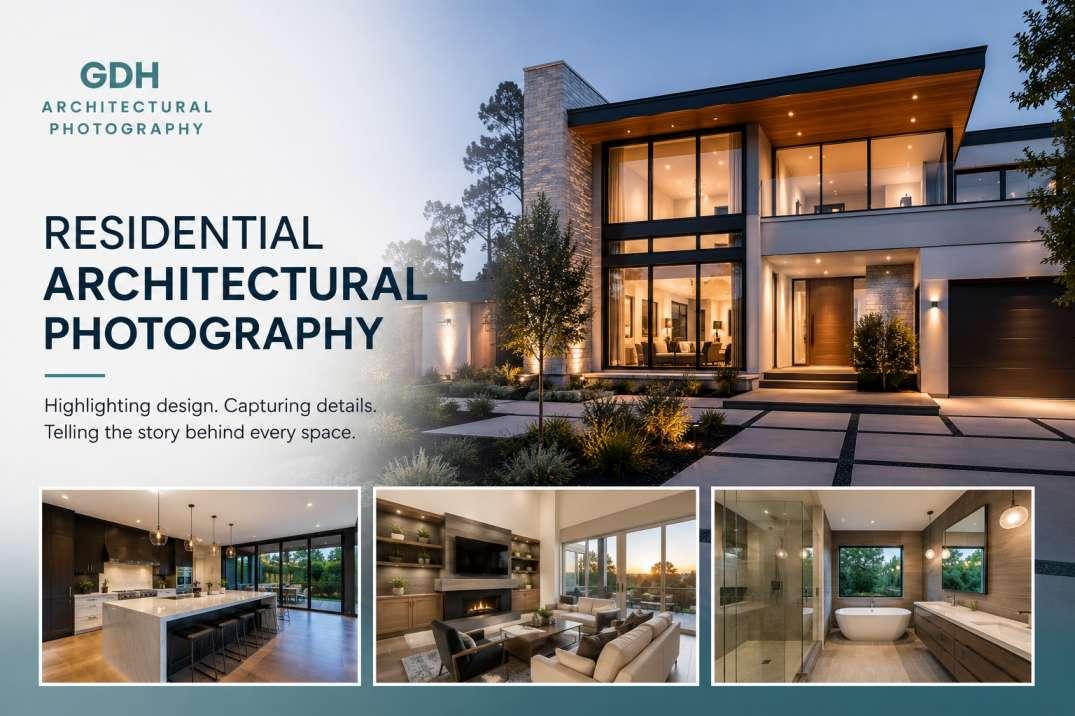
Residential Architectural Photography: Turning Beautiful Homes Into Powerful Visual Stories
When people think about selling, marketing, or showcasing a home, they often focus on the design itself. The flooring, lighting, custom finishes, and carefully chosen furniture get plenty of attention. But here's the thing—if those details aren't captured properly, much of their impact gets lost.
That's where residential architectural photography comes in.
I've seen stunning homes look average in poorly taken photos, and I've seen thoughtfully photographed properties attract attention almost instantly. Great photography doesn't just document a space—it tells a story about how that space feels.
Whether you're an architect, builder, interior designer, real estate developer, or homeowner, investing in professional architectural photography can make a significant difference.
What Is Residential Architectural Photography?
Residential architectural photography is the art and technique of photographing homes in a way that highlights their design, structure, materials, and atmosphere.
Unlike standard real estate photos, architectural photography focuses on the creative vision behind the property. It's about showcasing design intent, craftsmanship, and the relationship between spaces.
A professional photographer carefully considers:
- Lighting
- Angles
- Composition
- Perspective
- Architectural details
- Interior and exterior balance
The goal isn't simply to show a room. The goal is to communicate the experience of being there.
Why Professional Photography Matters for Residential Projects
Many homeowners assume a smartphone can do the job. Modern phones are impressive, but architecture is one of the most challenging subjects to photograph properly.
Wide-angle distortion, uneven lighting, reflections, and perspective issues can quickly make a beautifully designed home appear awkward.
Professional photographers use specialized equipment and techniques to solve these problems.
Better First Impressions
People form opinions in seconds. Whether someone is browsing a portfolio, visiting a website, or reviewing project submissions, photography creates the first impression.
High-quality images immediately communicate professionalism and attention to detail.
Showcase Design Intent
Architects spend months, sometimes years, refining every aspect of a project.
The placement of windows, the flow between rooms, and the interaction with natural light all deserve to be documented accurately.
Professional residential architectural photography ensures those design decisions are visible and appreciated.
Build a Strong Portfolio
For architects and designers, a portfolio is often the most important marketing tool.
Strong project photography helps attract better clients, win awards, and support future business growth.
The Connection Between Architecture and Photography
Architecture and photography have more in common than many people realize.
Both rely heavily on composition, balance, proportion, and light.
The best photographers don't simply point a camera at a building. They study how the structure interacts with its surroundings and how light moves through the space throughout the day.
That's why timing matters.
Sometimes the perfect photograph happens early in the morning. Other times, it's the golden glow of late afternoon that brings a home to life.
Patience often makes the difference between a good image and an unforgettable one.
Creative Architecture Photography: Going Beyond Documentation
One area that has gained popularity in recent years is creative architecture photography.
Instead of simply recording a structure, creative photography explores unique perspectives, dramatic lighting, reflections, and artistic compositions.
For example:
- Capturing shadows created by geometric forms
- Using leading lines to guide the viewer's eye
- Highlighting symmetry and patterns
- Framing architecture through landscape elements
- Photographing reflections in glass or water
These techniques create images that feel more like artwork than documentation.
For architects looking to stand out in a crowded market, creative architectural images can be incredibly valuable.
Capturing the Beauty of Architecture Photography Interior Spaces
Interior spaces often present the biggest challenge.
Anyone who's tried photographing a living room knows the struggle. The windows look too bright, the corners look too dark, and somehow the room never feels as spacious as it does in person.
That's where expertise in architecture photography interior work becomes essential.
Professional photographers use advanced lighting techniques and exposure blending to create balanced, natural-looking images.
The result is a photograph that accurately reflects what the human eye experiences.
Important Interior Features to Highlight
When photographing residential interiors, professionals focus on:
- Natural light flow
- Custom cabinetry
- Material textures
- Ceiling details
- Staircase designs
- Built-in features
- Furniture placement
- Architectural focal points
Even small details can dramatically influence the final image.
Why Local Experience Matters
Location can influence architectural photography more than many people realize.
Weather patterns, sunlight direction, surrounding landscapes, and local architectural styles all play a role.
For example, a skilled university place photographer understands how local environmental conditions affect residential photography throughout the year.
They know the best times of day to photograph certain properties and how to work with local lighting conditions to create stronger images.
That local knowledge often translates into better results and a more efficient photography session.
How GDH Architects Helps Bring Residential Projects to Life
At GDH Architects, photography isn't viewed as an afterthought. It's considered an important part of presenting architectural work to the world.
Every project has a unique story.
Some homes impress with bold contemporary design. Others stand out because of subtle craftsmanship and thoughtful details.
Professional photography ensures those stories are captured accurately and presented in a way that resonates with clients, homeowners, and industry professionals alike.
Choosing the Right Residential Architectural Photographer
Not all photographers specialize in architecture.
Before hiring someone, review their portfolio carefully.
Look for:
- Straight vertical lines
- Balanced lighting
- Consistent image quality
- Attention to detail
- Strong composition
- Experience with residential projects
If every image feels intentional, that's usually a good sign.
A skilled architectural photographer understands both the technical side of photography and the design principles behind architecture.
That combination is what creates truly exceptional results.
Final Thoughts
A well-designed home deserves more than ordinary photographs.
Professional residential architectural photography captures the character, craftsmanship, and vision behind every project. It transforms buildings into compelling visual stories that connect with viewers and leave a lasting impression.
Whether you're an architect building a portfolio, a designer showcasing your latest work, or a homeowner proud of a custom residence, investing in quality photography is one of the smartest decisions you can make.
After all, long after construction is complete, the photographs become the lasting record of the work,and those images should be every bit as impressive as the architecture itself.

 Arabic
 French
 Spanish
 Portuguese
 Deutsch
 Turkish
 Dutch
Dutch
 Italiano
 Russian
 Romaian
 Portuguese (Brazil)
 Greek
Greek
 Bengali