


Custom CNC Machining for Industrial Applications
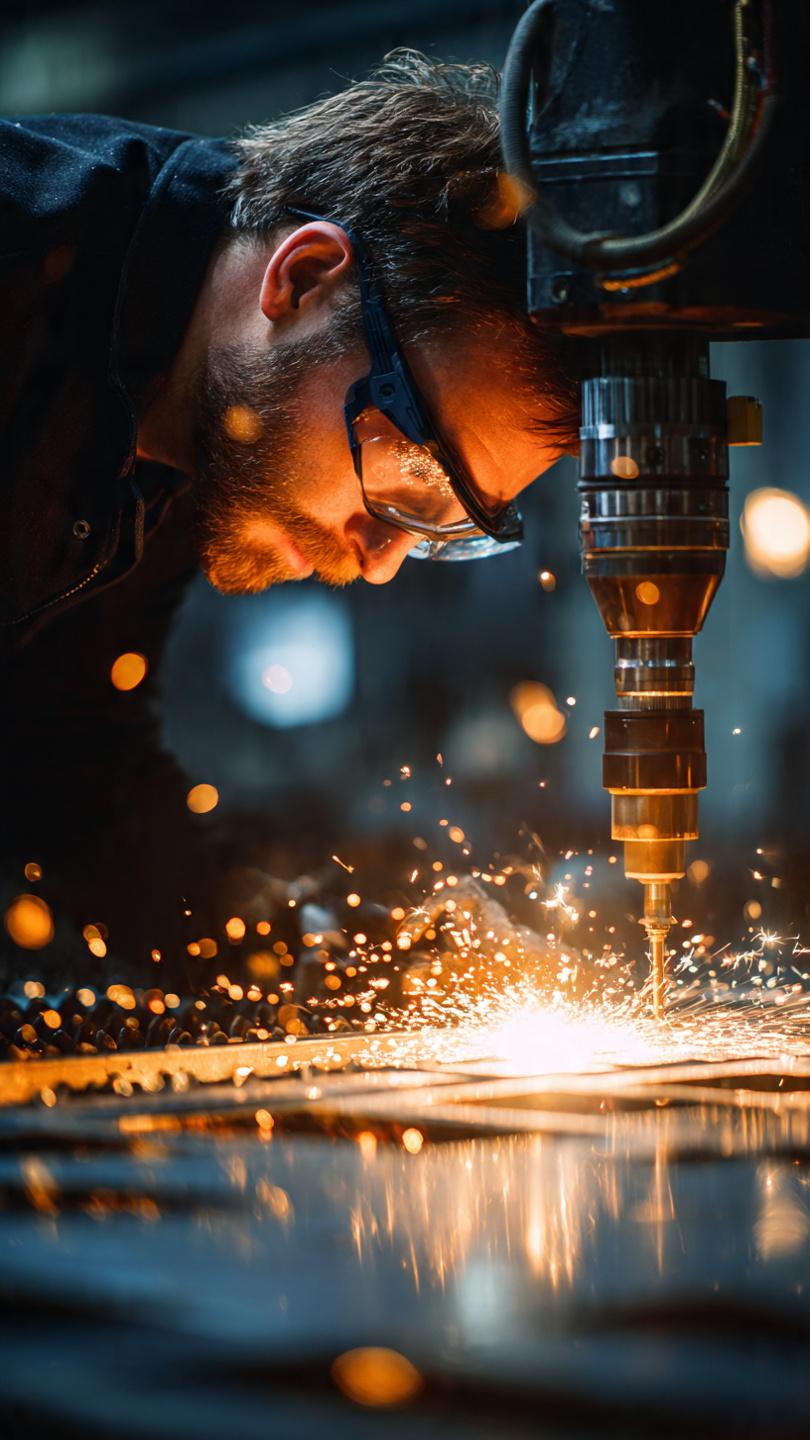
There's an uncomfortable truth in manufacturing. A part can look perfect, feel perfect, and still be completely out of spec. Custom cnc machining only delivers real value when inspection gets treated as part of production, not as a box-ticking exercise tacked on at the end.
What Makes Precision CNC Machined Parts Trustworthy
The phrase precision cnc machined parts gets thrown around loosely, but genuine precision is only provable through measurement, not appearance. A part machined to plus or minus five microns needs verification with equipment capable of measuring well beyond that resolution, usually a coordinate measuring machine, sometimes backed up by optical or laser scanning for complex shapes.
What separates trustworthy precision parts from parts that simply claim to be precise is documentation. A proper inspection report specifies exactly which dimensions were measured, against what tolerance, using what equipment, and on what date. Without that paper trail, a buyer is basically taking the manufacturer's word for it, which is a poor substitute for verifiable data, especially on parts headed into safety-critical applications.
First-article inspection, checking the very first part produced in a run before committing to full production, catches most of the problems that would otherwise spread through an entire batch. Skipping that step to save time is one of the most common, and costly, shortcuts a less disciplined manufacturer takes.
The Often-Missed Step: In-Process Inspection
Final inspection alone isn't enough for genuinely demanding parts. In-process inspection, checking critical dimensions partway through a multi-stage machining sequence, catches problems while there's still time to fix them, rather than after a part has already gone through every operation including the expensive finishing steps.
This matters particularly for parts machined in multiple setups, where a small error early on can compound through later stages. Manufacturers serious about precision build inspection checkpoints into the process flow itself, rather than treating measurement as something that happens only at the end.
Conclusion
Precision cnc machined parts earn that name through rigorous, documented measurement at multiple stages of production, not through visual inspection or operator confidence alone. When sourcing precision cnc machined parts, ask to see the inspection process itself, not just the final report. That's where the real evidence of quality lives.
FAQs
What's the difference between final inspection and in-process inspection?
Final inspection checks the completed part, while in-process inspection checks critical dimensions partway through machining, catching errors before they propagate through later operations.
Why does first-article inspection matter for production runs?
It verifies the first part meets specification before committing to a full batch, which prevents widespread defects from an unnoticed early-stage problem.
What should an inspection report include to be considered trustworthy?
It should specify exactly which dimensions were measured, the equipment used, the applicable tolerances, and the date of inspection.
There's a persistent assumption in manufacturing that you get speed or accuracy, never both, and that rushing a job inevitably costs you precision. Modern custom cnc machining has largely dismantled that assumption, though it takes the right combination of programming, tooling, and process planning to pull off.
How CNC Precision Machining Achieves Both
The trick behind fast and accurate cnc precision machining mostly lives in the programming stage, long before the spindle starts turning. Modern CAM software optimises toolpaths for cycle time and surface finish at once, calculating feed rates and tool engagement angles that cut down on unnecessary air-cutting and reduce tool deflection, rather than relying on an operator's gut feel set conservatively to avoid mistakes.
Tooling choices matter more here than most people realise. Modern coated carbide tooling, built for particular material grades, runs at noticeably higher feed rates than older general-purpose tooling while holding tighter tolerances, simply because the tool geometry and coating cut down on heat and wear. Picking the right tool for a specific job, instead of grabbing whatever's already in the carousel, often delivers speed and precision gains together.
Machine rigidity matters too, even though it's less visible than software or tooling. A machine with great static specs can still struggle to hold tight tolerances at high feed rates if its structure flexes under cutting force. That's why high-throughput precision shops tend to invest in heavier, more rigid machine platforms rather than just running lighter machines harder.
Where the Real Time Savings Come From
A lot of cycle time reduction in precision machining actually comes from cutting the number of setups, not from cutting faster. Every time a part gets removed, reoriented, and re-clamped, there's a chance for positional error and lost time. Multi-axis machines that reach multiple faces in a single setup eliminate that problem entirely, and often save more time than simply spinning the spindle faster ever could.
Simulation software has changed things too, letting toolpaths get tested virtually before any metal is cut, which catches collisions or inefficient movements that would otherwise only show up, expensively, on the shop floor.
Conclusion
Cnc precision machining has moved well past the old trade-off between speed and accuracy. With smarter programming, the right tooling, rigid machine platforms, and fewer setups, modern shops can deliver both, and the providers who've invested in this approach tend to offer noticeably better value than those still relying on brute-force speed or overly cautious slow runs. If consistent quality at speed matters for your project, it's worth checking how a provider approaches cnc precision machining before signing off on a quote.
FAQs
Does faster CNC machining always mean lower accuracy?
Not with modern programming and tooling. Properly optimised toolpaths and rigid machines can hit high speed without sacrificing tolerance.
Why does reducing setups matter more than increasing spindle speed?
Each re-clamping introduces potential positional error and adds time, so multi-axis machines that minimise setups often save more time than faster cutting alone.
How does simulation software improve CNC machining efficiency?
It lets toolpaths get tested virtually beforehand, catching collisions or inefficiencies before they cause costly mistakes on the actual machine.

 English
 Arabic
 French
 Spanish
 Portuguese
 Turkish
 Dutch
Dutch
 Italiano
 Russian
 Romaian
 Portuguese (Brazil)
 Greek
Greek
 Bengali