


What Happens Inside Automotive Cable Tie Mold During Heating?
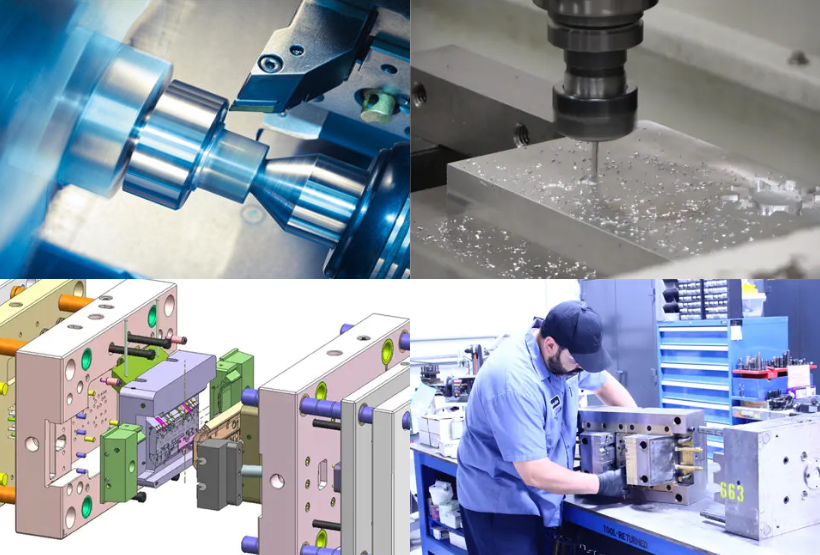
Automotive cable ties are commonly produced using PA66 nylon reinforced with heat-resistant additives. This material requires stable thermal control throughout the injection process, making the Automotive Cable Tie Mold highly sensitive to temperature variation.
Melt processing temperature usually ranges from 275°C to 315°C. Within this range, nylon maintains sufficient flowability to fill narrow cavity channels. However, exceeding this range may cause polymer degradation, resulting in reduced molecular chain strength and brittle final products.
Inside the mold, thermal distribution is not uniform. The first sections of the cavity fill quickly, while end sections experience heat loss due to long flow paths. This creates a temperature gradient that directly affects crystallization behavior. Uneven crystallization leads to internal stress accumulation in finished cable ties.
Mold temperature control plays a critical role. Standard mold surface temperature is maintained between 75°C and 95°C. If mold temperature is too low, surface freezing occurs too early, restricting flow into locking teeth structures. If too high, cycle time increases and dimensional shrinkage becomes unstable.
Cooling channel design inside the Automotive Cable Tie Mold is engineered to balance thermal dissipation. Channels are typically drilled close to cavity surfaces, maintaining cooling water between 15°C and 25°C. Balanced cooling reduces warpage in long strap sections.
Thermal fatigue is another long-term issue. Continuous heating and cooling cycles generate stress inside mold steel. Materials such as H13 are commonly used because they resist thermal cracking under repeated exposure to high temperature cycles.
Gate freezing time is also temperature-dependent. If gate freezes too early, packing pressure cannot fully compensate shrinkage. If it freezes too late, overpacking may occur, leading to flash defects. Gate diameter is usually controlled between 0.6 mm and 1.2 mm depending on cavity layout.
Moisture interaction also affects thermal stability. PA66 absorbs water easily, and if drying is insufficient, steam forms during injection. This creates voids or splay marks inside the molded product. Drying conditions typically require 80°C for 3–4 hours before processing.
Thermal consistency is essential for automotive-grade performance. Cable ties used in engine compartments must resist elevated temperatures without losing mechanical strength. Therefore, the mold must ensure uniform heat distribution to maintain repeatable structural integrity.

 Arabic
 French
 Spanish
 Portuguese
 Deutsch
 Turkish
 Dutch
Dutch
 Italiano
 Russian
 Romaian
 Portuguese (Brazil)
 Greek
Greek
 Bengali