Introduction
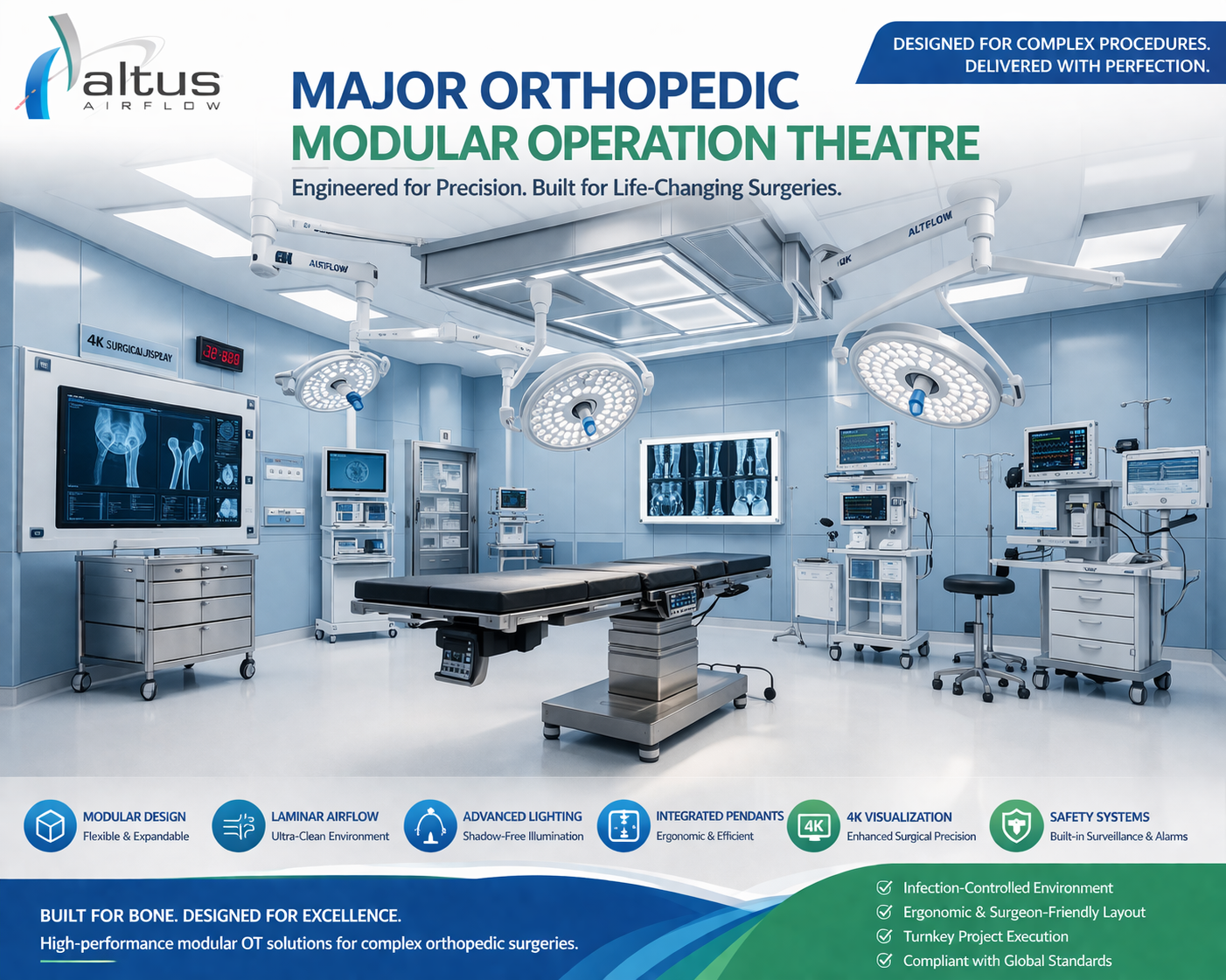
A Major Orthopedic Modular Operation Theatre is a specialized surgical facility designed to support complex orthopedic procedures such as joint replacements, trauma surgeries, spine operations, and sports injury treatments. Hospitals investing in modular operation theatres often want to know how much time is required for installation before the facility becomes fully operational.
Compared to conventional construction methods, modular operation theatres offer significantly faster project completion because many components are prefabricated and assembled on-site. The overall timeline depends on factors such as project scope, customization requirements, infrastructure readiness, and regulatory approvals.
Understanding the Installation Process
Installing a modular orthopedic OT involves several carefully planned stages. Each stage is designed to ensure compliance with healthcare standards while maintaining quality and efficiency.
The process generally includes:
- Site assessment and planning
- OT design and engineering
- Manufacturing of modular components
- Site preparation
- Installation of OT systems
- Testing and validation
- Final commissioning
When managed properly, these stages can be completed much faster than traditional construction projects.
Average Installation Timeline
In most cases, a Major Orthopedic Modular Operation Theatre can be installed and commissioned within 6 to 12 weeks after design approval and site readiness. Smaller projects may be completed more quickly, while larger multi-OT projects may require additional time.
The exact duration depends on:
- OT size and layout
- Customization requirements
- Equipment integration
- Existing infrastructure conditions
- Approval processes
Working with an experienced modular OT provider helps ensure timely completion.
Site Assessment and Project Planning
The first step involves evaluating the hospital site and understanding operational requirements.
Activities may include:
- Facility inspection
- Utility assessment
- Workflow planning
- Space allocation
- Feasibility analysis
This phase typically takes one to two weeks depending on project complexity.
Design and Engineering Phase
After planning is complete, engineers create detailed drawings and technical specifications.
This stage includes:
- OT layout design
- HVAC engineering
- Medical gas planning
- Electrical system design
- Equipment integration planning
Design and engineering usually require one to three weeks based on customization needs.
Manufacturing of Modular Components
Once designs are approved, modular components are manufactured in a controlled production facility.
These components may include:
- Wall panels
- Ceiling systems
- Hermetically sealed doors
- Utility panels
- Flooring systems
Manufacturing generally takes two to four weeks and often runs parallel with site preparation to reduce project timelines.
Site Preparation
Before installation begins, the hospital area must be prepared.
Preparation work may include:
- Civil modifications
- Utility connections
- Structural checks
- Electrical provisions
- Access planning
This phase usually takes one to two weeks.
Installation of Modular Systems
One of the biggest advantages of modular construction is rapid installation.
Installation activities typically include:
- Wall panel assembly
- Ceiling installation
- Door fitting
- Flooring completion
- Utility integration
The core modular structure can often be installed within one to two weeks.
HVAC and Environmental Control Installation
Orthopedic operation theatres require advanced environmental control systems to maintain sterility.
Installation includes:
- Air handling units
- Ducting systems
- HEPA filtration units
- Laminar airflow systems
- Pressure control systems
HVAC installation and balancing generally require one to two weeks.
Medical Gas and Electrical Integration
Medical utility systems are installed and connected during this stage.
Services typically include:
- Oxygen pipelines
- Medical air systems
- Vacuum systems
- Surgical lighting
- Electrical control panels
These installations are often completed simultaneously with HVAC work.
Testing and Validation
Before handover, the operation theatre must undergo comprehensive testing and validation.
This process may include:
- Airflow testing
- HEPA filter integrity testing
- Pressure differential verification
- HVAC performance testing
- Medical gas system testing
- Electrical safety inspections
Testing and validation usually take several days to one week.
Factors That Affect Installation Time
Several variables can influence the overall project schedule.
Project Size
A single OT installation is generally faster than a multi-theatre project.
Customization Level
Highly customized designs may require additional engineering and manufacturing time.
Equipment Requirements
Advanced orthopedic equipment integration can increase project duration.
Site Conditions
Existing infrastructure and utility availability play a major role in project speed.
Compliance and Approvals
Regulatory inspections and documentation requirements may extend timelines.
Benefits of Modular OT Installation
Hospitals increasingly prefer modular operation theatres because of their speed and efficiency.
Advantages include:
- Faster project completion
- Reduced disruption to hospital operations
- Better quality control
- Lower construction waste
- Easier maintenance and upgrades
These benefits make modular OTs a practical solution for healthcare facilities.
Why Faster Installation Matters
A shorter installation timeline allows hospitals to:
- Start surgical services sooner
- Increase patient capacity faster
- Generate revenue earlier
- Reduce downtime during expansion projects
- Improve return on investment
Rapid project completion is one of the key reasons modular operation theatres are becoming increasingly popular.
Conclusion
The installation of a Major Orthopedic Modular Operation Theatre typically takes between 6 and 12 weeks, depending on project size, customization requirements, infrastructure readiness, and equipment integration. Thanks to prefabricated construction methods, modular operation theatres can be completed significantly faster than traditional surgical facilities while maintaining the highest standards of quality, safety, and compliance. By partnering with an experienced modular OT provider, hospitals can achieve efficient project execution and establish a fully functional orthopedic surgical environment in a relatively short period.
Frequently Asked Questions (FAQs)
1. How long does it take to install a Major Orthopedic Modular Operation Theatre?
A Major Orthopedic Modular Operation Theatre generally takes between 6 and 12 weeks to install and commission, depending on project complexity and site conditions.
2. Why are modular operation theatres faster to install?
Modular OTs use prefabricated components manufactured off-site, which significantly reduces on-site construction time.
3. What factors affect the installation timeline?
Project size, customization, equipment integration, infrastructure readiness, and regulatory approvals can all impact completion time.
4. Is testing required before the OT becomes operational?
Yes. Airflow testing, HEPA filter validation, HVAC performance checks, electrical inspections, and medical gas testing are typically conducted before handover.
5. What are the benefits of modular OT installation?
Benefits include faster completion, better quality control, reduced disruption, easier maintenance, and long-term operational reliability.
Read Our Previous Blog ---------------> Which surgeries and procedures are performed in a Modular Major Orthopedic Operation Theatre?



 Arabic
 French
 Spanish
 Portuguese
 Deutsch
 Turkish
 Dutch
Dutch
 Italiano
 Russian
 Romaian
 Portuguese (Brazil)
 Greek
Greek
 Bengali