


Hand Stitched Rasp Guide for Fine Wood Shaping and Carving Tools
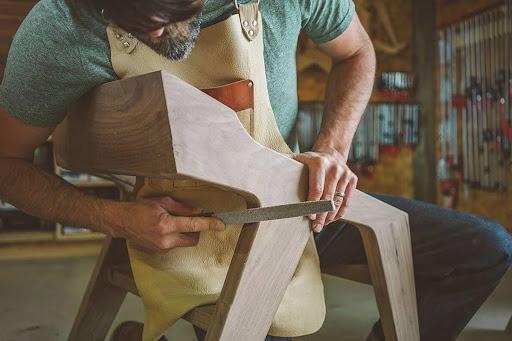
Wood shaping is a detailed craft that requires precision tools capable of removing material smoothly while maintaining control. Among the most valued tools in woodworking are rasps, especially the hand-stitched rasp, known for its unique cutting ability and superior finishing performance.
In modern workshops, the hand-made rasp is widely used for shaping curves, refining edges, and preparing surfaces before sanding. Its ability to balance fast material removal with controlled finishing makes it essential for both professional woodworkers and hobbyists.
What is a Hand-Stitched Rasp?
A stitched rasp is a woodworking tool where each cutting tooth is individually formed by a craftsman using a hammer and a chisel-like tool. This process creates a slightly irregular pattern of teeth, which improves cutting efficiency and reduces chatter during use.
Unlike machine-made rasps with uniform teeth, hand-stitched versions offer:
-
More natural cutting action
-
Smoother surface finish
-
Better control on curved surfaces
This handcrafted variation is considered a premium tool in woodworking due to its precision and performance.
How a Rasp Works in Wood Shaping?
A rasp is designed for rapid material removal in wood and other soft materials. It uses raised, individual teeth that scrape away material quickly, making it ideal for shaping rather than finishing.
Rasps are commonly used for:
-
Sculpting curved surfaces
-
Removing saw or chisel marks
-
Refining edges and corners
-
Shaping detailed wooden forms
Unlike files, which produce smoother finishes, rasps are designed for aggressive shaping and fast stock removal.
Fine Rasp vs Coarse Rasp
Choosing between them depends on the stage of work.
Coarse Rasp
-
Removes large amounts of material quickly
-
Ideal for rough shaping
-
Used in the early stages of carving
Fine Rasp
-
Provides smoother surface control
-
Used for refining shapes
-
Prepares surface for sanding or finishing
A rasp is especially useful when transitioning from rough carving to detailed shaping, where precision becomes more important than speed.
Fine and Hand-made Rasp Together
The combination of a hand-stitched rasp and a rasp gives woodworkers full control over shaping stages. The hand-stitched version removes material efficiently while still maintaining a relatively smooth finish, reducing the need for excessive sanding.
This makes it ideal for:
-
Furniture making
-
Instrument carving
-
Sculptural woodworking
-
Detail refinement in curved surfaces
Hand-made rasps are also valued because their irregular tooth pattern reduces “tramline” marks, leaving a more natural surface finish.
Role of Carving Tools in Modern Workshops
Alongside traditional hand tools, carving tools have transformed woodworking by accelerating material removal and shaping. These tools use electric or rotary systems to carve wood quickly and efficiently.
Common carving tools include:
-
Rotary grinders
-
Angle grinders with carving discs
-
Flexible shaft carving machines
-
Burr-based shaping tools
While power tools excel at speed, they are often used alongside hand tools like rasps to refine shapes and add finishing details.
Hand Tools vs Automatic Carving Tools
Both hand rasps and carving tools have distinct roles in woodworking:
Hand Tools (Rasps)
-
Offer high precision
-
Better control for fine detailing
-
Quiet and dust-free operation
-
Ideal for controlled shaping
Automatic Carving Tools
-
Extremely fast material removal
-
Suitable for rough shaping
-
Requires skill for precision work
-
Generates more dust and noise
Most professionals use both systems together for the best results—power tools for rough shaping and rasps for refinement.
Advantages of Hand-made Rasps
Hand-stitched rasp is preferred by experienced woodworkers due to several benefits:
-
Faster cutting with a smoother finish
-
Reduced tool clogging
-
Better control over curved surfaces
-
Long-lasting durability
-
Suitable for multiple materials like wood and composites
Their craftsmanship makes them more expensive but significantly more effective for detailed work.
Choosing the Right Rasp for Your Project
When selecting a rasp, consider:
-
Level of detail required
-
Material type (softwood vs hardwood)
-
Stage of carving (rough vs finishing)
-
Desired surface smoothness
For most woodworking projects, using both a coarse rasp for shaping and a finishing rasp provides the best workflow.
Conclusion
The hand-made rasp remains one of the most essential tools in woodworking due to its balance of precision and efficiency. Meanwhile, modern power carving tools complement traditional rasps by speeding up rough material removal, creating a complete system for efficient and professional wood shaping. When paired with a rasp, it allows craftsmen to achieve detailed shaping and smooth finishes with control.

 Arabic
 French
 Spanish
 Portuguese
 Deutsch
 Turkish
 Dutch
Dutch
 Italiano
 Russian
 Romaian
 Portuguese (Brazil)
 Greek
Greek
 Bengali