


The End-to-End System: A Modern 5G Mm-Wave Technology Market Solution Explained
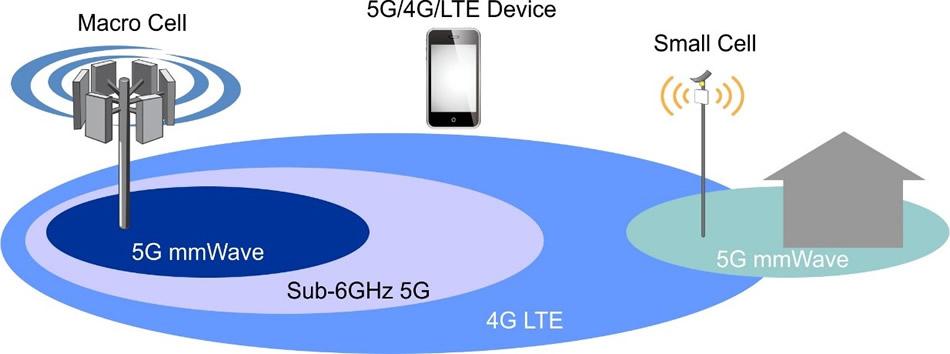
A complete and functional 5G Mm-Wave Technology Market Solution is not a single product but a complex, tightly integrated system of systems, stretching from the network core to the antenna in a user's device. Its primary purpose is to solve the formidable physics challenges of millimeter-wave propagation and deliver a seamless, multi-gigabit wireless experience. The solution is architected to provide a massive "capacity-on-demand" layer that works in concert with broader, lower-frequency coverage networks. It begins with the strategic deployment of a dense physical infrastructure, consisting of numerous small cell base stations. Unlike traditional cell towers, these are compact, low-power nodes connected to the network via high-capacity fiber optic backhaul. This dense mesh topology is the foundational element of the solution, as it is necessary to overcome the short range of mmWave signals and provide the line-of-sight links required for a stable connection. The solution is designed to create targeted zones of extreme performance rather than ubiquitous coverage.
At the heart of the hardware solution, both in the base station and the end-user device, lies the advanced radio and antenna system. This part of the solution is a masterpiece of modern radio frequency engineering. It comprises the modem chipset, which handles the complex signal processing, and the RF front-end (RFFE) modules, which contain the amplifiers, filters, and switches needed to operate at such high frequencies. The most critical component of this hardware solution is the phased-array antenna, often referred to as an Antenna-in-Package (AiP) module. This is not a simple antenna but an array of dozens of tiny antenna elements that are intelligently controlled by software. This solution enables beamforming—the ability to create and electronically steer a highly focused, pencil-thin beam of radio energy. The solution requires beamforming to be implemented on both sides of the link; the base station forms a beam pointing to the device, and the device forms a beam pointing back to the base station. This creates a strong, robust connection that concentrates energy where it is needed, overcoming the immense signal loss that would otherwise make mmWave communication impossible.
The software layer is the intelligence that makes the entire hardware solution work as a cohesive system. This software is responsible for the incredibly complex task of "beam management." This includes the initial process where the device and base station discover each other and establish the optimal beam pair. More importantly, it involves continuous beam tracking, where the software makes micro-second adjustments to keep the beams perfectly aligned as the user moves, rotates the device, or as environmental conditions change. A key part of the software solution is also managing "beam switching" and "blockage mitigation." For example, if a user's hand covers the antenna module the phone is currently using, the software must instantly detect this blockage and switch to another antenna module on the phone that has a clear path. Similarly, if a user walks behind a pillar, the software can instruct the base station to try and establish a link using a reflected, non-line-of-sight beam. This sophisticated, AI-assisted software management is what transforms a collection of high-tech hardware into a resilient and usable communication solution.
Finally, the complete solution is defined by its seamless integration with the broader cellular network in a "dual connectivity" architecture. A mmWave-capable device is never only on the mmWave network. The solution is designed so that the device always maintains a robust anchor connection to a mid-band or low-band 5G (or even 4G LTE) network. This anchor band is used for control signaling, maintaining session continuity, and providing a baseline level of connectivity when the user is outside of a mmWave coverage zone. When the device enters a mmWave hotspot, the dual connectivity solution allows it to simultaneously connect to the mmWave network for all its high-bandwidth data needs, while still anchored to the lower-band network. This provides the best of both worlds: the broad, reliable coverage of the lower bands and the extreme, multi-gigabit performance of mmWave when available. This intelligent aggregation of different spectrum layers is the ultimate expression of the end-to-end 5G mmWave solution, ensuring a seamless and powerful user experience.
Explore More Like This in Our Regional Reports:

 Arabic
 French
 Spanish
 Portuguese
 Deutsch
 Turkish
 Dutch
Dutch
 Italiano
 Russian
 Romaian
 Portuguese (Brazil)
 Greek
Greek
 Bengali