


Applications of Magnesium Dioxide in Modern Science
Introduction
Some compounds get all the attention—carbon this, lithium that. Then there are the quieter ones sitting somewhere in lab notes and research papers. Magnesium dioxide is one of those. You don’t hear about it much unless you’re already poking around chemistry topics, and even then, it kind of slips in and out of conversations.
Still, magnesium dioxide shows up in more places than people expect. Not loudly. Not dramatically. Just… doing its thing in the background.
What is Magnesium Dioxide, Really?
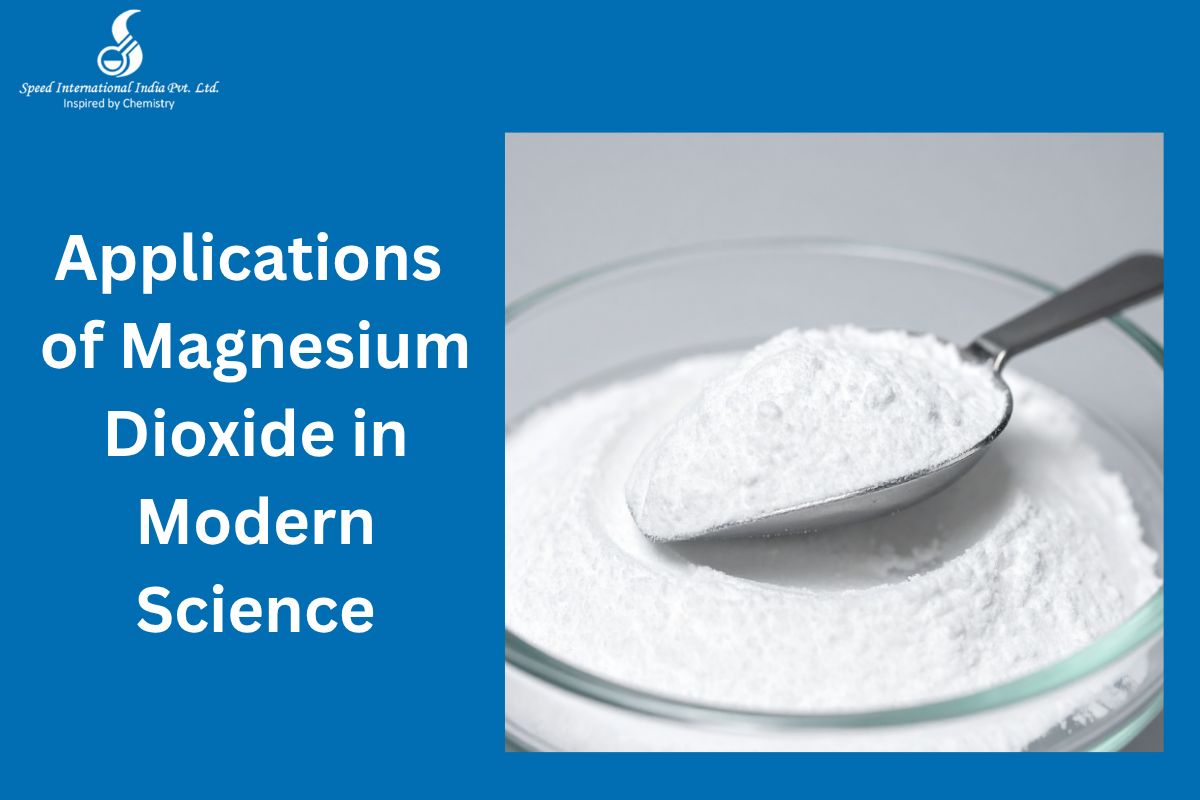
Alright, quick picture. Magnesium dioxide (MgO₂) is a peroxide compound. It’s made of magnesium and oxygen, but arranged in a way that gives it slightly different behaviour compared to plain magnesium oxide.
It’s not the most stable compound out there. That’s part of the reason it doesn’t dominate industrial use like some others. It can break down and release oxygen under certain conditions, which is actually where things get interesting.
I remember reading about this in a lab manual years ago and thinking—wait, so it just… releases oxygen like that? Felt oddly simple. But also not simple at all.
Why Scientists Care About Magnesium-Based Compounds
Magnesium itself is pretty common. Cheap-ish. Lightweight. Easy to find in nature. That already makes magnesium compounds attractive for research.
Magnesium dioxide, in particular, gets attention because of its oxygen-releasing properties and mild reactivity. Nothing too aggressive, nothing too passive either. Kind of sits in that middle ground.
And in science, that middle ground can be useful.
Applications of Magnesium Dioxide in Modern Science
Role in Chemical Reactions and Oxidation
One of the more talked-about magnesium dioxide uses is in oxidation reactions.
It can act as a source of oxygen in controlled chemical setups. Not like explosive oxygen release—more gradual. Researchers sometimes use it where a slow oxidation process is needed.
There’s something oddly satisfying about reactions that don’t rush.
It’s also looked at as an alternative oxidising agent in certain lab-scale experiments. Not replacing the usual suspects entirely, just… offering another option when conditions call for it.
Magnesium Dioxide in Environmental Science
This one surprised me a bit.
Magnesium dioxide has been explored in soil and environmental cleanup work. Since it can release oxygen, it helps support aerobic microbial activity in contaminated soils.
More oxygen = better breakdown of organic pollutants. At least in theory. In practice, results vary depending on soil type, moisture, and a dozen other factors that never behave exactly the same twice.
Still, the idea of using a compound like this to gently “feed” oxygen into the ground is kind of clever.
Use in Energy Storage and Batteries
Now this area… it’s still developing.
There’s ongoing research around magnesium-based compounds in battery technology. Magnesium itself has been considered as an alternative to lithium in some battery designs.
Magnesium dioxide enters the conversation as part of studies looking at magnesium-air batteries or oxygen-related reactions inside cells.
Nothing mainstream yet. You won’t find magnesium dioxide batteries in your phone anytime soon. But in research labs? Yeah, it pops up.
Magnesium Dioxide in Water Treatment and Purification
Water treatment is another space where magnesium dioxide gets occasional attention.
Because it releases oxygen, it can help in oxidising contaminants in water. Things like iron, manganese, or certain organic compounds can be easier to remove after oxidation.
Some small-scale systems experiment with this idea. Though, to be honest, it’s not as widely used as other treatment chemicals.
Cost, stability, and handling play a role there.
Still, in niche setups—especially where slow oxygen release is useful—it has a place.
Lab-Scale Uses vs Real-World Use
There’s a bit of a gap here.
In laboratories, magnesium dioxide is easier to control. Small quantities. Controlled conditions. Clear observations.
Outside the lab… things get messy. Soil varies. Water chemistry changes. Temperature shifts.
So while magnesium dioxide applications sound promising on paper, scaling them up isn’t always straightforward.
You tweak one factor, something else shifts. That’s science, I guess. Slightly frustrating. Slightly fascinating.
Is Magnesium Dioxide Safe to Handle?
Short answer—generally yes, with basic precautions.
It’s not highly toxic, but it’s still a chemical compound that can irritate skin or eyes if handled carelessly. And since it can release oxygen, storing it improperly might cause issues over time.
Nothing extreme. Just the usual lab awareness.
Gloves. Dry storage. Not mixing randomly with things you’re unsure about.
Common sense, mostly.
Challenges and Limitations Nobody Talks About Much
Here’s where things feel a bit less polished.
Magnesium dioxide isn’t the most stable compound. It can decompose, especially in moist conditions. That limits how long it can be stored or used effectively.
Also, compared to other oxidising agents, it’s not always the strongest or fastest. Sometimes that’s a good thing. Sometimes it just makes it less practical.
And then there’s availability. It’s not as widely produced or distributed as more common chemicals, which quietly affects how often it’s chosen.
Where It Might Head Next (or maybe not)
Hard to say with certainty.
Research into magnesium compounds in green chemistry is ongoing. There’s interest in materials that are less harmful, more abundant, easier to manage.
Magnesium dioxide kind of fits that direction… at least partially.
But whether it becomes more common or stays in that “interesting but limited” category—yeah, that depends on future studies, funding, and whether someone figures out how to handle its stability better.
Science doesn’t always move in straight lines.
Ending Note (just a quiet wrap-up)
Magnesium dioxide isn’t the loudest compound in the room. It doesn’t headline major breakthroughs or dominate industries.
Still, it shows up. In labs. In experiments. In small, thoughtful applications where its particular properties actually matter.
And sometimes that’s enough.
Not everything needs to be everywhere to be useful.

 Arabic
 French
 Spanish
 Portuguese
 Deutsch
 Turkish
 Dutch
Dutch
 Italiano
 Russian
 Romaian
 Portuguese (Brazil)
 Greek
Greek
 Bengali