


Baking Paper Technology for Modern Kitchens
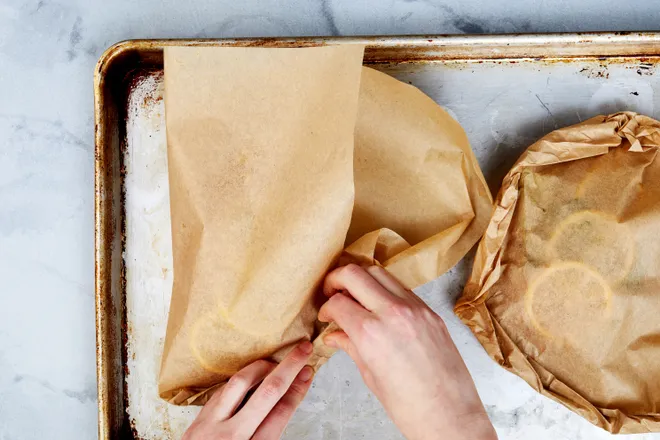
In professional kitchens and home baking environments alike, the role of Baking Paper has evolved into a cornerstone of efficient and reliable food preparation, offering a balance of heat resistance, non-stick capability, and structural integrity that supports a wide range of culinary techniques.
The performance of baking paper begins with its carefully engineered base material. Typically produced from high-quality wood pulp, the paper undergoes a refining process that enhances fiber uniformity and density. This results in a smooth yet durable surface capable of withstanding both dry and moist heat conditions. One of the defining characteristics is its resistance to high temperatures, often achieved through specialized treatment methods that prevent scorching or deformation during prolonged baking cycles. This ensures that pastries, breads, and other delicate items maintain their intended texture and appearance without sticking or burning.
Equally important is the non-stick performance, which is usually achieved through a food-grade silicone coating. This coating forms an invisible barrier between the food and the paper, reducing the need for additional oils or greasing agents. The result is not only a healthier cooking process but also a more convenient cleanup. The consistency of this coating plays a critical role; uneven application can lead to inconsistent baking results, making precision in manufacturing a key factor in product quality.
From a production standpoint, the craftsmanship behind baking paper involves multiple stages of processing. After pulping and sheet formation, the paper is subjected to calendaring, a mechanical process that smooths and compresses the fibers. This step enhances both the strength and flexibility of the paper, allowing it to conform easily to different baking surfaces such as trays, molds, and pans. Following this, the silicone coating is applied using advanced techniques that ensure even distribution and strong adhesion to the paper substrate.
Another notable aspect of the manufacturing process is the curing stage. Once coated, the paper is exposed to controlled heat conditions that solidify the silicone layer, ensuring it remains stable under high temperatures. This step is essential for maintaining the integrity of the non-stick surface during repeated use. In some cases, manufacturers incorporate additional treatments to improve grease resistance and moisture barrier properties, further expanding the paper’s versatility in various cooking scenarios.
When it comes to practical usage, understanding how to handle baking paper can significantly enhance baking outcomes. For instance, cutting the paper to fit the exact dimensions of the baking tray prevents curling and ensures even heat distribution. In high-temperature applications, pre-shaping the paper can help it stay in place, especially when dealing with lightweight batters or delicate pastries. Additionally, using baking paper as a lining for steaming or wrapping food can help retain moisture while preventing direct contact with metal surfaces.
The adaptability of baking paper extends beyond traditional baking. It is widely used in roasting, grilling, and even freezing applications. Its ability to act as a protective layer makes it ideal for separating food items, wrapping ingredients for storage, and maintaining hygiene standards in food preparation environments. In commercial settings, such as bakeries and food processing facilities, baking paper contributes to operational efficiency by reducing cleaning time and minimizing product waste.
In recent years, companies like Zhejiang Guanghe New Materials Co., Ltd. have played a role in advancing the global supply of high-quality baking materials. By focusing on consistent sourcing and quality control, such organizations help ensure that end users receive products that meet both safety and performance standards. Their involvement in international trade also supports the distribution of innovative baking solutions across different markets, catering to diverse culinary needs.
The growing demand for sustainable and food-safe materials has also influenced the development of baking paper. Manufacturers are increasingly exploring environmentally friendly production methods, including the use of chlorine-free pulping and recyclable packaging. These efforts align with broader industry trends toward sustainability while maintaining the functional benefits that users expect.For those seeking reliable baking paper solutions and further information about product specifications and sourcing, more details can be found at https://www.guanghepaper.com .

 Arabic
 French
 Spanish
 Portuguese
 Deutsch
 Turkish
 Dutch
Dutch
 Italiano
 Russian
 Romaian
 Portuguese (Brazil)
 Greek
Greek
 Bengali