


Zojirushi vs Cosori Rice Cooker: Which One Is Worth the Money
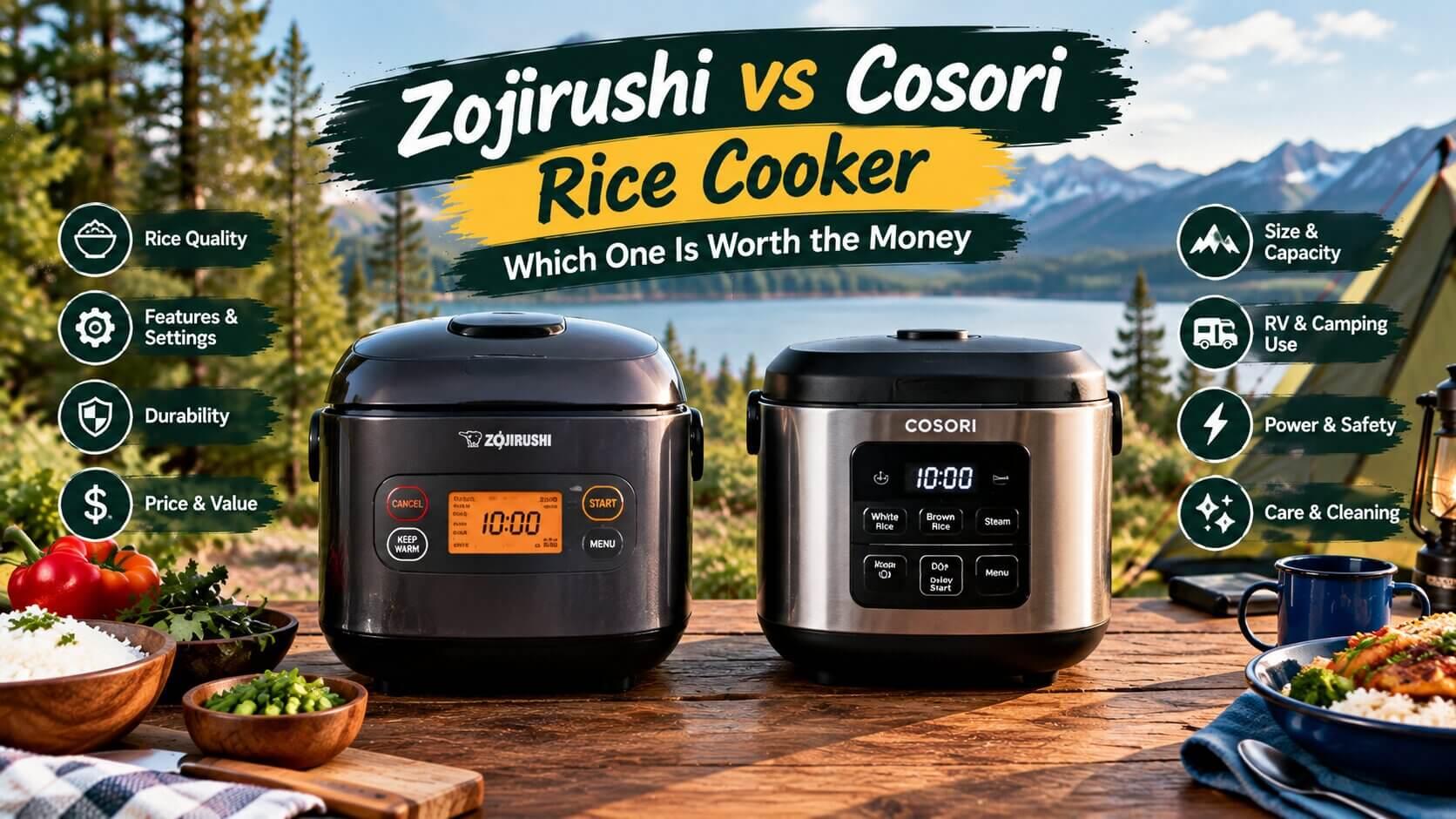
Rice is one of the easiest meals to pack for a road trip, and a good cooker makes it nearly foolproof. The hard part is the price gap. A Zojirushi often costs about twice as much as a Cosori, so the zojirushi vs cosori rice cooker question comes up a lot. This guide compares the two for everyday cooking, RV and van life, and backyard use across the USA. By the end, you will know which one deserves your money.
Quick answer: Zojirushi is worth the extra cost if you cook rice several times a week and want the most consistent texture. Cosori is the better value if you want solid results, useful extra settings and a lower price. For most RV and camp cooks watching budget and power use, Cosori is the easier pick.
How the Two Brands Compare at a Glance
Here is the short version before we go deeper:
- Zojirushi: Japanese brand known for rice quality, fine-tuned heating and long-lasting parts. Higher price.
- Cosori: Newer brand with a wide range of presets, a friendly price and a modern look. Lower price.
- Both: Easy to use, with keep-warm modes and a nonstick inner pot.
Models change often, so check the current specs and prices for the exact cooker you plan to buy.
Rice Quality and Cooking Technology
Zojirushi built its name on rice. Many models use fuzzy logic or microcomputer controls that adjust heat during the cook. Higher-end models also use induction heating, which warms the pot more evenly. The payoff is rice with a steady texture, whether you cook white, sushi or brown.
Cosori also uses smart controls and offers several rice presets. It cooks good rice for most people, but plenty of users report slightly less consistency with very picky rice types. If you cook short-grain sushi rice often, that difference can matter. If you mostly cook jasmine or long-grain rice for meals, you may never notice.
Features and Settings
Cosori usually packs in more extras for the money. Many models include presets for white rice, brown rice, porridge, steaming and sometimes quick cook. That makes it handy for oatmeal, grains and simple one-pot meals.
Zojirushi models often focus on fewer, better-tuned functions, though some top models add settings for sushi rice, mixed rice and sweet rice. They also tend to include a keep-warm function that holds rice well for hours.
If you want flexibility, Cosori wins. If you want rice that tastes right every time, Zojirushi has the edge.
Size and Capacity
Rice cooker sizes are measured in cups of uncooked rice. A 3-cup cooker suits a solo traveler or a couple. A 5- or 6-cup model feeds a family or a small group. Ten-cup models are large and heavy, and they take real space in an RV cabinet.
Both brands offer several sizes. Measure your storage space before you order. A cooker that does not fit in your van or camper will end up left at home.
Price and Value
Prices shift with sales and models, but the pattern stays the same. Cosori is often available for roughly $50 to $100. Zojirushi commonly lands higher, often around $100 to $250 or more, depending on the model.
Zojirushi buyers are usually paying for rice quality and long-term durability. Cosori buyers are paying for features per dollar. If a cooker will run a few times a month, the cheaper one makes sense. If it will run daily for years, the higher price can spread out nicely.
Zojirushi vs Cosori Rice Cooker for Camping, RV and Van Life
For travel, other factors matter as much as rice quality. The zojirushi vs cosori rice cooker choice often comes down to weight, power draw and how rough your trips are.
Weight and size. Smaller 3-cup models from either brand fit most van and RV storage. Larger models add weight and bulk quickly.
Power use. Rice cookers are electric. Many models draw several hundred watts, often in the 500 to 700 watt range, so check the label. At a campsite with hookups, this is no problem. Running one on a battery bank needs a properly rated inverter, and rice cooking drains batteries faster than most people expect.
Durability. Zojirushi has a reputation for sturdy build quality. Cosori is lighter and more affordable, so a bump or a drop costs less to replace.
For weekend car camping with a power source, either one works. For long-term van life, a compact 3-cup model that fits your electrical setup matters more than the brand name.
Power and Safety Tips for Camp Use
Electric cookers have their own safety rules, different from gas stoves. Keep these in mind:
- Use the cooker on a flat, stable, dry surface, never on soft ground or near water.
- Keep it away from tent walls, curtains and anything that could catch heat or steam.
- Do not use a rice cooker inside a tent, and leave room around the lid so steam can escape.
- Match your extension cord and inverter to the wattage on the label, and never overload a circuit.
- Keep the cord away from walkways, and never run it under a rug or across wet ground.
- Check campsite and park rules, plus any local fire restrictions, before you cook outdoors.
This article is for information only. Always follow the manufacturer’s instructions for your own gear.
Care and Cleaning
Both brands use nonstick inner pots, so avoid metal utensils and harsh scrubbing. Let the pot cool, then wash it with a soft sponge and mild soap. Wipe the lid, steam vent and heating plate before you pack the cooker away.
Dry everything before storing it, especially in humid places like Florida. Keep the cord loosely wrapped, and store the cooker where nothing heavy can crush it. Good care helps either brand last longer.
Which One Should You Buy?
Choose Zojirushi if rice is a regular part of your meals, you care about texture and you want a cooker you can use for years. It suits home kitchens and long-term RV setups with reliable power.
Choose Cosori if you want good results, more presets and a lower cost. It suits beginners, occasional travelers and anyone who wants to try a rice cooker without a big investment.
Frequently Asked Questions
Is Zojirushi better than Cosori?
Zojirushi is often praised for more consistent rice and long-term durability. Cosori offers more presets and a lower price. The better one depends on how often you cook rice and how much you want to spend.
Is a Zojirushi worth the extra money?
It can be, if you cook rice often and care about texture. The higher price usually buys finer heat control and a reputation for lasting. If you cook rice only now and then, a cheaper model may be enough.
Can I use a rice cooker while camping?
Yes, if you have a reliable power source, such as a campsite hookup or a properly sized inverter and battery system. Check the wattage on the label first. Use it outdoors or in a ventilated space, never inside a tent.
How much power does a rice cooker use?
Many rice cookers draw several hundred watts while cooking, often around 500 to 700 watts. The exact number is printed on the label or in the manual. Make sure your inverter and cords can handle it.
What size rice cooker is best for an RV or van?
A 3-cup model is usually enough for one or two people and saves space. Families may prefer a 5- or 6-cup cooker, if storage allows. Measure your cabinet before you buy.
Can a rice cooker cook things besides rice?
Yes. Many models steam vegetables, cook oatmeal and make simple one-pot meals. Cosori models often have more preset options for this. Check the manual for what your model supports.
Conclusion
The zojirushi vs cosori rice cooker decision is not about which brand is better overall. It is about what you cook and how you travel. Zojirushi rewards frequent rice cooks with consistent texture and long-term durability. Cosori gives most people good rice, extra settings and a friendlier price. Whether you cook at a Colorado campsite, in a Texas backyard or from a van on the California coast, match the cooker to your power setup and storage space. Pick the one that fits your habits, and you will cook better and camp longer.

 English
 Arabic
 Spanish
 Portuguese
 Deutsch
 Turkish
 Dutch
Dutch
 Italiano
 Russian
 Romaian
 Portuguese (Brazil)
 Greek
Greek
 Bengali