


Steel Tubes for Fabrication: Grades, Properties, and Benefits
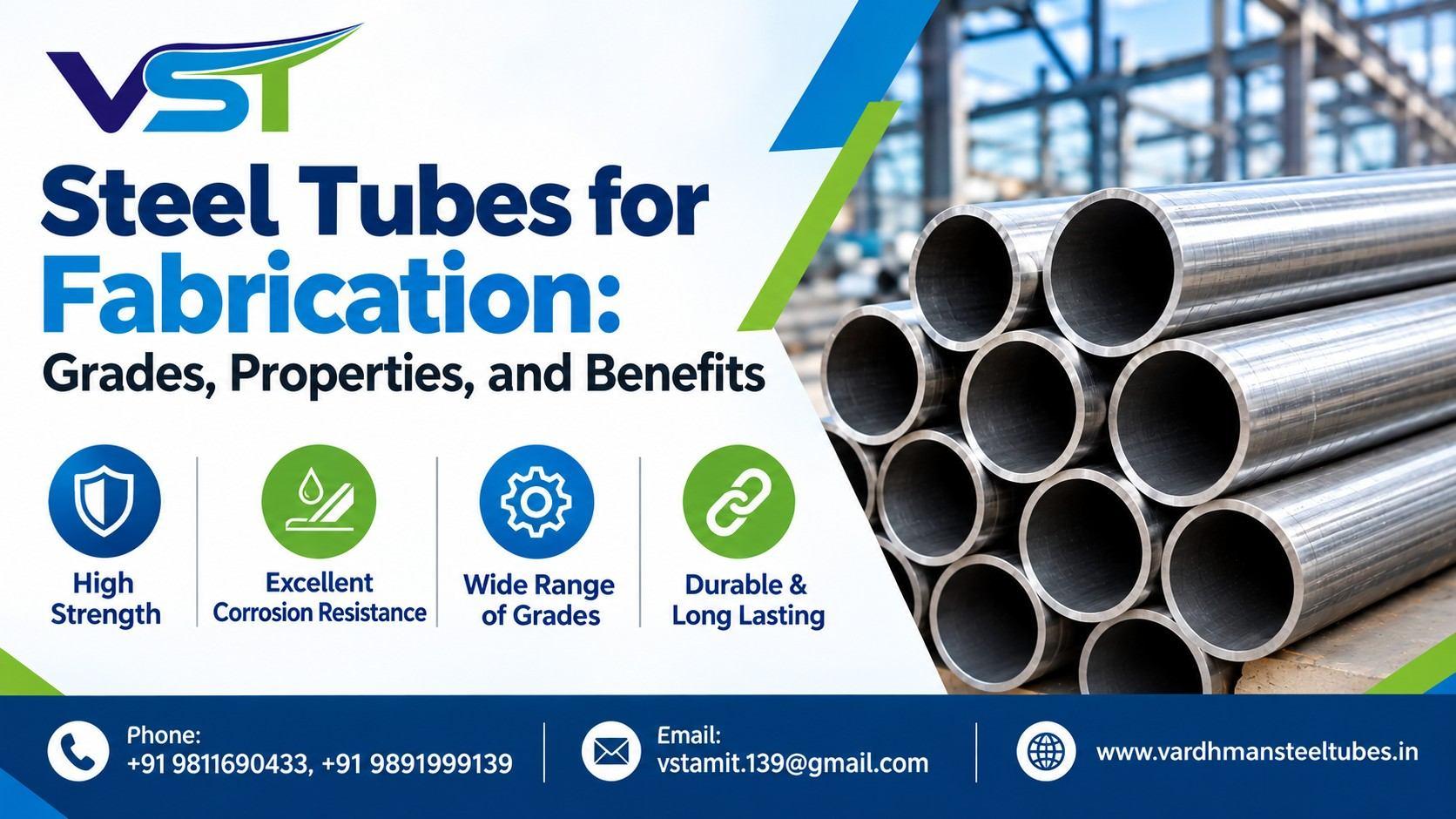
Hollow steel sections sit behind most of what fabricators build, from furniture frames and machine guards to trolleys, racks and railings. Choosing the right tube takes more than picking a shape and size. Material grade, wall thickness, manufacturing process, surface finish, weldability and loading conditions all affect the finished product.
This guide explains how to evaluate steel tubes for fabrication, so you can choose material that suits your design, your fabrication process and your budget.
What Are Steel Tubes for Fabrication?
Fabrication tubes are hollow steel sections that can be cut, welded, drilled, bent and assembled into finished components, depending on the material and specification. The common profiles are:
-
Round steel tubes: Used in tubular frames, handles, railings and some mechanical applications.
-
Square steel tubes: Suited to frames, racks, furniture structures and fabricated supports.
-
Rectangular steel tubes: Useful where you need flat mounting surfaces or strength in a particular direction.
-
Other shaped tubes: Used where a design calls for a specific profile.
Tubes and pipes can follow different dimensional conventions and standards, so they are not always interchangeable. Always confirm the specification rather than assuming.
Common Steel Tube Grades and Types
The right grade depends on the application, manufacturing process, loading and required properties. No single grade is best for everything.
Mild steel tubes are widely used in everyday fabrication. They suit frames, furniture and supports where moderate strength, workability and weldability are needed.
Cold-rolled (CRC) steel tubes are associated with a smoother surface finish and better dimensional control in suitable products. That makes them relevant to furniture, automotive components, equipment frames and other work where fit and appearance matter.
Structural steel tubes may need a grade with specified yield strength, tensile properties and tolerances. Buyers should choose a grade that meets the design requirements for the project.
Seamless and welded tubes differ in how they are made. The better choice depends on the application and the relevant product standard.
When a project calls for a specific grade designation or standard, confirm it against the supplier’s technical documentation rather than relying on general descriptions.
Important Properties of Steel Tubes
-
Tensile strength: Resistance to pulling forces.
-
Yield strength: The stress at which permanent deformation begins.
-
Ductility: How far the material can deform before fracturing, which matters for bending and forming.
-
Weldability: How readily the tube can be joined with an appropriate welding process.
-
Dimensional accuracy: Consistent dimensions help parts fit during assembly and reduce rework.
-
Surface finish: Affects appearance and the preparation needed before painting or coating.
-
Corrosion resistance: Depends on the steel, any protective coating, the environment and maintenance.
Actual performance varies with grade, dimensions, wall thickness, manufacturing process and operating conditions.
Key Benefits of Choosing Suitable Steel Tubes
-
Structural support: Correctly designed tube frames can provide the support a structure needs.
-
Fabrication flexibility: Many tubes can be cut, welded, drilled and formed with suitable tools and procedures.
-
Dimensional consistency: Uniform sizes can improve assembly accuracy and reduce fitment problems.
-
Efficient material use: Depending on the design, hollow sections can offer useful structural performance with less material than some solid sections.
-
Versatility: Different profiles and specifications serve furniture, automotive, engineering, construction-related and industrial applications.
-
Finishing options: Suitable surface preparation and protective finishes help meet appearance and environmental requirements.
These benefits depend on specifying the tube correctly for the actual application.
Industrial Applications of Fabrication Steel Tubes
-
Furniture manufacturing: Chairs, tables, bed frames and storage racks.
-
Automotive and transportation: Selected components, support structures and fabricated assemblies.
-
Industrial equipment: Machine frames, guards, trolleys, racks and equipment supports.
-
Construction-related fabrication: Railings, gates, partitions and suitable structural assemblies.
-
Medical and institutional furniture: Bed frames, equipment stands and furniture components.
-
Gym and fitness equipment: Frames and supports designed for the relevant loads.
Load-bearing, safety-critical and regulated applications need proper engineering calculations and verified material specifications.
Comparison Table: Choosing the Right Steel Tube
|
Tube type or category |
Key consideration |
Typical applications |
|
Mild steel tubes |
Strength, weldability and intended loading |
General fabrication and frames |
|
CRC steel tubes |
Surface finish and dimensional consistency |
Furniture and precision-oriented fabrication |
|
Square steel tubes |
Profile dimensions and structural requirements |
Racks, furniture and fabricated supports |
|
Rectangular steel tubes |
Orientation, dimensions and loading |
Frames and equipment structures |
|
Round steel tubes |
Diameter, wall thickness and forming needs |
Railings, handles and tubular assemblies |
|
Seamless steel tubes |
Applicable standards and operating conditions |
Selected specialised mechanical applications |
These are general examples, not universal specifications. Final selection should rest on the product grade, dimensions, applicable standards and engineering requirements.
How to Select the Right Steel Tubes for a Fabrication Project
-
Define the application: Identify the finished product and its operating environment.
-
Assess loading: Determine whether the part sees static loads, movement, impact or repeated stress.
-
Select the grade: Match documented material properties to the design requirements.
-
Confirm dimensions: Check the profile, outside dimensions, wall thickness and lengths.
-
Evaluate fabrication methods: Consider cutting, welding, bending, machining and assembly.
-
Check surface and corrosion protection: Decide whether painting, coating or another treatment is appropriate.
-
Verify documentation: Request material specifications and test documentation when required.
-
Compare suppliers: Look at consistency, suitability, pricing, order quantities and delivery arrangements.
Selecting a tube only on price or appearance can lead to wasted material or unsuitable performance.
Steel Tube Solutions from Vardhman Steel Tubes
Vardhman Steel Tubes, based in Sahibabad, Ghaziabad, supplies CRC pipes, CRC tubes and CRC sheets for industrial and commercial use. These products are relevant to industries such as furniture manufacturing, automotive components, medical equipment and industrial fabrication.
To learn more, read our complete guide to steel tubes for fabrication and browse the applications page to see where our products may fit your requirements.
Please contact our team to confirm available sizes, specifications, pricing and order requirements. Not every grade or profile may be available.
Frequently Asked Questions (FAQs)
1. What are steel tubes used for in fabrication?
They are cut, welded, drilled, bent and assembled into frames, supports, furniture, equipment structures, railings and similar products. The right tube depends on the design, loading and environment.
2. What is the difference between mild steel tubes and CRC steel tubes?
Mild steel tubes are used for general fabrication, valued for workability and weldability. CRC tubes are made from cold-rolled steel, which is associated with a smoother surface finish and better dimensional control, so they are often considered for furniture and precision-oriented work.
3. Which tube shape should I choose: round, square or rectangular?
It depends on the design. Round tubes suit railings, handles and tubular assemblies. Square tubes suit racks and general frames. Rectangular tubes suit structures that need flat mounting surfaces or a defined load direction.
4. Are seamless and welded tubes interchangeable?
Not necessarily. They are made differently, and suitability depends on the application and the relevant product standard. Check the specification before substituting one for the other.
5. What should I confirm with a supplier before ordering?
Confirm the grade, profile, outside dimensions, wall thickness, length, surface condition, quantity and delivery terms. For critical applications, also ask for material specifications and test documentation.
Conclusion: Making an Informed Steel Tube Selection
The best steel tubes for fabrication are the ones that match your project’s mechanical requirements, material grade, dimensions, manufacturing process and intended use. Understanding tube properties and verifying specifications before you buy helps you plan fabrication more reliably and avoid costly mismatches.
If you are sourcing CRC steel products for industrial or commercial work, Vardhman Steel Tubes can help you with product information and purchasing enquiries.
Contact Vardhman Steel Tubes
Company: Vardhman Steel Tubes
Phone: +91 9811690433, +91 9891999139
Email: vstamit.139@gmail.com
Address: Plot No. 139, Gate No. 1, Metro Pillar 167, Prakash Industrial Estate, Sahibabad, Ghaziabad, Uttar Pradesh.
Website: www.vardhmansteeltubes.in

 Arabic
 French
 Spanish
 Portuguese
 Deutsch
 Turkish
 Dutch
Dutch
 Italiano
 Russian
 Romaian
 Portuguese (Brazil)
 Greek
Greek
 Bengali