


What to Expect at the SCRS Global Site Solutions Summit 2026: Collaboration, Innovation, and Site Sustainability
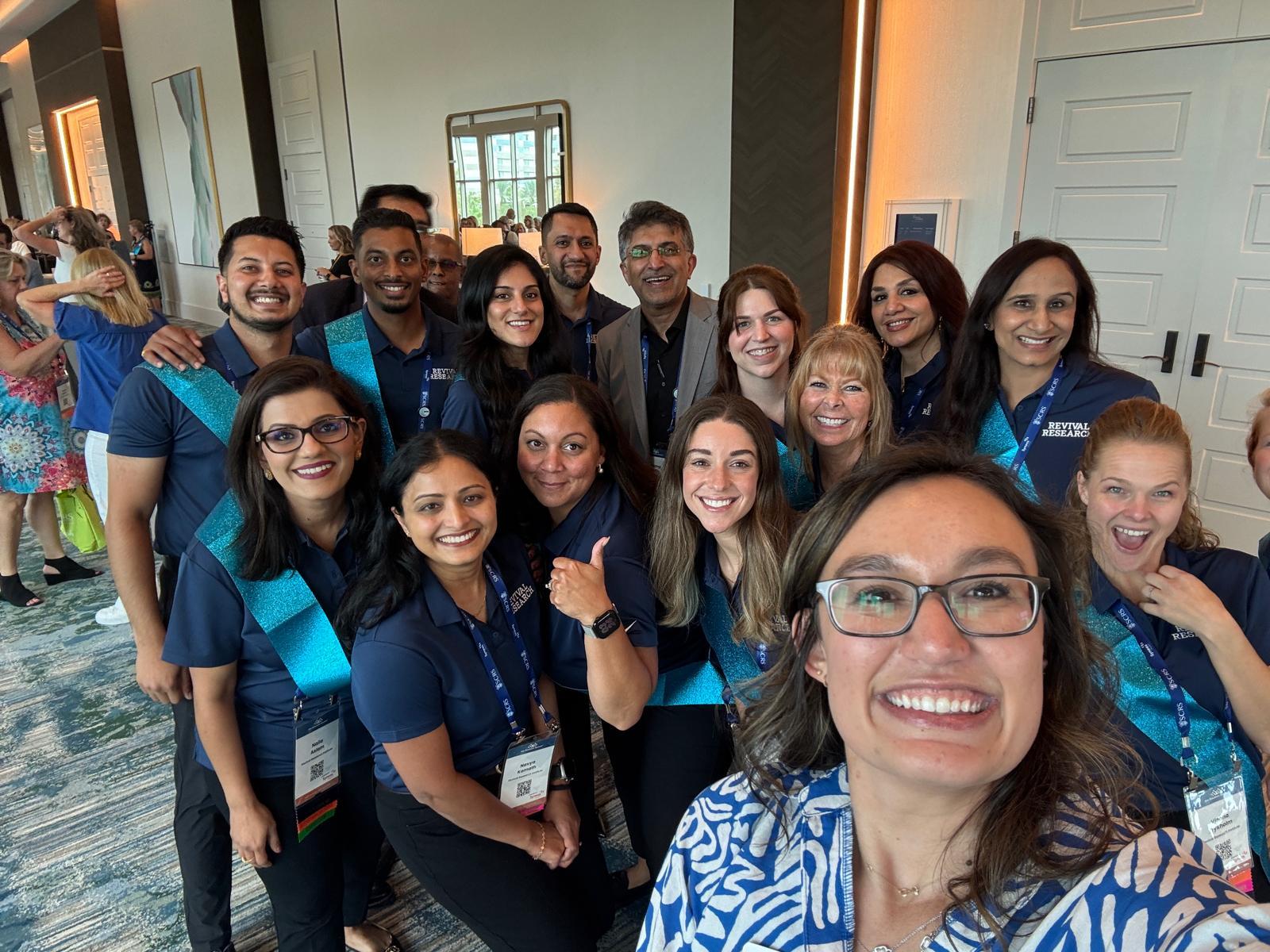
What happens when the people who make clinical research possible get a seat at the same table as the people who design, fund, manage, and support it?
That question sits at the heart of the SCRS Global Site Solutions Summit 2026, where members of the clinical research ecosystem will come together to discuss the realities, challenges, and opportunities shaping research sites today.
Clinical research may begin with a protocol, but it takes much more than a protocol to bring a study to life.
Behind every trial are:
- Investigators
- Research coordinators
- Sponsors
- CROs
- Technology providers
- Patients and their families
- Site teams working behind the scenes
Each brings a different perspective to the research process.
And when those perspectives come together, the conversation becomes bigger than any one organization or role.
A Meeting Built Around the People Behind Research
The SCRS Summit 2026 will take place October 15–18, 2026, at Signia by Hilton Orlando Bonnet Creek in Orlando, Florida.
The event brings together clinical research sites, sponsors, CROs, solution providers, and other industry professionals for conversations centered on the realities of conducting clinical research.
The Society for Clinical Research Sites (SCRS) was founded in 2012 and today represents more than 12,000 sites across 75+ countries. Its mission focuses on unifying the voice of sites and advancing greater site sustainability.
That makes the summit more than another industry gathering.
It creates a space where different parts of the research ecosystem can look at the same challenges from different angles.
Different stakeholders. Different priorities.
Research sites may be thinking about:
- Staffing and workforce needs
- Patient recruitment
- Study workload
- Budgets and financial sustainability
- Operational efficiency
Sponsors and CROs may be focused on:
- Study timelines
- Data quality
- Recruitment performance
- Trial execution
- Consistency across sites
Technology providers may be exploring:
- Automation
- Data connectivity
- Digital workflows
- Artificial intelligence
- Tools that reduce operational complexity
Putting these perspectives in the same room can create opportunities to identify where expectations differ and where they can align.
Collaboration That Goes Beyond Networking
Networking is easy to measure.
Collaboration is harder.
A room full of introductions does not necessarily lead to better clinical research. Meaningful collaboration requires people to openly discuss what is working, what is not, and where improvements are needed.
That is particularly important in clinical research because no single stakeholder controls the entire study journey.
A site may be responsible for executing a protocol locally, but successful execution can depend on decisions made across the broader ecosystem.
Collaboration can influence:
- How quickly studies get started
- How recruitment challenges are addressed
- How technology is implemented
- How teams communicate
- How operational problems are escalated
- How patient needs are incorporated
Previous SCRS conversations have touched on areas including finances, recruitment, workforce challenges, technology, inclusion, and site partnerships.
These are not isolated issues.
They are interconnected parts of how research gets done.
From Technology Hype to Practical Innovation
Artificial intelligence has become one of the biggest conversations in clinical research.
But there is an important distinction between discussing what technology could do and understanding what it can realistically do within everyday trial operations.
The conversation around innovation is therefore shifting.
Instead of asking only:
“What can AI do?”
Research organizations increasingly need to ask:
“Where can technology genuinely improve the research experience?”
That could mean reducing repetitive administrative work, improving access to information, supporting communication, or helping research teams work more efficiently.
But technology also introduces important considerations.
Innovation still needs to account for:
- Human oversight
- Data privacy
- Security
- Accountability
- Training
- Patient trust
- Ease of use
For patients, the question is particularly important.
A new tool may be impressive from a technical perspective, but that does not automatically make it useful for someone participating in a clinical trial.
The better question may be:
Does technology make research easier to navigate without making the human experience harder?
Why Site Sustainability Matters
“Site sustainability” can sound like an operational or financial term.
In practice, it can have implications throughout the research journey.
A sustainable research site needs the people, resources, systems, and infrastructure required to support studies effectively.
When those foundations are under pressure, research teams can face challenges that extend beyond budgets.
Sites may encounter pressures related to:
- Rising operational costs
- Staffing shortages
- Increasing workloads
- Complex protocols
- Administrative requirements
- Technology implementation
- Recruitment demands
These pressures can influence how efficiently a study is conducted.
That is why site sustainability has become an increasingly important industry conversation.
The question is not simply how to keep sites operating today.
It is also:
How can research sites build sustainable models that allow them to continue supporting clinical trials in the future?
Recruitment Is About People, Not Just Numbers
Clinical trial recruitment is often discussed in terms of enrollment targets.
How many participants are needed?
How quickly can they be enrolled?
What happens when recruitment falls behind?
But behind every enrollment number is a person making a decision about whether to participate in research.
That makes recruitment more complicated than simply filling a study.
Effective recruitment also involves:
- Reaching appropriate populations
- Providing understandable information
- Building trust
- Addressing concerns
- Reducing unnecessary barriers
- Supporting participants throughout the study
This is where the patient perspective becomes especially important.
Instead of asking only:
“How do we fill the study?”
A patient-centered approach asks:
“What does someone need to understand, consider, and feel comfortable participating in research?”
That shift can influence everything from how studies are communicated to how participants are supported after enrollment.
Diversity and Inclusion Remain Part of the Conversation
Recruitment also raises another important issue: representation.
Clinical research is intended to generate evidence that can inform healthcare decisions across diverse populations.
Yet reaching those populations requires more than simply opening enrollment.
It can involve understanding:
- Where potential participants are located
- How research is communicated
- What barriers may prevent participation
- Whether study requirements create unnecessary challenges
- How sites can build stronger relationships within their communities
Conversations around inclusion therefore connect directly with recruitment, patient engagement, and study design.
They also reinforce the importance of understanding research from the participant's perspective.
Regulatory Readiness Without Losing the Human Side
Clinical research operates within rigorous regulatory and quality standards.
That foundation is essential for protecting participants, maintaining data integrity, and ensuring studies are conducted appropriately.
At the same time, research teams are navigating increasingly complex operational environments.
Discussions around:
- Inspection readiness
- Documentation
- Electronic systems
- Quality management
- Training
- Evolving requirements
can help organizations consider how compliance fits into everyday study operations.
But compliance should not become disconnected from the people carrying out the work.
A good process should help teams understand what is expected and why it matters.
The challenge is finding a balance.
Processes should:
- Protect patients
- Protect research data
- Support accountability
- Reduce avoidable inefficiencies
- Give teams the tools they need to perform their roles
Technology should strengthen those processes and not simply add another layer of work.
A Bigger Question for Clinical Research
The SCRS Global Site Solutions Summit 2026 is centered around collaboration, innovation, and site sustainability.
But underneath all three is a broader question:
Are we building a clinical research system that works better for the people inside it—and the people who depend on it?
That question applies to technology.
It applies to recruitment.
It applies to site operations.
It applies to regulatory processes.
And, ultimately, it applies to the patient experience.
As the clinical research community gathers in Orlando from October 15–18, 2026, the conversations taking place may offer more than new ideas.
They may provide an opportunity to look at how different pieces of clinical research fit together and what it will take to make the system work better in practice.

 English
 Arabic
 Spanish
 Portuguese
 Deutsch
 Turkish
 Dutch
Dutch
 Italiano
 Russian
 Romaian
 Portuguese (Brazil)
 Greek
Greek
 Bengali