


Dubai to India sea freight
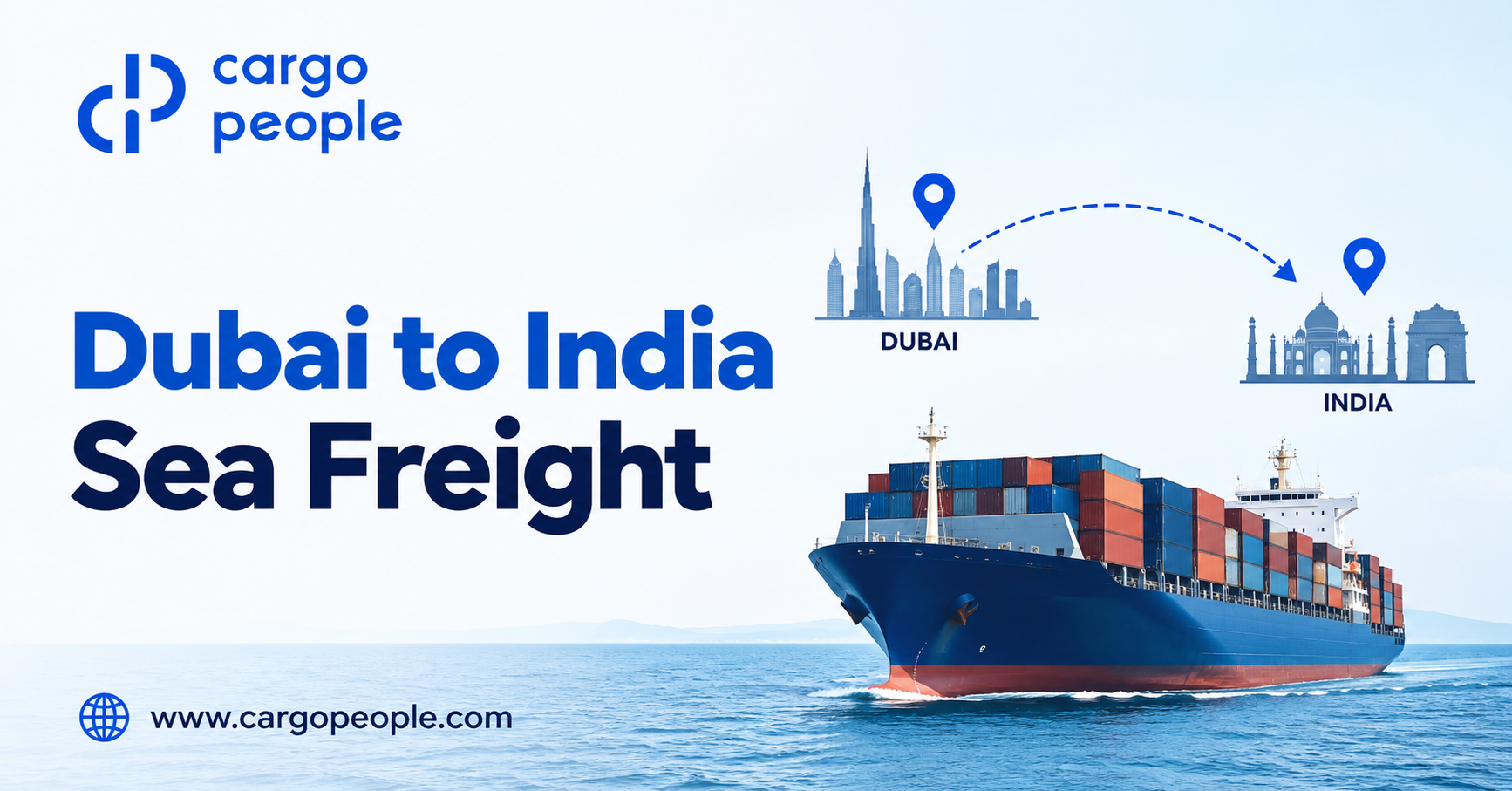
Dubai to India Sea Freight: A Practical Guide for Importers and Businesses
Dubai to India sea freight is one of the most active short-haul shipping routes for Indian importers, manufacturers, traders and procurement teams. The route is widely used for machinery, electrical goods, industrial raw materials, chemicals, consumer products, spare parts, metals and general commercial cargo.
Because Dubai is close to India, businesses often assume the shipment will be simple and fast. In practice, the sea transit may be short, but the complete import cycle also depends on vessel schedules, documentation, Indian Customs clearance, destination charges and final delivery.
For most businesses, the right approach is to plan the complete movement from the Dubai supplier to the final Indian destination instead of looking only at the ocean freight rate.
A well-planned Dubai to India shipment usually follows this sequence:
Cargo review - FCL or LCL selection - vessel booking - origin pickup - export handling - sea transit - advance Customs preparation - clearance - inland delivery
Why Dubai to India Sea Freight Is Important
Dubai is not only a major commercial centre in the UAE. It is also a regional sourcing, distribution and re-export hub.
Many Indian businesses buy goods from suppliers based in Dubai, Jebel Ali, Sharjah and surrounding industrial areas. In several cases, the goods may originally come from China, Europe, Southeast Asia or another country and are then re-exported from the UAE.
This makes Dubai to India sea freight commercially important for both direct UAE-origin cargo and re-export shipments.
Jebel Ali is one of the main ports used for this trade. It handles very high container volumes and offers frequent connections to major Indian ports.
For importers, this creates a strong advantage because multiple carrier options may be available. However, different shipping lines can offer different transit times, routes and destination charges.
That means the cheapest freight rate is not always the best logistics option.
Who Uses Dubai to India Sea Freight?
Dubai to India sea freight is suitable for a wide range of businesses.
Manufacturers may use the route to import machinery, production components or raw materials.
Traders often use it for regular commercial stock.
Importers may bring in electrical goods, tools, industrial equipment, automotive parts, chemicals, metals or consumer products.
It can also be useful for SMEs that do not require a full container and want to move smaller commercial consignments through LCL shipping.
The route is particularly useful for businesses importing into western India because JNPA, Mundra and Kandla can provide strong connectivity for cargo arriving from the Gulf.
For southern India, Chennai and Cochin can also be relevant depending on the carrier and final delivery location.
Main Shipping Route from Dubai to India
Most containerised sea cargo from Dubai moves through Jebel Ali Port.
From there, cargo can move directly or through a regional connection to Indian ports such as:
- JNPA / Nhava Sheva
- Mundra
- Kandla
- Chennai
- Cochin
The best port should be selected based on the final destination in India.
For example, cargo destined for Mumbai or Pune may make sense through JNPA.
Cargo for Gujarat, Rajasthan or parts of North India may be more economical through Mundra or Kandla.
Cargo for Tamil Nadu or the Bengaluru region may be better routed through Chennai.
The key is to compare the full door-to-door cost rather than only the ocean freight.
How Long Does Dubai to India Sea Freight Take?
The sea transit from Dubai to India is relatively short compared with Europe, China or the USA.
For Jebel Ali to major west-coast Indian ports, a broad planning range may be around 5 to 15 days depending on the shipping line and whether the service is direct or transshipped.
A direct sailing may be much faster than a service involving a feeder or transshipment.
This is why a quote showing 6 days and another showing 12 days can both be valid for the same origin and destination.
The complete door-to-door shipment may take longer.
A practical planning cycle may look like this:
Origin pickup in Dubai: 1 to 2 days
Export handling: 1 to 2 days
Sea transit: 5 to 15 days
Indian Customs: 2 to 4 days
Final delivery: 1 to 2 days
That means the complete shipment can take around 9 to 23 days depending on the route and documentation.
FCL vs LCL for Dubai to India Shipping
Businesses generally choose between FCL and LCL.
FCL means Full Container Load. The entire container is used for one shipper.
LCL means Less than Container Load. Cargo from multiple shippers is consolidated in the same container.
FCL is generally better for larger or regular shipments because it provides better control and fewer handling points.
LCL works well for smaller volumes, especially when the shipper has only a few pallets or a few cubic metres of cargo.
However, LCL usually requires extra consolidation and deconsolidation.
This can add around 2 to 5 days or more to the overall movement compared with the underlying vessel transit.
For time-sensitive cargo, businesses should compare LCL with air freight instead of automatically choosing sea freight.
Main Process for Dubai to India Sea Freight
The process should begin with complete cargo details.
The freight forwarder normally needs the commodity, number of packages, gross weight, dimensions, pickup location and final Indian delivery address.
After this, the forwarder compares FCL and LCL options and identifies the most suitable sailing.
The next stage is carrier booking.
Once space is confirmed, the cargo is picked up in Dubai and moved to the port or consolidation facility.
Export documentation is completed at origin.
At the same time, the Indian Customs broker should begin preparing the import file.
This is especially important because the sea transit from Dubai can be short.
If Customs preparation starts only after the vessel reaches India, the importer may lose 2 to 4 days unnecessarily.
Documents Required for Dubai to India Sea Freight
The standard import file usually includes the Commercial Invoice, Packing List and Bill of Lading.
The Indian importer also needs a Bill of Entry for Customs clearance.
Depending on the product, additional regulatory documents may be required.
These can include Certificate of Origin, BIS registration, FSSAI approval, WPC approval, EPR registration or other product-specific compliance documents.
The exact requirement depends on the HS code and nature of the goods.
Typical documents include:
- Commercial Invoice
- Packing List
- Bill of Lading
- Bill of Entry
- Certificate of Origin, where applicable
- Product approvals, where required
One of the most common problems is inconsistency between documents.
If the invoice shows one product description and the Bill of Lading shows another, Customs may raise a query.
For regular importers, a standard document checklist should be shared with the Dubai supplier before dispatch.
Customs Clearance in India
Indian Customs clearance is a major part of the total shipment timeline.
For well-prepared sea imports, clearance may often take around 2 to 4 days after arrival, although this can vary.
The actual timeline depends on HS classification, duty payment, importer profile, documentation quality and whether Customs examination is required.
If the shipment is covered by an additional regulatory authority, the timeline can be longer.
For example, electrical goods may need BIS-related review in some cases, while food products may involve FSSAI requirements.
The importer should therefore confirm the applicable compliance before the goods leave Dubai.
A short sea transit means there is very little time to solve regulatory issues after dispatch.
Why Advance Bill of Entry Helps
Advance Customs planning is particularly useful for Dubai to India sea freight.
A vessel may reach India within one week.
If the importer waits until arrival to begin preparing the Bill of Entry, several days can be lost.
A better process is to review the HS code, value, invoice and supporting documents while the cargo is still in transit.
This allows problems to be identified before the container reaches the Indian port.
For a shipment with a 6-day sea transit, a 3-day document delay can increase the total cycle by almost 50%.
That is why pre-arrival Customs preparation can make a major difference on this trade lane.
India-UAE CEPA and Certificate of Origin
India and the UAE have a Comprehensive Economic Partnership Agreement.
Eligible UAE-origin goods may receive preferential tariff treatment if the applicable rules of origin are satisfied.
However, businesses should not assume that every shipment from Dubai qualifies.
Dubai is a major re-export hub.
A product manufactured in another country and simply shipped through Dubai does not automatically become UAE-origin.
The importer should verify the actual country of origin and confirm whether the product qualifies under CEPA.
The Certificate of Origin must also be valid and correctly issued.
Incorrect origin claims can result in Customs queries or duty reassessment.
Cost of Dubai to India Sea Freight
The total cost includes much more than the ocean freight.
For FCL, the cost may include:
Ocean freight + origin THC + documentation + destination THC + Customs clearance + inland transport
For LCL, additional CFS and consolidation charges may apply.
Duty and taxes are separate from the logistics cost.
Businesses should always ask for a quotation that clearly separates:
origin charges - sea freight - destination charges - Customs - delivery
This avoids surprises after arrival.
A freight quote that looks ₹15,000 cheaper can become more expensive if the destination charges are ₹25,000 higher.
The correct comparison is the full landed logistics cost.
Demurrage, Detention and Storage
Delays after arrival can create significant extra cost.
Demurrage generally relates to the container remaining inside the port or terminal beyond the allowed free time.
Detention generally relates to the container being kept outside the terminal beyond the permitted period.
CFS or terminal storage may also apply separately.
Actual charges vary by shipping line, port and container type.
For planning purposes, businesses may sometimes model a broad delay exposure of around ₹7,000 to ₹15,000 per day, but this is only an indicative range.
If total delay-related exposure is ₹10,000 per day, a 5-day avoidable delay can add around ₹50,000 to the shipment cost.
This is why documentation and Customs planning are critical.
Common Challenges in Dubai to India Sea Freight
One of the biggest challenges is choosing a route based only on freight price.
A cheaper service may involve transshipment and take several extra days.
Another common issue is incomplete supplier documentation.
Because Dubai-to-India transit is short, document errors can quickly turn into port storage costs.
Incorrect HS classification can also create Customs delays.
Businesses should not assume that the classification used by a Dubai supplier is automatically correct for Indian Customs.
Another challenge is re-export cargo.
If the product was manufactured outside the UAE, the importer must clearly understand the original country of origin.
This becomes especially important when claiming preferential duty.
Benefits of Dubai to India Sea Freight
The biggest advantage is proximity.
Compared with long-haul routes, Dubai-to-India shipping can offer short transit and frequent sailings.
This makes the corridor suitable for businesses that want lower transport costs without the long lead times associated with Europe or the USA.
Another benefit is flexibility.
Businesses can choose between FCL and LCL based on cargo volume.
Dubai's logistics ecosystem also provides access to warehousing, consolidation and re-export services.
For regular importers, this can make Dubai a useful regional sourcing and distribution hub.
How a Freight Forwarder Can Help
A professional freight forwarder helps manage the complete movement rather than only the vessel booking.
The process starts with selecting the right shipping mode and route.
The forwarder compares direct and transshipment services, checks sailing schedules and evaluates the most suitable Indian port.
At origin, the forwarder coordinates pickup and export handling.
During transit, the Indian Customs file can be prepared in advance.
At destination, the process continues through Customs clearance, terminal release and inland delivery.
For regular importers, a good freight forwarder can also help standardise the process so that each monthly shipment follows the same documentation and clearance workflow.
This reduces errors and improves predictability.
Conclusion
Dubai to India sea freight offers Indian businesses a fast and commercially attractive route for importing machinery, raw materials, industrial products and general cargo.
The main advantage is the short geographical distance, with sea transit often falling within approximately 5 to 15 days on many routes.
However, the total logistics cycle also depends on origin handling, Customs preparation and final delivery.
Businesses should compare FCL and LCL carefully, verify whether the service is direct, prepare Customs documents before arrival and select the Indian port based on final destination.
The right freight forwarder can help coordinate the entire movement from Dubai pickup to Indian Customs clearance and door-to-door delivery.
Get Expert Assistance
👉https://cargopeople.com/blog/tag/sea-freight-from-india-to-uae/
Website: https://cargopeople.com
Phone: +91 97174 65454
Email: wecare@cargopeople.com

 Arabic
 French
 Spanish
 Portuguese
 Deutsch
 Turkish
 Dutch
Dutch
 Italiano
 Russian
 Romaian
 Portuguese (Brazil)
 Greek
Greek
 Bengali