


Why Does My Car’s Rear End Feel Unstable When Cornering on Uneven Surfaces?
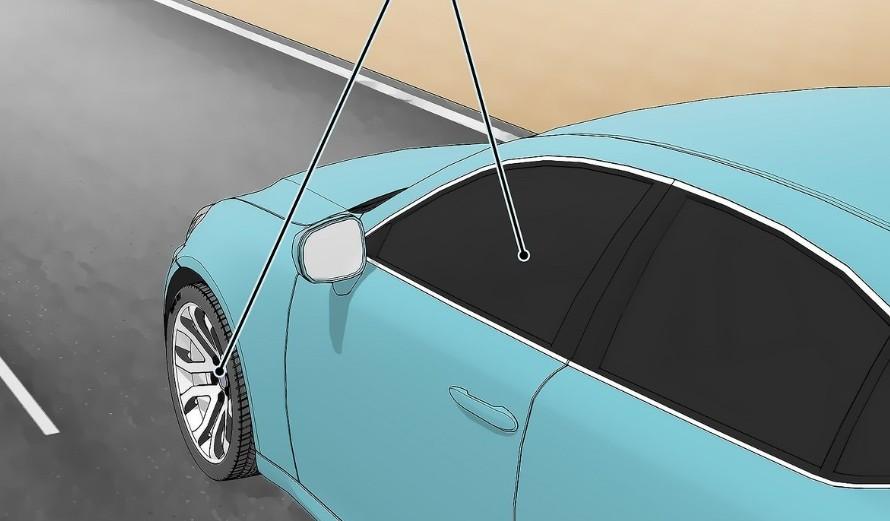
Taking a sharp turn should feel predictable and controlled, but hitting a bump mid-corner and feeling the rear end of your vehicle kick outward or "skitter" across the pavement can be genuinely nerve-wracking. Drivers often describe this phenomenon as a sensation of the back wheels stepping out, wandering, or briefly floating over the road surface. While it might feel like a sudden loss of steering control, the root cause almost always traces back to rear suspension dynamics, tire health, or chassis geometry.
The Physics of Mid-Corner Rear Instability
To understand why your car’s rear end steps out over bumps during a turn, it helps to examine two critical automotive concepts: bump steer and tire contact patch retention.
Under normal cornering, your vehicle’s weight transfers diagonally across the chassis. The outer rear suspension compresses while the inner rear suspension extends. When the rear tires encounter a sudden bump or dip under lateral load, the suspension linkage must move through its stroke rapidly.
-
Bump Steer: This occurs when the movement of the suspension arm changes the toe angle (the inward or outward direction) of the rear wheel without any input from the driver. If worn bushings or damaged links allow the wheel to toe out under compression, the rear tire will momentarily steer itself outward, creating a sudden yawing or twisting motion.
-
Loss of Contact Patch: A tire only generates grip when it stays planted firmly against the pavement. When a shock absorber loses its dampening ability, the coil spring compresses over a bump and rebounds violently. Instead of staying glued to the road, the wheel bounces off the ground. For a fraction of a second, lateral grip drops to zero, causing the vehicle to slide outward under centrifugal force.
4 Common Mechanical Culprits Behind Rear-End Wiggle
When a vehicle exhibits rear instability specifically on uneven cornering surfaces, mechanical wear in the rear suspension assembly is almost always to blame. Below are the primary components that require immediate inspection:
1. Worn or Leaking Rear Shock Absorbers
Shock absorbers (or struts) control the kinetic energy stored in the vehicle’s springs. When shocks degrade, fluid leaks out or internal valves fail, leaving the spring uncontrolled. Over an uneven turn, an un-damped spring will compress and violently bounce the wheel off the asphalt. If you notice a floating feeling or persistent bouncing after hitting a bump, worn shocks are likely the primary offender.
2. Deteriorated Suspension Bushings
Modern rear suspensions—especially multi-link and double-wishbone designs—rely on rubber or polyurethane bushings to absorb road vibrations and hold control arms in precise alignment. Over years of thermal stress and load, these rubber bushings dry out, crack, or tear. Excess play in control arm or trailing arm bushings allows the entire rear wheel hub assembly to shift unexpectedly under lateral cornering force.
3. Faulty Sway Bar Links and Bushings
The rear anti-roll bar (sway bar) connects the left and right sides of the rear suspension to minimize body roll during turns. If the sway bar end links break or the mounting bushings wear down, the bar can no longer distribute lateral forces evenly. Hitting a bump on one side while cornering forces that specific wheel to compress independently, disrupting the balance of the rear axle.
4. Incorrect Tire Pressure and Tread Wear
Tires act as the primary damping element before forces even reach your suspension. If rear tire pressures are uneven or significantly overinflated, the tire casing becomes overly stiff, bouncing off road imperfections rather than absorbing them. Furthermore, uneven tread wear or mismatched tires across the rear axle create inconsistent grip thresholds when negotiating mid-corner bumps.
How Professional Diagnostics Uncover Suspension Defects
Diagnosing rear-end instability requires a systematic approach, combining physical checks on a hydraulic hoist with precise wheel alignment equipment. Mechanics inspect the underbody using pry bars to apply leverage against control arms and trailing links, checking for microscopic play in the bushings. They also analyze tire wear patterns—such as "cupping" or diagonal wiping—which clearly indicate that a wheel has been bouncing or running out of alignment under load.
+-----------------------------------------------------------------------+
| REAR SUSPENSION DIAGNOSIS |
+-----------------------------------------------------------------------+
| 1. Visual Inspection --> Check for oil leaks on shock bodies |
| 2. Leverage Test --> Pry control arms to check bushing deflection|
| 3. Alignment Check --> Verify rear toe-in and camber angles |
| 4. Tire Analysis --> Inspect for cupping or irregular tread wear |
+-----------------------------------------------------------------------+
Grasping how these complex multi-link setups react to dynamic loads takes dedicated study and practical experience. Whether you are a car enthusiast troubleshooting your own daily driver or looking to gain formal technical expertise through a car mechanic course, developing a keen eye for suspension geometry and alignment tolerances is key to solving persistent handling issues safely.
Quick DIY Checks You Can Perform at Home
If your car exhibits rear instability on rough turns, you can perform several basic preliminary checks before taking the vehicle to a certified repair facility:
-
The Tire Pressure Check: Measure all four tires when cold using an accurate digital gauge. Ensure the rear tires match the exact specification printed on your vehicle's driver-side door jamb placard, not the maximum rating printed on the tire sidewall.
-
The Bounce Test: Push down firmly on the rear bumper or trunk lid several times to bounce the rear end, then let go suddenly. A healthy suspension setup will settle immediately after one bounce. If the vehicle continues to oscillate two or three times, the rear dampers are severely worn.
-
Visual Inspection for Leaks: Look behind the rear wheels with a flashlight. Inspect the body of each rear shock or strut. If you notice damp, dark fluid coating the housing along with accumulated road grime, the internal hydraulic seal has blown.
-
Wheel Movement Check: Jack up the rear of the car securely on jack stands. Grasp each rear tire at the 9 and 3 o'clock positions and attempt to wiggle it back and forth. Repeat at the 12 and 6 o'clock positions. Any noticeable play or metallic clicking indicates worn control arm bushings, bad toe links, or failing wheel bearings.
Why You Shouldn't Ignore Rear-End Instability
Ignoring a squirmy rear suspension is a significant safety hazard. While a small rear-end step-out on a dry road at low speeds might seem minor, the same mechanical defect on a wet, icy, or high-speed curve can trigger a complete loss of control or a spinout.
Furthermore, driving with un-damped shocks or loose control arm bushings rapidly accelerates wear on other expensive components. Uncontrolled wheel hop destroys rear tires within a few thousand miles and places undue stress on wheel bearings, subframe mounts, and steering linkages. Addressing suspension instability at the first sign of trouble preserves your vehicle's handling safety, extends tire life, and ensures a predictable, smooth ride across all road conditions.

 Arabic
 French
 Spanish
 Portuguese
 Deutsch
 Turkish
 Dutch
Dutch
 Italiano
 Russian
 Romaian
 Portuguese (Brazil)
 Greek
Greek
 Bengali