


PCB Manufacturing FAQ: Understanding the PCB Fabrication Process
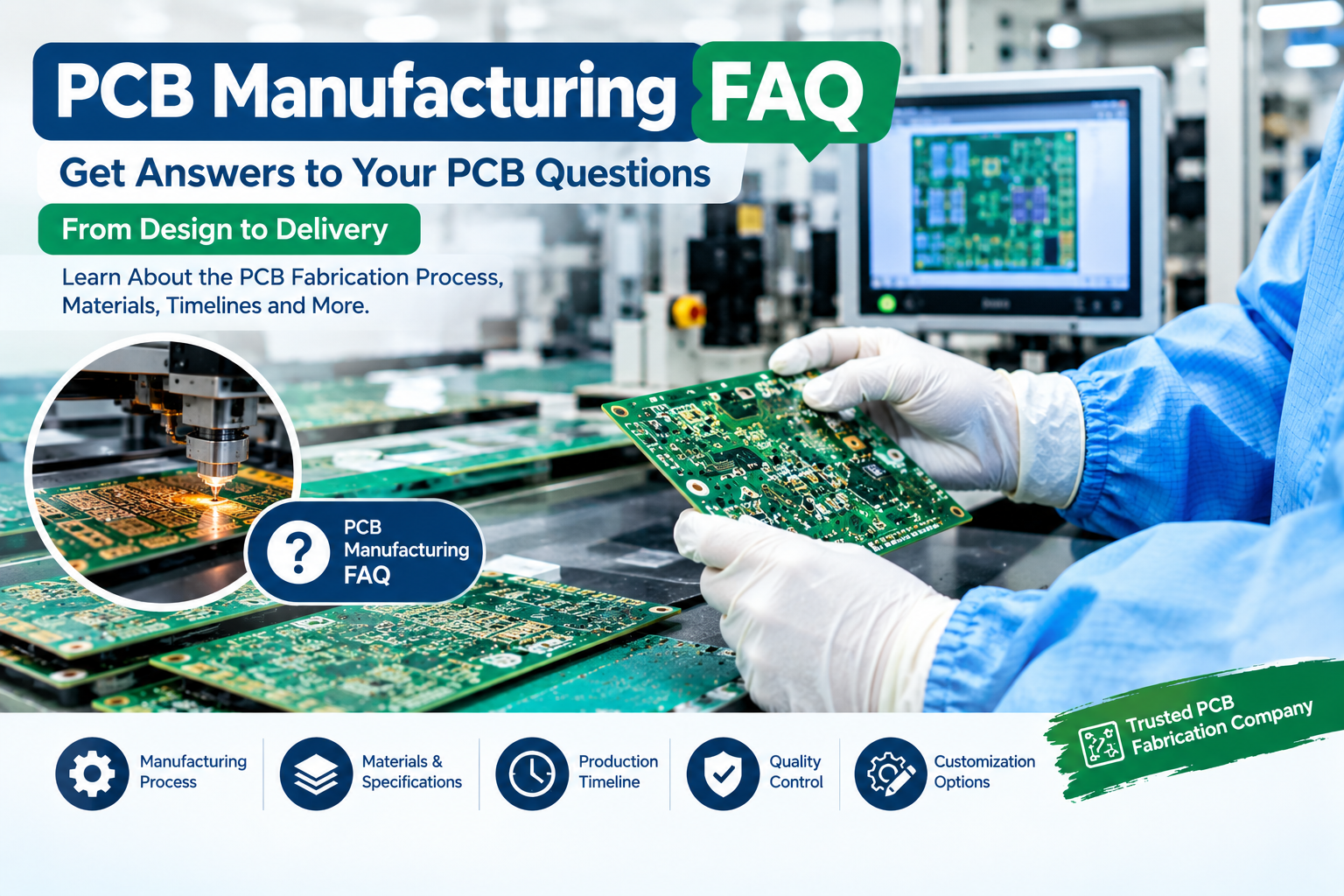
Printed circuit boards are an essential part of modern electronics, providing the physical and electrical foundation for connecting electronic components. From simple consumer devices to sophisticated industrial equipment, PCBs are manufactured according to specific design and performance requirements. Understanding the manufacturing process can help product developers make better decisions when working with a pcb fabrication company.
This Pcb Manufacturing Faq answers some common questions about PCB production, materials, design requirements, and quality considerations.
What Is PCB Manufacturing?
PCB manufacturing is the process of producing a circuit board from an electronic design. Depending on the board type, the process can include material preparation, circuit pattern creation, drilling, copper plating, surface finishing, solder-mask application, and final inspection.
The exact production method depends on factors such as the number of layers, board thickness, material selection, copper weight, and design complexity.
What Does a PCB Fabrication Company Do?
A pcb fabrication company converts PCB design information into physical circuit boards. Manufacturers may produce single-layer, double-layer, or multilayer boards for different applications.
Depending on their capabilities, they may also offer prototype production, material selection support, testing, surface finishing, and other related services. Some companies provide PCB assembly as well, while others focus primarily on board fabrication.
What Information Is Needed to Manufacture a PCB?
Manufacturers generally require accurate design information before production begins. This may include Gerber files, drill files, board specifications, layer information, material requirements, and surface-finish details.
For assembled boards, additional information such as a bill of materials and component placement data may be necessary. Providing complete and accurate documentation can help reduce misunderstandings during production.
Which Materials Are Used for PCBs?
Different PCB applications require different materials. FR-4 is widely used for many conventional circuit boards, while specialized applications may require materials with particular thermal, electrical, mechanical, or high-frequency characteristics.
Material selection should consider the intended operating environment, board construction, signal requirements, temperature conditions, and mechanical demands.
How Long Does PCB Manufacturing Take?
Production time varies according to board complexity, quantity, materials, manufacturing requirements, and whether the order is a prototype or larger production run.
Simple boards may require less manufacturing time than complex multilayer designs with specialized materials or finishes. Businesses should discuss production schedules with their chosen manufacturer before placing an order.
How Is PCB Quality Checked?
Quality control can occur at several stages of PCB manufacturing. Manufacturers may inspect raw materials, circuit patterns, drilled holes, plated surfaces, solder masks, and finished boards.
Depending on the project, electrical testing and visual inspection can also be performed. These procedures help identify manufacturing defects before boards are shipped.
Can PCBs Be Customized?
Yes. PCB designs can be customized to meet particular electrical and mechanical requirements. Customization may involve board dimensions, layer count, copper thickness, materials, surface finishes, hole configurations, and other specifications.
Working closely with a pcb fabrication company can help engineers determine which manufacturing options are suitable for their application.
Can a Manufacturer Produce PCB Prototypes?
Many PCB manufacturers provide prototype services. Prototypes allow engineers to test their designs before committing to larger production quantities.
Prototype manufacturing can reveal issues related to circuit functionality, physical dimensions, component placement, or manufacturability. Design adjustments can then be made before volume production begins.
What Should You Look for in a PCB Manufacturer?
When evaluating a manufacturer, consider its fabrication capabilities, material options, quality-control procedures, production capacity, technical communication, and experience with similar board requirements.
It is also useful to confirm whether the manufacturer can support the required quantities and specifications throughout the expected product lifecycle.
Conclusion
This Pcb Manufacturing Faq highlights several important aspects of circuit-board production, from design documentation and material selection to inspection and customization. Working with an experienced pcb fabrication company can make the transition from digital PCB design to physical production more organized.
By understanding manufacturing requirements in advance and maintaining clear communication with the supplier, businesses can better prepare their designs for production and establish a practical foundation for reliable electronic products.

 English
 Arabic
 French
 Spanish
 Portuguese
 Deutsch
 Dutch
Dutch
 Italiano
 Russian
 Romaian
 Portuguese (Brazil)
 Greek
Greek
 Bengali