


The AI Revolution in Drug Discovery: From Small Molecules to Biologics
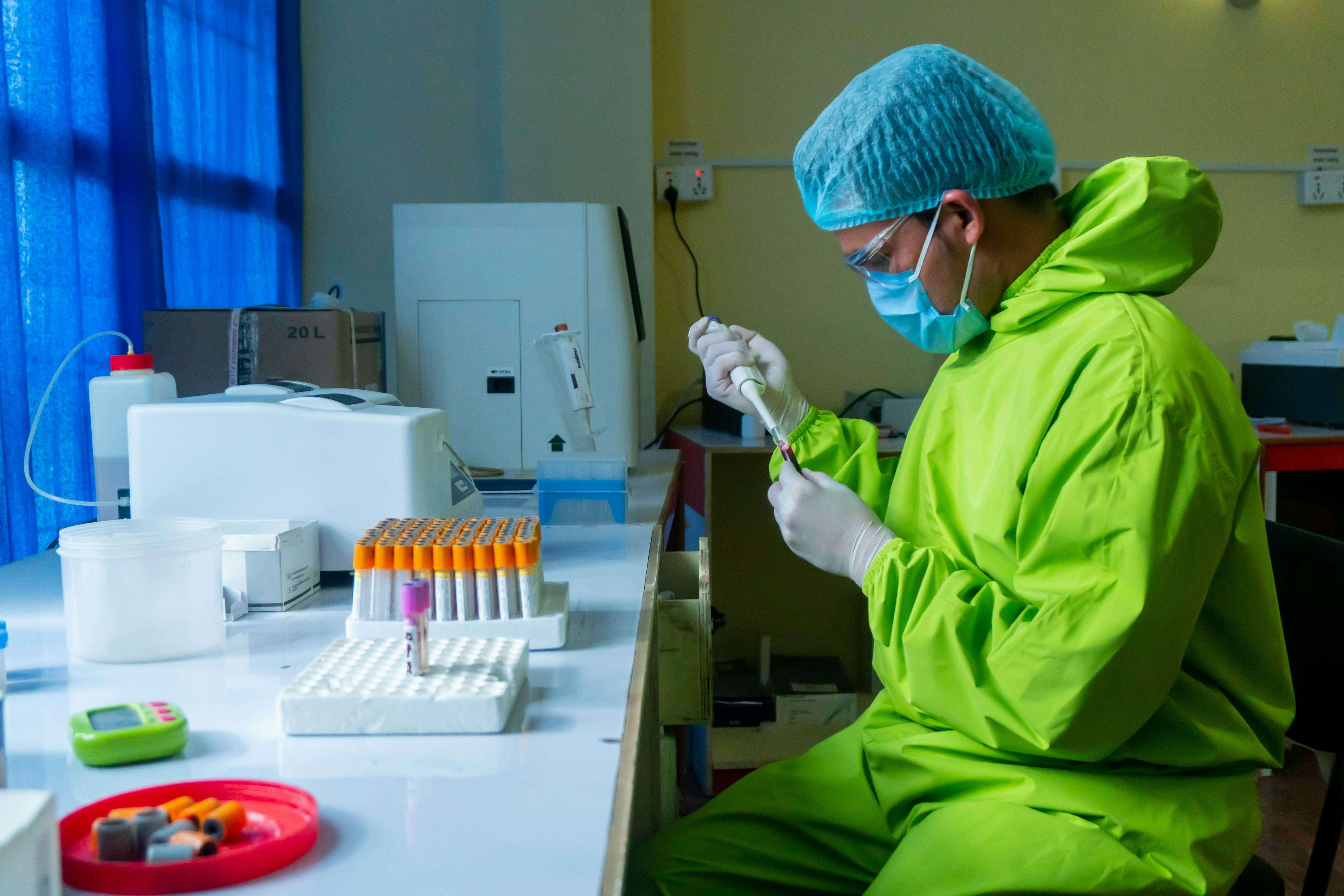
For decades, discovering a new drug was a painstaking journey of trial and error, often compared to searching for a needle in a haystack. Today, that haystack is being illuminated by the transformative power of Computational Biology and AI, turning a blind search into a precise, data-driven science. This revolution is reshaping medicine at its core, accelerating the journey from a novel biological target to a life-saving therapy. At the forefront of this transformation are advanced platforms that use AI to screen billions of compounds and validate the best candidates in the lab—creating a seamless pipeline from digital design to physical reality. This article explores how these intelligent systems are not just speeding up drug discovery, but fundamentally changing what we believe is possible, from engineering better small-molecule pills to designing complex antibody therapies for diseases once thought untreatable.
The Data Deluge and the AI Solution
Modern biology produces data at an unprecedented scale. Sequencing a human genome, once a monumental 13-year project, now takes hours. This explosion of information—from genes to proteins to cellular imaging—is a treasure trove, but it's too vast for traditional analysis. This is where Computational Biology and AI become essential. AI, particularly deep learning, excels at finding subtle patterns in these massive datasets, learning the intricate rules of biology. It can predict how a protein folds or how a molecule might block a disease enzyme in days, a task that once took months or years.
Two Fronts in Drug Discovery
This computational power is deployed along two major fronts. The first is small molecule drugs—traditional pills and capsules. The second, more recent frontier is biologics, such as therapeutic antibodies, which are complex proteins engineered to precisely target diseases. While both aim to find molecules that interact with disease targets safely and effectively, their complexity differs vastly. A small molecule is a simple key; an antibody is a sophisticated master key system. Computational Biology and AI provide the toolkit for both. For small molecules, AI excels at virtual screening and docking simulations. For biologics, advanced AI models tackle the monumental challenge of predicting antibody structures, optimizing binding, and improving manufacturability—a field known as AI for Antibody and Biologics.
Part I: The Engine of Small Molecule Discovery
Finding a new small-molecule drug is a numbers game. The theoretical chemical space—over 10 to the power of 60 possible drug-like molecules—makes physical screening of even a fraction impossible.
Computational Biology and AI solve this through virtual screening. Instead of testing molecules in a lab, AI screens them on a computer. Modern virtual screening platforms can now screen over 10 billion compounds against a target in weeks.
The process works like a funnel. AI-powered docking simulates how compounds fit a protein's binding pocket. Physics-based scoring ranks the hits. Top candidates undergo Free Energy Perturbation and molecular dynamics to eliminate false positives. The highest-ranked molecules are then validated experimentally using biophysical techniques like Surface Plasmon Resonance.
This creates a "closed-loop" system: experimental data feeds back into the AI, retraining it for the next round. By bridging prediction and experimental truth, these platforms slash the time and cost of finding viable drug candidates.
Part II: The Frontier of Biologics
If small molecules are precision keys, biologics are sophisticated master key systems. Therapeutic antibodies—complex Y-shaped proteins—must fold perfectly, bind with exquisite specificity, and remain stable at high concentrations. Their function hinges on six tiny loops called complementarity-determining regions, which form the "tip" that recognizes disease targets.
This is where AI for Antibody and Biologics proves transformative. General protein AI models treat all amino acids equally, but antibodies require a focused approach. Researchers at Boston University demonstrated that training AI specifically on complementarity-determining regions—the biologically relevant parts—improved binding affinity prediction by up to 27 percent, outperforming larger, more general models.
Modern platforms, such as the AI for antibody design, integrate AI design with experimental validation in a closed-loop system. The workflow is streamlined: AI predicts antibody structures and scores variants for humanization and affinity. Mammalian expression systems produce purified candidates in about a week to ten days. SPR screening measures actual binding kinetics. Crucially, experimental data feeds back into the AI, continuously improving its predictions for the next cycle.
The impact is measurable. Traditional antibody engineering, which often took months to iterate, can now compress into weeks. By predicting developability—solubility, aggregation risk, and immunogenicity—before synthesis, AI flags manufacturing liabilities early, dramatically reducing late-stage failures. For biotechs, this means delivering optimized lead candidates in months rather than years, dramatically de-risking development programs.
The Unified Impact: From Undruggable to Curable
The true power of Computational Biology and AI lies in tackling what was once impossible. For decades, flat protein-protein interfaces, dynamic proteins, and hidden pockets were labeled "undruggable." AI is systematically erasing this category.
Platforms using induced-fit docking and cryptic pocket simulations now identify binding sites that standard screens miss. For AI for Antibody and Biologics, modeling complex epitopes opens disease areas—aggressive cancers, neurodegenerative disorders—previously inaccessible.
The closed-loop approach compounds this power. Every project generates data that retrains the AI. Hit rates rise. False positives fall. The system learns.
This is not incremental progress. It's a paradigm shift—the same AI that screens billion-compound libraries also designs antibodies, predicts manufacturability, and flags toxicity before any molecule enters a test tube.
Conclusion: The Future is Computational
Computational Biology and AI are moving from academic curiosity to industrial standard. The trajectory is clear: tomorrow's medicines will be designed in silico first, validated in the lab second.
Closed-loop systems will evolve into self-improving engines, accelerating discovery from years to months. For patients, this means faster access to therapies. For researchers, it means tools to explore biology at unprecedented scale. For industry, it means lower costs and higher success rates.
Yet the human element remains essential. AI requires skilled scientists to pose the right questions and guide discovery with biological insight. The future belongs to those who bridge both worlds—computational and experimental.
Understanding Computational Biology and AI is no longer optional. It is becoming essential literacy for the 21st century.

 English
 Arabic
 French
 Spanish
 Portuguese
 Deutsch
 Turkish
 Italiano
 Russian
 Romaian
 Portuguese (Brazil)
 Greek
Greek
 Bengali