


Flight Dispatcher Course in India: Start Your Career in Professional Flight Operations
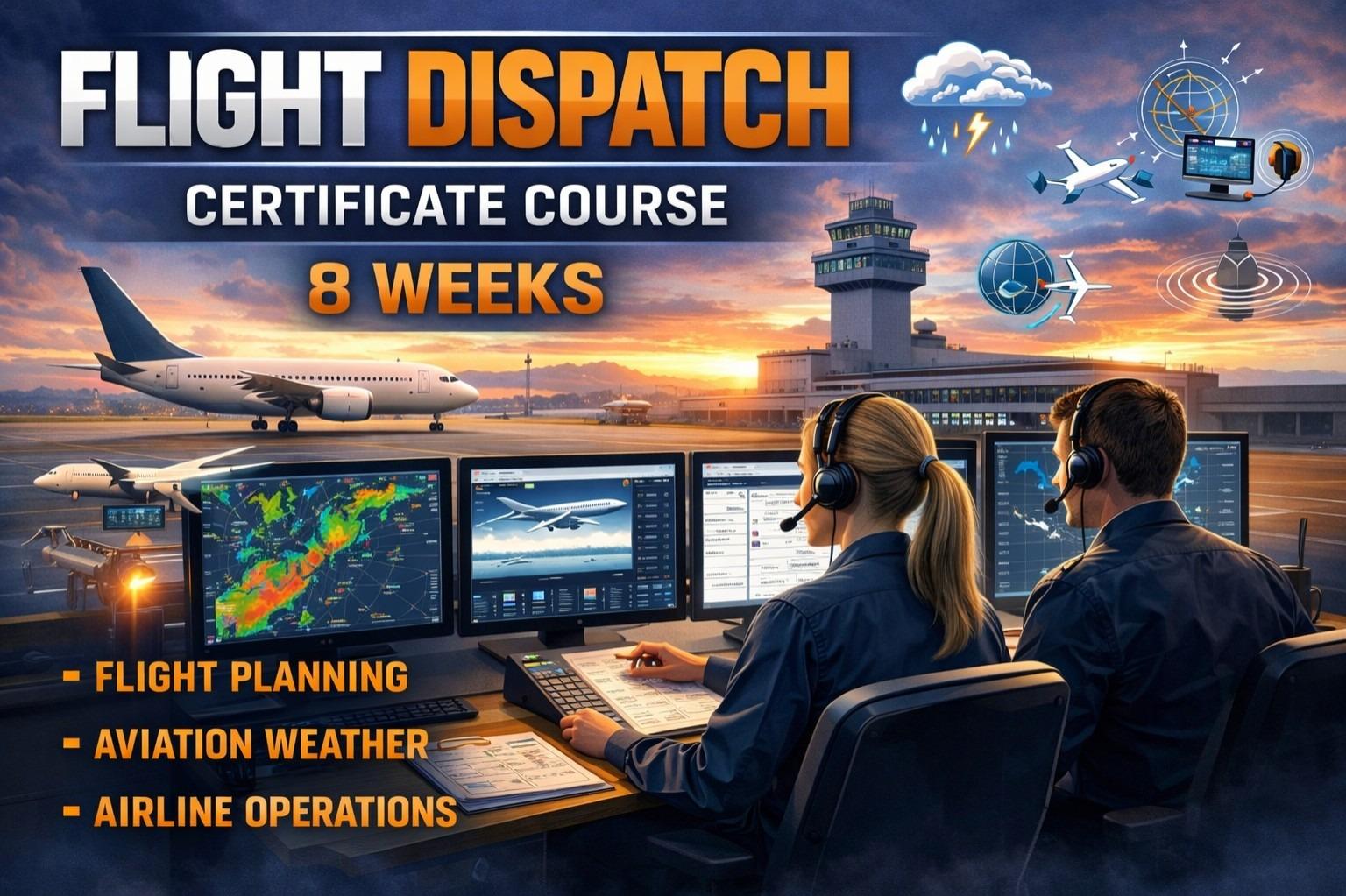
The aviation industry offers exciting career opportunities beyond becoming a pilot or cabin crew member. One such important role is that of a Flight Dispatcher, a professional who works closely with pilots and airline operations teams to support safe, efficient, and well-planned flights. If you are looking to build a career in airline operations, enrolling in a professional Flight Dispatcher Course can help you develop the technical knowledge and practical skills required for this field. The Aviation & Aerospace Skills Development Council (AASDC) offers a Certificate Course in Flight Dispatch designed around essential areas such as flight planning, fuel calculation, aviation weather, aircraft performance, NOTAMs, and operational control.
What Is a Flight Dispatcher Course?
A Flight Dispatcher Course provides specialized training in the planning and operational management of commercial flights. Flight dispatchers play an important role in supporting airline operations and coordinating with pilots before and during flights. The program is designed to help students understand how real-world airline operations work and develop job-related aviation skills.
Why Choose a Flight Dispatcher Course in India?
India's aviation sector provides diverse career opportunities for students interested in airline operations and aviation management.
A professional course can help you understand:
- Flight planning and route selection
- Operational Flight Plan (OFP) preparation
- Fuel calculation and management
- Aviation weather interpretation
These skills are valuable for understanding the operational side of commercial aviation.
What Will You Learn in an Aircraft Dispatcher Course?
A specialized Flight Dispatcher Course in India can be a useful option for candidates who want to develop aviation knowledge without pursuing a complete pilot training program. An Aircraft Dispatcher Course combines aviation theory with practical operational knowledge. AASDC's curriculum is divided into eight parts covering the complete flight dispatch process.
1. Flight Dispatch and Airline Operations
Students learn about airline operations, the responsibilities of flight dispatchers, Operations Control Center (OCC) structures, dispatcher-pilot coordination, and basic flight safety.
2. Aviation Regulations and Documentation
The course introduces students to DGCA and ICAO regulations, aircraft documentation, dispatch release procedures, flight plan documentation, and regulatory responsibilities.
3. Aircraft Performance and Weight & Balance
Students learn the fundamentals of aircraft performance, weight and balance, take-off and landing performance, runway conditions, and performance limitations.
4. Flight Planning Fundamentals
Flight planning is a major part of dispatch operations. Students learn about route selection, domestic and international flight planning, alternate airports, fuel policies, and Operational Flight Plans.
5. Fuel Planning and Calculation
Proper fuel planning is essential for safe and efficient flight operations. The curriculum covers taxi, trip, contingency, alternate, and final reserve fuel, along with cost-efficient fuel planning.
Who Can Enroll in the Flight Dispatcher Course?
The AASDC course lists Graduation, BE, B.Tech, AME, or Pilot as educational backgrounds and also mentions good communication skills. The listed age group is 18–26 years.
Candidates interested in airline operations, aviation management, flight planning, and operational control can consider this type of specialized training to strengthen their aviation knowledge.
Career Benefits of Flight Dispatch Training
Flight dispatch is an important part of airline operations because flight planning and operational decisions directly contribute to safe and efficient flight management.
After completing suitable training, students can develop skills related to:
- Flight planning
- Airline operations
- Fuel planning
- Weather analysis
- Operational control
- Flight monitoring
- Aviation documentation
The AASDC course specifically aims to develop practical skills such as preparing Operational Flight Plans, performing fuel calculations, understanding airline dispatch procedures, and making operational decisions.
Why Practical Training Matters
Aviation is a highly operational industry, so understanding concepts alone may not be enough. Practical learning helps students understand how aviation professionals apply their knowledge to real operational situations.
AASDC's course includes hands-on learning and practical dispatch scenarios, including complete OFP preparation and abnormal or emergency situation handling.
This approach can help learners build confidence while understanding the responsibilities involved in flight dispatch operations.
Conclusion
A Flight Dispatcher plays an important role in supporting safe, organized, and efficient airline operations. From preparing flight plans and calculating fuel to analyzing weather and coordinating with pilots, the role requires strong technical knowledge, decision-making skills, and attention to detail.
A well-structured Aircraft Dispatcher Course can help aspiring aviation professionals develop these essential skills. AASDC's Certificate Course in Flight Dispatch offers structured training covering flight planning, fuel management, weather, aircraft performance, regulations, NOTAMs, operational control, and practical dispatch scenarios.

 English
 Arabic
 French
 Spanish
 Portuguese
 Turkish
 Dutch
Dutch
 Italiano
 Russian
 Romaian
 Portuguese (Brazil)
 Greek
Greek
 Bengali