


Medical Representative Job: How to Build the Right Skills?
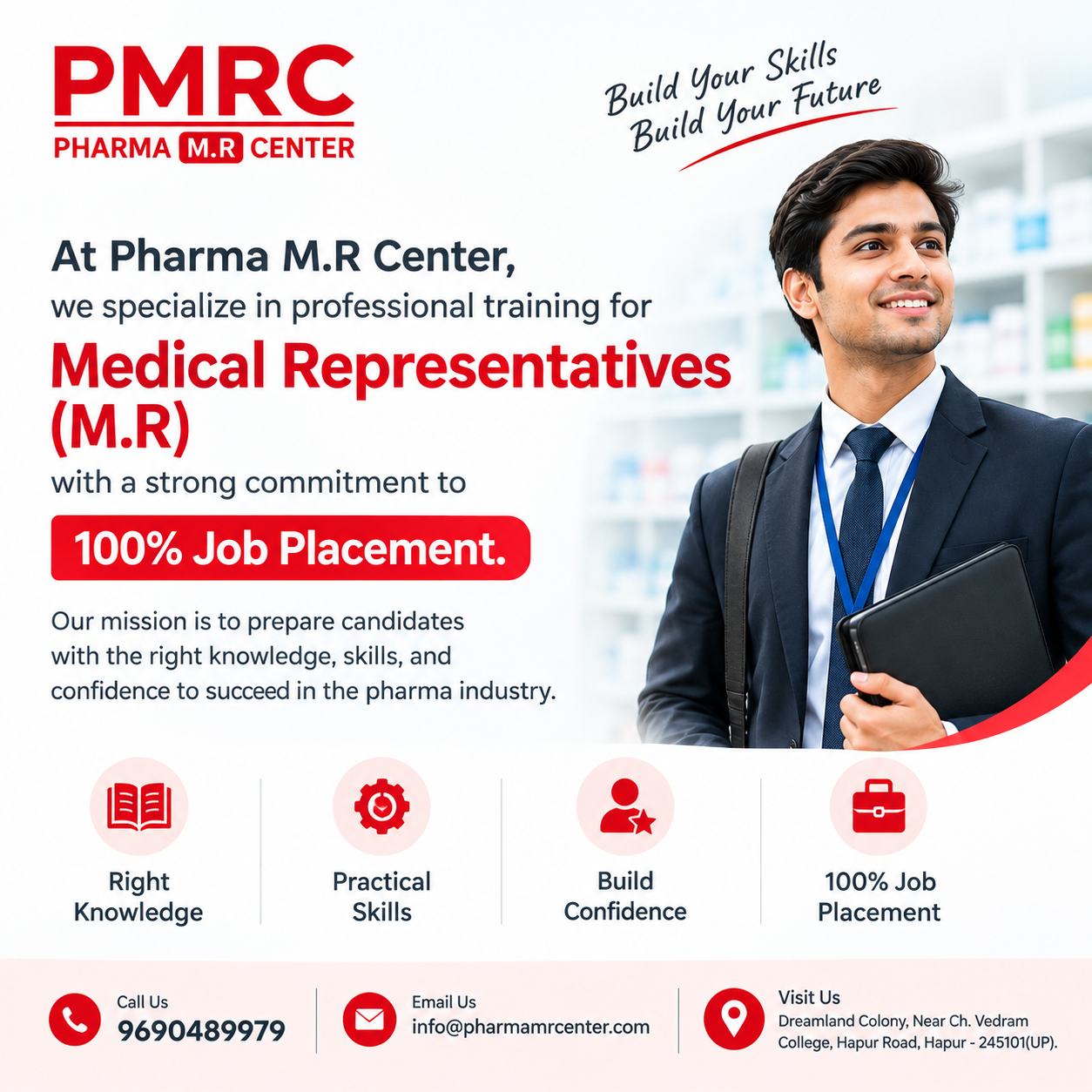
Starting a career in pharmaceutical sales can be exciting, but it also comes with responsibilities that many freshers do not fully understand until they enter the field. A representative may spend the day travelling between appointments, speaking with healthcare professionals, learning product information, maintaining records, and managing an assigned territory.
This is why preparing for a Medical Representative Job involves more than completing a degree and sending out resumes. Candidates need to build a combination of communication, pharmaceutical knowledge, sales ability, organisation, confidence, and professional discipline.
For people who are new to the industry, a practical medical representative training course can provide a useful starting point. Training can introduce candidates to pharmaceutical terminology, product presentation, communication, sales basics, territory planning, mock calls, interview preparation, and field situations.
However, skills develop through practice. The best approach is to use training as a foundation and continue improving once you begin working.
Understand the Skills the Job Actually Requires
Before working on your skills, understand what a medical representative is expected to do.
Depending on the employer, responsibilities can include:
- Visiting doctors and healthcare professionals
- Communicating approved product information
- Managing an assigned territory
- Planning daily visits
- Building professional relationships
- Following up with customers
- Recording field activities
- Preparing reports
- Working toward assigned objectives
Each responsibility requires a different ability.
Communication is needed for professional discussions. Product knowledge is required to explain information accurately. Time management helps organise daily visits, while sales skills support customer relationships and business objectives.
Understanding this connection makes skill development more purposeful.
1. Build Strong Pharmaceutical Knowledge
Product knowledge should be one of the first areas you work on.
A representative needs to understand the products they are responsible for discussing. Depending on the position, this may include:
- Product composition
- Therapeutic categories
- Approved indications
- Relevant dosage information
- Precautions
- Contraindications
- Product-specific information
- Basic medical terminology
Do not try to memorise information without understanding it.
Instead, learn the meaning behind the information and practise explaining it in simple language.
Use approved company material and reliable sources when learning about pharmaceutical products.
Most importantly, never guess when you do not know the answer to a technical question.
2. Improve Your Communication
Communication is central to a Medical Representative Job.
A representative may have only a few minutes to interact with a healthcare professional, so being able to communicate clearly is important.
Practise:
- Introducing yourself
- Explaining information concisely
- Listening carefully
- Asking relevant questions
- Responding respectfully
- Closing conversations professionally
You do not need complicated vocabulary.
Clear and natural communication is usually more effective than trying to sound overly formal.
If you are uncomfortable speaking in front of people, practise with friends, classmates, or colleagues. Record short presentations and listen to them afterwards. This can help you identify unclear speech, unnecessary repetition, or weak explanations.
3. Learn to Listen Properly
Many freshers focus heavily on speaking and forget that listening is equally important.
Healthcare professionals may ask questions, raise concerns, or provide feedback.
Good listening allows you to understand what the other person actually wants to know.
Try to:
- Avoid interrupting
- Pay attention to the question
- Take a moment before answering
- Ask for clarification when necessary
- Remember relevant feedback
A medical representative training course can help develop this ability through role-playing exercises where trainees practise both sides of a professional conversation.
4. Practise Product Presentation
Knowing product information is not enough if you cannot present it properly.
Product presentation should be concise, organised, and relevant.
Start by selecting the key information you need to communicate.
Then practise explaining it in a short presentation.
Ask yourself:
- Is the information accurate?
- Is it easy to understand?
- Am I speaking for too long?
- Am I using unnecessary technical language?
- Can I answer likely questions?
Practising short presentations repeatedly can make real professional interactions feel much more comfortable.
5. Develop Basic Sales Skills
A medical representative works in a sales environment, so understanding basic sales principles is important.
You can develop skills related to:
- Understanding customer needs
- Product positioning
- Professional follow-up
- Relationship building
- Handling objections
- Working toward objectives
Sales should not mean pressuring people.
Pharmaceutical sales requires responsible communication and professional relationships.
A good representative learns how to explain relevant information, understand customer concerns, and follow up appropriately.
6. Learn How to Handle Rejection
Rejection is part of field sales.
A doctor may be unavailable. An appointment may be cancelled. A professional may not be interested in continuing a discussion.
These situations can be frustrating for a fresher.
The key is not to take professional rejection personally.
Instead:
- Remain polite.
- Understand the situation.
- Learn what you can.
- Plan an appropriate follow-up.
- Move on to the next activity.
With experience, handling these situations becomes easier.
7. Improve Your Time Management
A field representative's day can change quickly.
Several appointments may be planned, but traffic, delays, cancellations, and unexpected meetings can affect the schedule.
Develop the habit of planning ahead.
Before starting your day:
- Review your appointments
- Check locations
- Estimate travel time
- Prioritise important visits
- Keep time for reporting
- Prepare for possible changes
At the end of the day, review what was completed and prepare for the next day.
These simple habits can improve productivity considerably.
8. Learn Territory Management
Territory management is another important skill.
A representative may be responsible for a particular geographical area containing multiple customers.
Effective territory management involves:
- Organising customer lists
- Planning routes
- Scheduling visits
- Tracking follow-ups
- Managing travel time
- Reviewing territory activity
Training programmes can use hypothetical territories to help candidates practise this skill before entering the workplace.
The more organised you become, the easier it is to manage a busy field schedule.
9. Develop Digital Skills
Modern pharmaceutical sales increasingly uses technology.
Depending on the company, representatives may work with:
- Mobile reporting applications
- Spreadsheets
- Digital calendars
- Customer databases
- Online forms
- Video meetings
You do not need to become a technology expert.
Start with basic skills.
Learn how to create and edit spreadsheets, send professional emails, organise digital files, use calendars, and complete online forms.
These abilities can save time once you begin working.
10. Become Comfortable With Reporting
Reporting is often overlooked by freshers.
After customer visits, representatives may need to record information about their activities.
This could include:
- Customer visits
- Product discussions
- Follow-ups
- Sales information
- Expenses
- Territory updates
Develop the habit of recording information accurately rather than relying on memory at the end of the week.
Good documentation reflects professional discipline.
11. Build Confidence Gradually
Confidence does not appear overnight.
It develops as you become more familiar with your products, responsibilities, and communication style.
You can build confidence by:
- Practising presentations
- Participating in discussions
- Performing mock calls
- Asking questions
- Learning from mistakes
- Speaking to different people
Do not confuse confidence with pretending to know everything.
A confident professional can also say, "I will verify that information and get back to you."
12. Develop Professional Behaviour
Small habits can influence how people perceive you.
For a Medical Representative Job, professional behaviour includes:
- Being punctual
- Dressing appropriately
- Communicating respectfully
- Keeping commitments
- Maintaining accurate records
- Following company procedures
- Respecting professional boundaries
These habits may seem basic, but they become increasingly important as you build professional relationships.
13. Use Training as a Starting Point
A medical representative training course can help structure your preparation.
Before selecting a course, check whether it includes practical topics such as:
- Pharmaceutical basics
- Product presentation
- Communication
- Sales fundamentals
- Territory management
- Mock calls
- Field reporting
- Interview preparation
- Personality development
A programme that provides only theoretical lectures may not give a fresher enough practical exposure.
Look for opportunities to practise what you learn.
14. Practise With Realistic Situations
One of the best ways to build skills is to simulate the situations you may face at work.
For example, practise:
Situation 1: A healthcare professional has only two minutes available.
Situation 2: Someone asks a question you cannot answer.
Situation 3: A scheduled meeting is cancelled.
Situation 4: You need to plan several visits across one territory.
Situation 5: A professional raises an objection about a product.
Thinking through these situations can help you become more comfortable with the unpredictable nature of fieldwork.
15. Keep Improving After Getting the Job
Skill development does not stop when you receive an offer.
Once you start your Medical Representative Job, pay attention to experienced colleagues.
Observe:
- How they plan visits
- How they communicate
- How they manage time
- How they handle difficult conversations
- How they complete reports
Ask for constructive feedback.
Keep a note of areas you need to improve and review your progress regularly.
A Simple Skill-Building Routine
You can create a weekly routine to improve gradually.
Monday: Study product information.
Tuesday: Practise a short presentation.
Wednesday: Work on communication and listening.
Thursday: Practise a sales or objection-handling situation.
Friday: Review territory and time-management concepts.
Saturday: Conduct a mock interview or professional conversation.
Even 20–30 minutes of focused practice can become useful when done consistently.
Final Thoughts
Building the right skills for a Medical Representative Job is a gradual process. A relevant qualification provides the foundation, but success in pharmaceutical sales also depends on communication, product knowledge, presentation, sales awareness, time management, territory planning, digital ability, reporting, confidence, and professional behaviour.
For freshers, a practical medical representative training course can make the starting point easier by providing structured lessons and opportunities to practise realistic situations. However, candidates should continue developing their abilities after training and after joining a company.
The most valuable skill may ultimately be the willingness to keep learning. Pharmaceutical products, company systems, customer expectations, and workplace responsibilities can change, so professionals need to remain adaptable.
Rather than trying to become perfect before applying, focus on becoming prepared. Learn the basics, practise communication, understand the field environment, develop good habits, and be honest about what you know. With consistent effort, these skills can help turn an entry-level opportunity into a stronger and more sustainable pharmaceutical career.

 English
 Arabic
 French
 Spanish
 Portuguese
 Deutsch
 Turkish
 Dutch
Dutch
 Italiano
 Russian
 Portuguese (Brazil)
 Greek
Greek
 Bengali