


Cement conveyor belt Connects Different Processing Stages
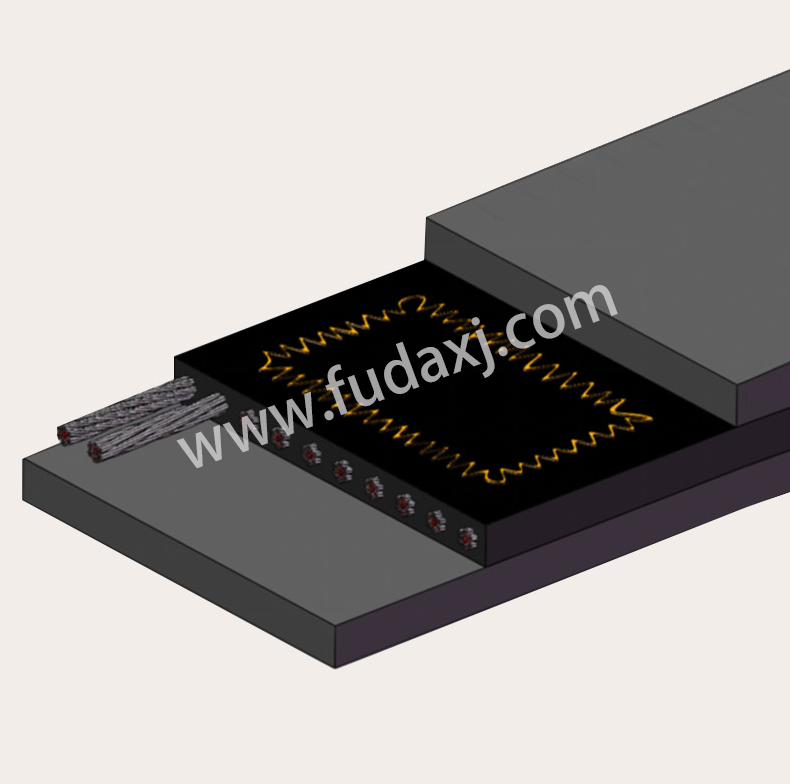
Cement production involves a long chain of material movement. Limestone, clinker, gypsum, coal, and powdered cement may all travel between different processing areas before reaching storage or packaging equipment. In this environment, a Cement conveyor belt serves as one of the practical links connecting separate stages of bulk material handling.
Unlike a small package moving across a warehouse conveyor, cement-related materials can involve heavy loads, dust, abrasive particles, and long conveying distances. Belt selection therefore needs to consider the physical properties of the material and the layout of the production line. A Cement conveyor belt can be designed around these conditions, using suitable reinforcement and cover materials for the intended application.
Raw limestone may begin its journey at a quarry or crushing area before moving toward additional processing equipment. Crushed material can then travel toward storage or production stages. Later, clinker and other ingredients may require additional conveying routes. Each section can have different loading requirements, belt widths, speeds, and distances, so one belt specification may not fit every section.
Temperature can also become relevant. Some cement-related materials leave processing equipment at elevated temperatures, making heat resistance an important consideration for certain conveyor sections. Other areas may handle materials under ordinary ambient conditions. A Cement conveyor belt needs to match the actual temperature range rather than relying only on the name of the industry.
Abrasive particles create another challenge. Limestone, clinker, and other mineral materials can gradually wear the belt surface during repeated transportation. Cover composition and thickness can therefore influence how the belt interacts with the conveyed material. Cement conveyor belt selection should take particle size, material shape, loading method, and expected throughput into account.
Belt width also affects system planning. Wider belts can carry larger material volumes, then narrower configurations may suit sections where space or material flow is limited. Belt speed, conveyor incline, pulley diameter, and support structure all need to work together.
Transfer points deserve particular attention. Material falling from one conveyor onto another can create impact and concentrated loading. Chute design, loading height, and belt support can influence how the material reaches the belt. A Cement conveyor belt should therefore be selected alongside the conveyor's overall structure.
Different cement-processing projects may also require different belt structures. Fabric-reinforced belts can suit certain applications, then steel-cord belts may be considered for long-distance or high-tension conveying systems. Edge design, joint configuration, and cover properties can also be customized around project requirements.
A Cement conveyor belt is therefore more than a simple transport surface. It forms part of a larger material-handling system that connects crushing, storage, processing, and packaging stages. For cement producers, equipment distributors, and industrial buyers, understanding the material, conveyor layout, and operating conditions can make belt selection more practical and precise.

 English
 Arabic
 French
 Spanish
 Portuguese
 Deutsch
 Dutch
Dutch
 Italiano
 Russian
 Romaian
 Portuguese (Brazil)
 Greek
Greek
 Bengali