


Understanding Rubber Compound, Nitrile Rubber and SBR Rubber for Industrial Applications
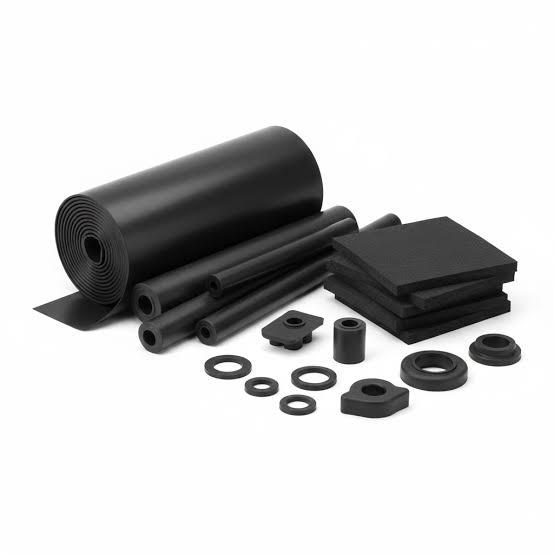
Rubber materials are essential across industries where flexibility, durability, sealing, vibration control and resistance to demanding operating conditions are required. From automotive components and industrial seals to hoses, gaskets and engineered rubber parts, selecting the right material can directly influence product performance and service life.
A rubber compound is developed by combining a base rubber with carefully selected ingredients such as reinforcing fillers, processing aids, antioxidants, curing agents and other additives. The formulation can be adjusted to achieve specific physical and chemical properties for a particular application.
Among the widely used rubber materials are nitrile rubber, NBR nitrile, and SBR rubber. Each material offers different characteristics and is suited to particular operating environments. Understanding these differences helps manufacturers and product designers select an appropriate material for their applications.
What Is a Rubber Compound and Why Is It Important?
A rubber compound is a formulated rubber material designed to meet defined performance requirements. Natural or synthetic rubber serves as the primary polymer, while additional ingredients are incorporated to modify properties such as hardness, tensile strength, abrasion resistance, flexibility, ageing resistance and temperature performance.
The formulation of a rubber compound depends heavily on the intended application. A compound designed for an oil seal may require strong resistance to oils and fuels, while a compound used for a conveyor component may need excellent abrasion resistance and mechanical strength.
The major components of a typical rubber formulation may include:
-
Base polymer
-
Carbon black or other reinforcing fillers
-
Plasticizers and processing aids
-
Vulcanizing agents
-
Accelerators
-
Antioxidants and antiozonants
-
Stabilizers and specialty additives
Through controlled formulation and processing, manufacturers can produce compounds with properties tailored to specific industrial requirements.
What Is Nitrile Rubber?
Nitrile rubber, commonly known as NBR, is a synthetic rubber produced from acrylonitrile and butadiene. Its balance of mechanical properties and resistance to petroleum-based oils and fuels has made it an important material for many industrial and automotive applications.
One of the key characteristics of nitrile rubber is its resistance to oils. This makes it particularly useful in applications where rubber components come into contact with lubricants, hydraulic fluids, fuels or other petroleum-based substances.
The performance of nitrile rubber can vary depending on its formulation and acrylonitrile content. Different grades can therefore be selected according to the required balance between flexibility, oil resistance and low-temperature performance.
Common applications include:
-
Oil seals
-
O-rings
-
Gaskets
-
Hydraulic seals
-
Fuel-system components
-
Industrial hoses
-
Automotive rubber parts
Nitrile rubber can also be formulated with different hardness levels and performance characteristics, making it adaptable to a broad range of engineered rubber products.
What Does NBR Nitrile Mean?
NBR nitrile refers to nitrile butadiene rubber, the same synthetic rubber family commonly abbreviated as NBR. The terms are frequently used when discussing rubber compounds intended for applications requiring oil and fuel resistance.
The performance of an NBR-based compound depends not only on the polymer itself but also on the overall formulation. Fillers, plasticizers, curing systems and other additives can significantly influence hardness, tensile strength, elongation, compression set and resistance to environmental conditions.
For manufacturers, selecting the appropriate NBR formulation is therefore important. An NBR compound used for an automotive seal may have different formulation requirements from one designed for an industrial gasket or hydraulic application.
This flexibility allows NBR-based compounds to be engineered for different operating conditions while maintaining the fundamental benefits associated with nitrile rubber.
What Is SBR Rubber?
SBR rubber, or styrene-butadiene rubber, is one of the most widely used synthetic rubber materials. It is produced using styrene and butadiene and is valued for its combination of abrasion resistance, mechanical strength and cost-effectiveness.
SBR rubber is commonly used in applications where good wear resistance and general-purpose performance are required. It can also be compounded to achieve different hardness, resilience and processing characteristics.
Typical applications of SBR include:
-
Automotive tyres
-
Rubber sheets
-
Conveyor components
-
Footwear soles
-
Industrial products
-
Rubber mats
-
General-purpose seals and components
Although SBR provides useful resistance to abrasion and ageing, its resistance to petroleum oils is generally lower than that of nitrile rubber. Consequently, material selection should consider the fluids, temperatures and environmental conditions encountered during actual operation.
What Is Styrene Butadiene Rubber Used For?
Styrene butadiene rubber is used extensively because it provides a practical combination of performance, availability and processing flexibility. Its abrasion resistance makes it particularly valuable in products subjected to repeated friction and mechanical wear.
In tyre manufacturing, for example, styrene butadiene rubber can contribute to durability and traction-related properties. Beyond tyres, it is also used in various industrial and consumer rubber products.
Its applications can include:
-
Tyre components
-
Conveyor belts
-
Rubber flooring
-
Footwear
-
Hoses and general rubber products
-
Mechanical components
-
Rubber sheets and mats
The final characteristics depend on the selected polymer grade and compound formulation. This means SBR can be modified to meet different production and performance requirements.
How Does Nitrile Rubber Compare With SBR Rubber?
Nitrile rubber and SBR rubber serve different purposes despite both being synthetic elastomers.
Nitrile rubber is particularly valued for its resistance to oils and fuels. This makes it a common choice for seals, gaskets and components exposed to petroleum-based fluids.
SBR rubber, on the other hand, is widely recognized for good abrasion resistance, mechanical properties and general-purpose applications. It is often selected when oil resistance is not the primary requirement.
A simple comparison can help illustrate their general characteristics:
|
Property |
Nitrile Rubber |
SBR Rubber |
|
Oil resistance |
Generally high |
Generally limited |
|
Abrasion resistance |
Good |
Good to very good |
|
Mechanical strength |
Good |
Good |
|
Fuel resistance |
Good |
Limited |
|
General-purpose applications |
Suitable |
Highly suitable |
|
Common applications |
Seals, O-rings, hoses |
Tyres, mats, sheets |
Actual performance can vary considerably depending on grade and compound formulation, so application-specific testing and technical specifications should always guide material selection.
How Does Rubber Compound Formulation Affect Performance?
The base polymer is only one part of a finished rubber compound. Formulation has a major influence on how the material performs during manufacturing and service.
For example, reinforcing fillers can improve hardness and tensile strength, while plasticizers may improve processing and flexibility. Curing systems determine how the polymer develops its final cross-linked structure. Antioxidants and antiozonants can help protect the compound from environmental degradation.
Important properties influenced by formulation include:
-
Hardness
-
Tensile strength
-
Elongation
-
Tear resistance
-
Abrasion resistance
-
Compression set
-
Heat resistance
-
Oil resistance
-
Ageing resistance
For this reason, two compounds based on the same polymer can perform differently when their formulations are optimized for different applications.
How Should Industries Choose the Right Rubber Material?
Choosing between a rubber compound, nitrile rubber or SBR rubber should begin with the operating environment rather than simply the material name.
Manufacturers should consider factors such as:
-
Temperature: Determine the minimum and maximum operating temperatures.
-
Fluid exposure: Identify whether the component will contact oil, fuel, water, chemicals or other fluids.
-
Mechanical load: Consider tensile, compression, impact and flexing requirements.
-
Abrasion: Assess whether the component will experience repeated friction or wear.
-
Environmental exposure: Consider ozone, weathering, UV exposure and ageing.
-
Hardness: Select a hardness range suitable for the application's sealing or mechanical requirements.
-
Processing requirements: Ensure the compound is compatible with the intended manufacturing process.
A properly selected compound can help improve product reliability while reducing premature failures and replacement requirements.
How GB Gummi Supports Rubber Compound Requirements
GB Gummi focuses on rubber material solutions designed for industrial and manufacturing applications. Its range of rubber compounds can be developed around different performance requirements, helping manufacturers identify materials suited to their products and operating environments.
Whether the requirement involves nitrile rubber, NBR nitrile, SBR rubber, or another elastomer system, compound selection should be based on the required combination of physical, chemical and environmental properties.
A technically appropriate rubber compound can contribute to consistent processing, dependable product performance and longer component service life. For manufacturers working with seals, gaskets, sheets, hoses, moulded components and other rubber products, selecting the correct material formulation is an important part of product development.
Conclusion
Rubber compounds provide manufacturers with the flexibility to engineer materials for specific operating conditions. Nitrile rubber and NBR nitrile are widely associated with applications requiring good oil and fuel resistance, while SBR rubber, also known as styrene butadiene rubber, offers useful abrasion resistance and versatile general-purpose performance.
The best material choice depends on the application's temperature, fluid exposure, mechanical stresses, environmental conditions and manufacturing requirements. By understanding the characteristics of each elastomer and working with appropriately formulated compounds, manufacturers can develop rubber products that deliver reliable and consistent performance.
GB Gummi provides rubber compound solutions for industrial applications where material performance and formulation requirements need to be carefully considered.

 English
 French
 Spanish
 Portuguese
 Deutsch
 Turkish
 Dutch
Dutch
 Italiano
 Russian
 Romaian
 Portuguese (Brazil)
 Greek
Greek
 Bengali