


How Does a Fibre Laser Welding Machine Improve Modern Metal Fabrication
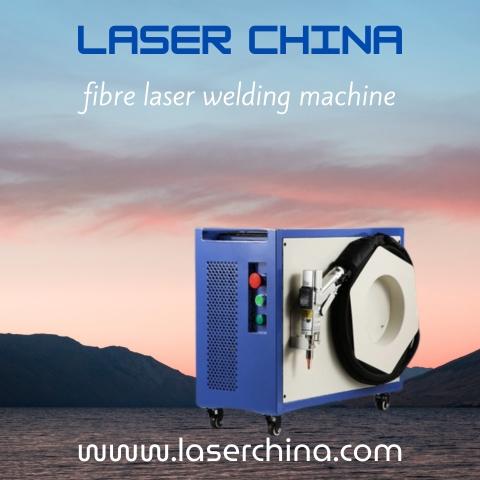
Modern metal fabrication requires welding equipment that can deliver accurate joints, consistent results, and efficient production. As manufacturers handle increasingly demanding projects, laser technology has become an important part of industrial welding operations. A fibre laser welding machine uses a concentrated laser beam to join metal components with high precision, making it suitable for a wide range of fabrication and manufacturing applications.
Unlike conventional welding methods that rely heavily on direct heat from an electrical arc, laser welding concentrates energy into a small working area. This allows manufacturers to create controlled welds while maintaining a clean and professional appearance. Fibre laser technology is used across industries such as automotive manufacturing, sheet metal fabrication, machinery production, electronics, stainless steel processing, and custom metalwork.
Understanding Fibre Laser Welding
Fibre laser welding is a process in which a laser beam generated through a fibre laser source is directed toward the workpiece. The concentrated energy melts the material at the joint, creating a strong connection as the molten area cools and solidifies.
The process can be used with different metals and thicknesses depending on the machine configuration, laser power, material type, and application requirements. Stainless steel, carbon steel, aluminium, galvanized materials, and other commonly used metals can be processed with suitable settings.
The quality of the final weld depends on several factors, including laser power, welding speed, focal position, material thickness, joint design, and shielding gas. Proper parameter selection helps operators achieve stable and repeatable welding results.
Why Fibre Laser Technology Is Used in Welding
The development of fibre laser sources has expanded the use of laser welding in industrial environments. Fibre technology provides an efficient way to deliver laser energy to the welding head while supporting precise control over the working process.
For manufacturers, this makes laser welding particularly useful when appearance and dimensional accuracy are important. A properly configured system can produce narrow and controlled weld seams, reducing unnecessary heating around the joint.
The concentrated welding process is also useful when working with components where excessive heat could affect the surrounding material. By controlling the energy input, operators can work on detailed assemblies and thinner metal sections with greater precision.
Applications in Sheet Metal Fabrication
Sheet metal workshops are among the common environments where laser welding technology can be applied. Products such as cabinets, enclosures, frames, panels, kitchen equipment, machinery parts, and metal structures often require clean and accurate joints.
A fibre laser welding machine can be used for straight seams, corner joints, overlapping sections, and other suitable welding configurations. Handheld systems are especially practical for workshops that need flexibility when working on components of different shapes and sizes.
Operators can move the welding head around the workpiece while maintaining controlled laser energy at the joint. This flexibility makes the technology suitable for both production environments and custom fabrication projects.
Welding Stainless Steel and Aluminium
Stainless steel is widely used in industrial equipment, food-processing systems, architectural products, and household applications. Its clean surface and corrosion-resistant properties make weld appearance particularly important.
Laser welding can produce precise joints on stainless steel when the appropriate power and process parameters are selected. The controlled heat input can help maintain a neat appearance around the welded area.
Aluminium presents different welding requirements because of its thermal properties and reflective surface. Modern fibre laser systems can be configured for aluminium applications, allowing manufacturers to process suitable aluminium components efficiently. Proper preparation, machine settings, and operator technique remain essential for consistent results.
Portable Fibre Laser Welding Systems
Portable laser welding systems have become increasingly useful for workshops that handle varied fabrication work. Instead of restricting welding operations to a fixed workstation, handheld equipment allows operators to work directly on larger structures and components.
A portable setup can be useful for repairing metal parts, fabricating frames, joining sheet metal, and completing assembly work. The welding head is generally designed for controlled manual operation, giving the operator flexibility when following different joint shapes.
Before selecting a portable system, manufacturers should consider the materials they commonly process, required laser power, material thickness, working environment, and available electrical infrastructure.
Preparing Materials for Laser Welding
Material preparation has a major influence on welding quality. Surfaces should be properly cleaned before welding because oil, dust, oxidation, paint, and other contaminants can interfere with the process.
The two parts should also be positioned correctly. Gaps or uneven alignment can affect the final weld and may require adjustments to the welding parameters. Proper fixturing helps maintain consistent positioning throughout production.
For professional fabrication, operators should establish suitable procedures for different materials and thicknesses. Testing sample pieces before full production can help identify appropriate settings and reduce unnecessary material waste.
Selecting the Appropriate Laser Power
Laser power should be selected according to the intended application. A workshop handling thin stainless-steel sheets may have different requirements from a manufacturer working with thicker carbon-steel components.
Common industrial systems are available in different power configurations, allowing users to select equipment according to their production needs. Higher power does not automatically mean better results for every application. The welding process must balance power, speed, focus, material thickness, and joint configuration.
Manufacturers should therefore evaluate their regular workload instead of selecting equipment based only on the highest available power rating.
Welding Speed and Process Control
Welding speed directly influences heat input and weld formation. If the process is too slow, excessive heat can enter the workpiece. If it is too fast, the laser may not provide sufficient energy for proper penetration.
A professional welding setup allows operators to adjust process parameters according to the material and application. Consistent settings are particularly important in production environments where multiple components must maintain a similar appearance and joint quality.
Maintaining clean optics, checking the welding head, and following appropriate maintenance procedures also contribute to reliable operation.
Industrial Applications
Fibre laser welding technology is used in many manufacturing sectors. Automotive suppliers can use laser welding for selected metal components and assemblies. Machinery manufacturers can apply the process to equipment frames, covers, brackets, and precision parts.
In stainless-steel fabrication, laser welding can be used for tanks, cabinets, equipment housings, and decorative structures. Metal furniture manufacturers can also use it for frames and sheet-metal assemblies.
Other potential applications include agricultural machinery, electrical enclosures, hardware production, kitchen equipment, metal doors, elevators, and general engineering projects.
Building a More Efficient Welding Workflow
Integrating laser welding into a fabrication workshop involves more than purchasing a machine. Operators should establish a complete workflow that includes material preparation, positioning, welding parameter selection, inspection, cleaning, and routine maintenance.
Training is also important. Operators need to understand laser safety procedures, machine controls, material behavior, and suitable welding techniques. A structured workflow helps maintain consistent production quality and allows businesses to make better use of their equipment.
Manufacturers can also organize sample testing for commonly used materials. Recording successful settings for specific applications can make future production work more consistent.
Choosing a Fibre Laser Welding Machine
When evaluating equipment, buyers should consider laser power, welding thickness, laser source, welding head, cooling system, control interface, portability, compatible materials, and after-sales technical support.
The machine should match the actual requirements of the workshop rather than being selected solely on price. Businesses should also consider long-term maintenance, replacement components, operator training, and technical assistance.
For companies planning to expand their fabrication capacity, a properly selected fibre laser welding machine can become an important part of a modern metalworking setup.
Final Thoughts
Fibre laser welding has become an increasingly practical solution for manufacturers seeking precise and controlled metal joining. Its applications range from sheet metal fabrication and machinery production to stainless-steel work, aluminium processing, repair operations, and custom manufacturing.

 English
 Arabic
 French
 Spanish
 Portuguese
 Deutsch
 Turkish
 Italiano
 Russian
 Romaian
 Portuguese (Brazil)
 Greek
Greek
 Bengali