


Why Walk In Cold Room Solutions Matter for Growing Food Businesses
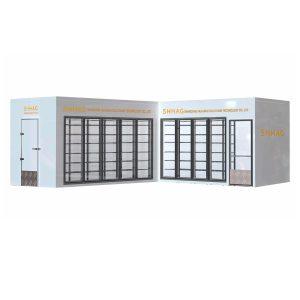
As food businesses grow, their refrigeration requirements often become more demanding. Small refrigerators may no longer provide enough space for large inventories of fresh produce, beverages, dairy products, prepared foods, and other temperature-sensitive goods. A properly designed walk in cold room provides businesses with a dedicated refrigerated environment where larger quantities of products can be stored, organized, and accessed efficiently.
Storage capacity is one of the most important advantages of a walk-in cold room. Instead of placing products across multiple smaller refrigeration units, businesses can create a centralized storage area that accommodates a larger inventory. This can be particularly useful for supermarkets, restaurants, hotels, catering companies, food wholesalers, and distribution facilities that need consistent access to refrigerated products.
Organization is another major consideration. A spacious cold room allows businesses to arrange products according to category, size, usage, or delivery schedule. Shelving and storage systems can be planned around the available space, creating clear areas for different types of products. Better organization can help employees locate items more quickly and make regular inventory checks easier.
Temperature management is essential when storing perishable goods. A dedicated refrigerated environment can provide controlled conditions suitable for the products being stored. Businesses should select refrigeration equipment according to their specific temperature requirements, storage volume, product types, and operational schedule. Proper planning helps ensure that the cold room supports the intended application.
Accessibility also plays an important role in commercial cold storage. Employees may need to enter the room several times each day for restocking, order preparation, cleaning, or inventory management. A practical layout with suitable access points can help staff move around efficiently. Keeping products arranged logically can further simplify routine tasks and reduce unnecessary time spent searching for inventory.
Durability is essential for commercial refrigeration environments because cold rooms are exposed to frequent use. Doors, panels, insulation, flooring, and other components must be suitable for the demands of the application. Selecting appropriate materials and maintaining the refrigeration system regularly can help support dependable operation over an extended period.
A cold room can also help businesses improve workflow. When refrigerated products have a dedicated storage area, staff can separate incoming stock from existing inventory and organize goods according to operational priorities. This can make receiving, storage, preparation, and distribution processes more structured. For businesses handling significant product volumes, efficient cold storage planning can make daily operations easier to manage.
Maintenance should be treated as an essential part of cold room management. Regular inspection of doors, seals, refrigeration components, and storage areas can help identify potential issues early. Businesses should also maintain clean and organized interiors and avoid blocking important airflow areas. Routine maintenance can support consistent operation and help protect stored products.
Before installing a cold room, businesses should evaluate several factors, including available space, required capacity, insulation requirements, temperature range, door configuration, product types, access frequency, and expected future growth. Planning around these requirements can help create a solution that fits both current operations and potential expansion.
For businesses searching for practical commercial refrigeration solutions, SHHAG provides cold room options designed to support different storage requirements. A suitable walk in cold room can provide spacious temperature-controlled storage while helping businesses keep products organized and accessible. This makes it a useful solution for operations where reliable refrigerated storage is an essential part of the daily workflow.
Modern food storage requires a balance of capacity, organization, accessibility, and temperature management. A well-planned cold room can provide businesses with the space and structure needed to handle larger inventories while supporting efficient everyday operations. With appropriate equipment, thoughtful layout planning, and consistent maintenance, commercial cold storage can become a dependable foundation for growing food and hospitality businesses.

 English
 Arabic
 French
 Spanish
 Portuguese
 Deutsch
 Turkish
 Dutch
Dutch
 Italiano
 Russian
 Portuguese (Brazil)
 Greek
Greek
 Bengali