


Denim Tears: The Brand That Wears Its History on Its Sleeve
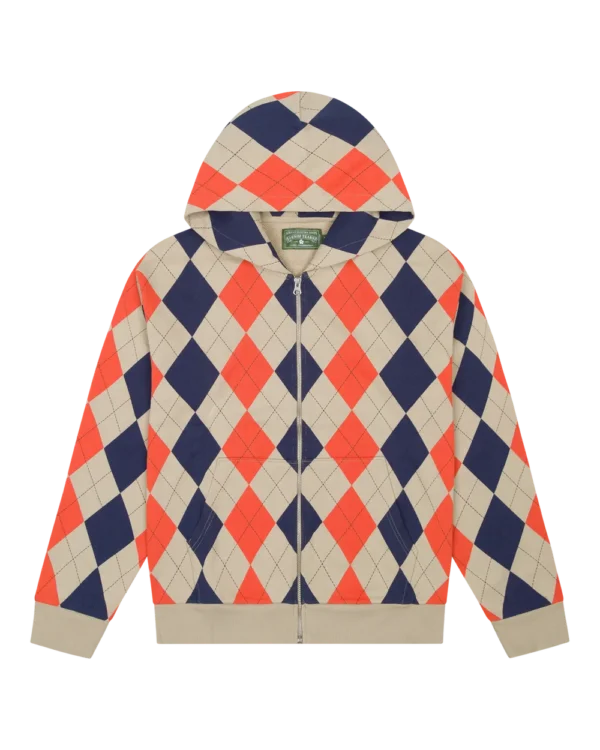
Denim Tears: The Brand That Wears Its History on Its Sleeve
Some clothing brands sell you a logo. Denim Tears Hoodie sells you a story—one that most people never learned in school.
If you've seen the cotton wreath design on a hoodie or a pair of jeans and wondered what it's really about, you're in the right place. This isn't just another streetwear breakdown. This is the story of a brand that turned pain into art, history into fabric, and clothing into a conversation that America still needs to have.
Let's get into it.
What Exactly Is Denim Tears?
Denim Tears is an American fashion label founded in 2019 by Tremaine Emory, a creative director and designer who was born in Atlanta, Georgia, and raised in Jamaica, Queens . But calling it just a "fashion label" misses the point entirely.
The brand functions more like an art project that happens to make incredibly wearable clothing. Every collection tells a specific chapter of the Black American experience—stories that have been overlooked, buried, or deliberately erased . Emory uses clothing as what he calls a "Trojan horse" to get these narratives into the mainstream .
The name itself carries weight. "Denim Tears" references the denim aprons worn by Emory's grandmother and countless other Black women who worked in fields and factories, their labor woven into the fabric of American industry . It's a tribute to the tears shed—both literal and metaphorical—by generations of Black Americans whose stories rarely made it into textbooks.
The Cotton Wreath: More Than Just a Logo
You've seen it everywhere. The cotton wreath—a circular arrangement of cotton bolls—has become Denim Tears' signature emblem since Emory introduced it in 2020 .
But here's what makes it different from your typical brand logo: the cotton wreath isn't decorative. It's a direct reference to the central role cotton played in the American slave trade . While denim itself is made from cotton, Emory flipped the narrative by using the very material that built so much American wealth as a symbol of remembrance and reckoning.
The wreath draws partial inspiration from the work of artist Kara Walker, whose silhouettes explore race, slavery, and identity in haunting ways . When you wear that hoodie, you're wearing a piece of historical commentary. It's not just fashion—it's a statement that says: We remember where this came from.
From No Vacancy Inn to Fashion's Biggest Stages
Before Denim Tears existed, Tremaine Emory was already a behind-the-scenes force in fashion and culture. He worked in advisory roles at Marc Jacobs, Stüssy, Off-White, and Yeezy . Alongside Ade "Acyde" Odunlami and Brock Korsan, he co-founded No Vacancy Inn in 2015—a creative collective that started with parties and DJ sets before expanding into clothing .
Emory's reputation as a "visionary agent provocateur" earned him collaborations with everyone from Frank Ocean to Andre 3000, Virgil Abloh to Theaster Gates . In 2022, he was appointed creative director of Supreme, a position he held until 2023 .
But Denim Tears was always the main event. What started in 2019 as a brand with no investors and a single retail partner (Dover Street Market) has grown into a business generating "tens of millions" in annual revenue, doubling sales every year since its founding . That kind of growth without outside money is almost unheard of in fashion.
The Collaborations That Made People Pay Attention
Denim Tears didn't blow up in a vacuum. Strategic partnerships put the brand in front of audiences that might never have encountered its message otherwise.
Levi's
The Levi's collaboration is probably the most important in the brand's history. The first season featured the Cotton Wreath motif on trucker jackets and wide-brimmed plantation hats—the latter "replicated and recontextualized after those worn in the fields during the assiduous cotton-picking process," according to the brand . Season 2 highlighted the Gullah Geechee people and their forced labor in indigo dye production. Season 3 explored Black biker culture and Martin Dixon's book Brooklyn Kings .
These weren't just logo swaps. Each drop was a history lesson disguised as a fashion release.
Converse
The Converse collaboration featured prints influenced by Marcus Garvey's pan-African flag and David Hammons' 1990 work African-American Flag . Released in 2020 amid the protests following George Floyd's murder, the project became emotionally charged in ways Emory couldn't have fully predicted .
Dior
In late 2022, Dior Homme designer Kim Jones invited Emory to guest-design a capsule called Dior Tears. Presented at Cairo's Grand Egyptian Museum, the collection drew from Black Ivy League students of the 1950s and '60s, paying tribute to James Baldwin and Miles Davis . The collection included remixed versions of the Saddle Bag, the Dior Lingot, and B33 sneakers .
This was a major moment—a Black-owned streetwear brand partnering with one of the most storied luxury houses in the world, on a collection about Black intellectual history. The symbolism was layered and undeniable.
ASICS
The ASICS collaboration came through Emory's mentor Angelo Baque, founder of Awake NY. They reworked the Gel MC Plus in "Georgia Red Clay" and "Cream" colorways, with "dirty" markings referencing the unpaved red clay roads Emory played on as a child in Harlem, Georgia .
Dr. Martens
For the 2023 Dr. Martens project, Emory took on the eight-eye 1460 boot and Penton loafer, adding a subversive Union Jack in the colors of the Jamaican flag by artist Chris Ofili. The collection nodded to the Windrush generation—Caribbean people who emigrated to postwar Britain to help rebuild the country, only to face discrimination and, in some cases, wrongful deportation decades later .
Each collaboration added another layer to the brand's mission. None of them were random. None of them were just about selling shoes.
Why Denim Tears Resonates with American Audiences
Here's the thing about Denim Tears that separates it from the endless sea of streetwear brands: it's not trying to be cool. It's trying to tell the truth.
Emory has said that he only works with brands he believes can support his activism . He doesn't do collaborations for the check. He does them because they extend the conversation.
The brand's flagship store in New York is called "African Diaspora Goods." It's located at 176 Spring Street—the original location of Union, the pioneering streetwear retailer . Half the store is a library containing 1,500 books on African art rather than clothing . Let that sink in. A retail space where half the square footage is dedicated to education and preservation.
Emory has said he wants each Denim Tears store to "express parts of the diaspora through a collection of Black ephemera" . There's so much that needs to be saved and preserved for future generations, and he sees the brand as playing a role in that preservation.
This isn't performative activism. It's a business model built on memory.
The Cultural Impact: Museums, Perfume, and Beyond
Denim Tears Clothing has achieved something rare: it's been embraced by both street culture and the institutional art world.
Garments from the brand are in the permanent collection of The Metropolitan Museum of Art's Costume Institute . The "Tyson Beckford" sweater—a play on Ralph Lauren's Polo aesthetic featuring the Pan-African flag—sits alongside Levi's denim with the Cotton Wreath in the Met's archives . Amanda Garfinkel, associate curator at The Met, praised Emory's "strength of point of view and his mission to highlight the stories and histories of Black Americans" .
In September 2026, the SCAD Museum of Art opened "Denim Tears From the Pool of Black Genius," the first solo exhibition and retrospective dedicated to Emory's creative practice . The show placed his garments alongside works by artists who inspired him—Arthur Jafa, Hank Willis Thomas, David Hammons—underscoring that his fashion output was always meant to be in conversation with the broader culture .
The brand even expanded into fragrance. In September 2026, Denim Tears released Tears, an eau de parm inspired by cotton and Georgia's landscape after it rains, in collaboration with Comme des Garçons . Yes, a perfume about cotton fields. Only Denim Tears could pull that off with sincerity. https://denimtearsclothing.com/
How to Shop Denim Tears (Without Getting Burned)
If you're looking to buy Denim Tears, there's one rule you need to follow: only buy from authorized sources.
Guaranteed authentic Denim Tears goods can only be purchased through:
-
The official Denim Tears website
-
African Diaspora Goods at 176 Spring Street, New York
-
African Diaspora Goods at Lenox Square, Atlanta
-
Dover Street Market locations
Collaboration pieces also drop on partner sites like Levi's and Converse when applicable . Anything outside these channels should be treated with suspicion. The resale market is full of fakes, and Denim Tears pieces are expensive enough that you don't want to gamble.
Sizing tip: Denim Tears hoodies and sweatshirts run with a relaxed, slightly boxy cut. True to size is the right call for most people. If you want an exaggerated oversized look, size up, but know that the sleeves and body will run noticeably longer . Denim pieces fit like the collaboration base brand—so Levi's jeans fit like Levi's 501s, Converse fit like Chuck 70s .
Care tip: Turn your hoodies inside out, wash cold, and air dry. The cotton wreath print deserves to stay sharp. Heat is the enemy of printed graphics, so keep your dryer away from these pieces . Because the wreath carries real cultural significance, preserving it properly is about more than keeping your clothes looking new—it's about maintaining the story the piece was designed to carry .
Top 10 FAQs About Denim Tears
1. What does "Denim Tears" mean?
It refers to the denim aprons worn by Black workers, including Emory's grandmother, and the collective struggle and tears of African Americans throughout history .
2. Who owns Denim Tears?
Tremaine Emory founded the brand in 2019 and remains its creative director and owner. It has no outside investors .
3. What is the cotton wreath symbol?
It's a circular arrangement of cotton bolls that represents the central role cotton played in American slavery and honors those who were forced to harvest it .
4. Is Denim Tears a Black-owned brand?
Yes. Tremaine Emory is Black American, and the brand is built around telling Black American stories .
5. Where can I buy authentic Denim Tears?
Only from the official Denim Tears website, African Diaspora Goods stores in New York and Atlanta, and select Dover Street Market locations .
6. Does Denim Tears run true to size?
Yes, hoodies and sweatshirts fit true to size with a relaxed cut. Denim pieces follow the sizing of the collaboration base brand .
7. What collaborations has Denim Tears done?
Notable collaborations include Levi's, Converse, Dior, ASICS, Dr. Martens, Stüssy, and Comme des Garçons .
8. How should I wash my Denim Tears hoodie?
Turn it inside out, wash in cold water on gentle cycle, avoid fabric softener, and air dry. Never use high heat .
9. Is Denim Tears in any museums?
Yes. Pieces are in The Metropolitan Museum of Art's Costume Institute permanent collection, and the SCAD Museum of Art hosted a retrospective exhibition in 2026 .
10. What makes Denim Tears different from other streetwear brands?
It functions as an art platform and educational tool, with each collection telling a specific story from Black American history rather than following trends .
The Bottom Line
Denim Tears isn't for everyone. It's not trying to be. It's a brand that demands something from you—attention, curiosity, a willingness to sit with uncomfortable history.
But for those who get it, Denim Tears represents something increasingly rare in fashion: authenticity that isn't performed, storytelling that isn't shallow, and a business that puts its values where its prices are. Tremaine Emory built something that matters. And in doing so, he reminded us that clothing can be so much more than fabric.

 Arabic
 French
 Spanish
 Portuguese
 Deutsch
 Turkish
 Dutch
Dutch
 Italiano
 Russian
 Romaian
 Portuguese (Brazil)
 Greek
Greek
 Bengali