


What Determines Laser Cleaner Price and How to Choose the Right Machine
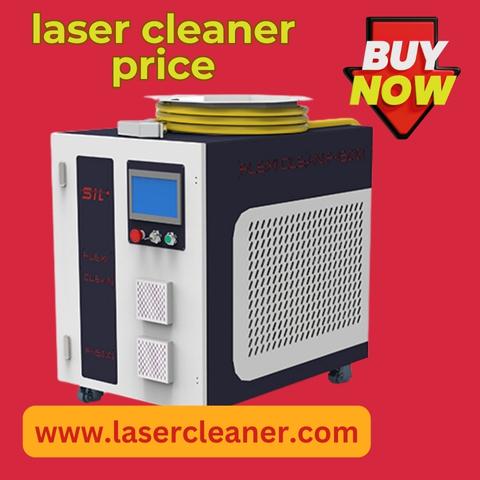
When businesses begin researching industrial cleaning equipment, laser cleaner price is often one of the first considerations. The market includes compact handheld systems, portable cleaning machines, and higher-powered industrial solutions designed for demanding production environments. Prices can vary considerably depending on the machine’s power, laser source, configuration, automation level, and intended application.
Understanding what influences the price makes it easier to select a machine that matches the actual cleaning requirements rather than simply choosing the lowest-priced option. Laser cleaning technology is increasingly used for removing rust, paint, oil, oxidation, coatings, and other contaminants from metal surfaces while maintaining precise control over the treatment area.
Understanding Laser Cleaning Machines
A laser cleaning machine uses concentrated laser energy to remove unwanted material from a surface. The laser interacts primarily with the contamination, causing it to detach, vaporize, or separate from the underlying material. Depending on the application and settings, operators can clean metal components, tools, molds, machinery, automotive parts, and industrial structures.
This wide range of applications is one reason why there is no single standard laser cleaner price.
What Influences Laser Cleaner Price?
Several factors affect the cost of a laser cleaning machine. Understanding these factors helps buyers compare machines more accurately.
Laser Power
Laser power is one of the most noticeable factors affecting machine pricing. Systems may be available in different power levels, such as 1000W, 1500W, 2000W, and higher configurations.
A lower-power machine may be suitable for removing light rust, surface contamination, or thin coatings from relatively small components. Higher-power equipment can be intended for larger areas and heavier contamination.
As power increases, the overall machine configuration and cost generally increase as well.
Laser Source
The laser source is another important part of the equipment. Different laser source manufacturers and technologies can influence the machine's overall cost, operating characteristics, and expected service life.
When comparing prices, buyers should look beyond the headline figure and check which laser source is included. A machine with a slightly higher initial price may have a configuration better suited to long-term industrial use.
Cleaning Application
The required application also influences the appropriate machine configuration.
For example, a workshop cleaning small metal components may not need the same equipment as a manufacturing facility cleaning large molds, industrial machinery, or extensive metal structures.
Common applications include:
- Rust removal
- Paint removal
- Oil and grease cleaning
- Oxide removal
- Coating removal
- Surface preparation
- Mold cleaning
- Welding-area cleaning
- Industrial maintenance
Identifying the primary application before purchasing can help prevent spending money on a machine that is either underpowered or unnecessarily large.
Handheld and Portable Laser Cleaners
Handheld laser cleaning machines are popular because they allow operators to move the cleaning head across different parts of a component. Portable systems can be particularly practical for workshops, maintenance teams, and businesses that clean different objects rather than a fixed production line.
The laser cleaner price for a handheld system depends on factors such as laser power, laser source, control system, cleaning head, cooling arrangement, and overall configuration.
For businesses that need flexibility, a portable machine can be considered when cleaning requirements change from one project to another.
Industrial Laser Cleaning Systems
Large manufacturing operations may require more advanced systems. Industrial laser cleaners can be integrated into production environments or configured for repetitive cleaning tasks.
These systems may involve automated movement, specialized workstations, customized cleaning areas, or integration with other manufacturing equipment.
Because of the additional equipment and customization involved, the price can be considerably different from that of a basic handheld machine.
Comparing Laser Cleaner Price by Power
When researching different machines, comparing prices according to laser power can provide a more useful starting point.
A compact lower-power system may be appropriate for delicate or relatively light cleaning work. A medium-power machine can provide a balance for workshops and general industrial applications. Higher-power systems are generally considered when cleaning speed and coverage are important for larger surfaces.
However, power alone should not determine the purchase decision. The material, contamination type, surface condition, cleaning area, and required production speed should also be considered.
Operating Requirements and Long-Term Costs
The purchase price is only one part of the overall cost of owning a laser cleaning machine.
Businesses should also consider electricity consumption, routine maintenance, replacement components, operator training, transportation, installation, and technical support.
A machine that fits the application properly can help establish a predictable cleaning process. Proper maintenance and correct operating procedures are also important for maintaining consistent performance over time.
Before purchasing, it is useful to ask the supplier about warranty coverage, technical assistance, spare parts, and recommended maintenance procedures.
Choosing the Appropriate Laser Power
The correct laser power depends heavily on the cleaning task.
For light surface contamination and smaller components, a lower-power configuration may be sufficient. For thicker rust, paint, or contamination covering larger areas, higher power may be considered.
Buyers should also think about how frequently the machine will be used. A business cleaning parts occasionally may have different requirements from a factory that needs continuous cleaning throughout the working day.
Discussing the actual application with a laser equipment supplier can help identify an appropriate configuration.
Where Laser Cleaning Is Used
Laser cleaning technology is used across many industries because it can be precisely controlled.
In automotive manufacturing, it can be used for cleaning components and preparing surfaces. In metal fabrication, it can help remove rust, oxidation, and unwanted coatings. Maintenance teams can use portable systems for machinery and equipment.
Other applications include shipbuilding, aerospace manufacturing, mold maintenance, restoration work, welding preparation, and general industrial cleaning.
The growing range of applications has created demand for different machine configurations and price levels.
Evaluating Suppliers Before Purchase
Price should always be considered alongside supplier support and machine specifications.
A reliable supplier should provide clear information about the laser source, power, cleaning system, warranty, operating requirements, and available technical assistance.
Buyers should also request a demonstration or cleaning test when possible. Testing the machine on the actual material and contamination can provide a better understanding of whether the proposed configuration is appropriate.
When comparing laser cleaner price, requesting detailed quotations from several suppliers can also make differences in specifications easier to identify.
Safety and Operator Training
Laser cleaning equipment requires proper safety procedures because industrial lasers can present serious hazards when used incorrectly.
Operators should receive appropriate training and follow the manufacturer's safety instructions. Suitable protective equipment, controlled working areas, warning systems, and appropriate laser safety practices should be established before operation.
Making a Practical Purchasing Decision
A practical purchasing process starts by defining the cleaning job.
After defining these requirements, compare machines with similar specifications rather than comparing prices alone. This approach makes it easier to understand whether a quotation represents the equipment needed for the application.
Final Thoughts
The right laser cleaner price depends on much more than the initial quotation. Laser power, laser source, machine configuration, portability, application requirements, automation, technical support, and long-term operating considerations all influence the overall investment.

 English
 Arabic
 French
 Spanish
 Deutsch
 Turkish
 Dutch
Dutch
 Italiano
 Russian
 Romaian
 Portuguese (Brazil)
 Greek
Greek
 Bengali