


Benefits of Using a Chapati Making Machine in Restaurants and Hotels
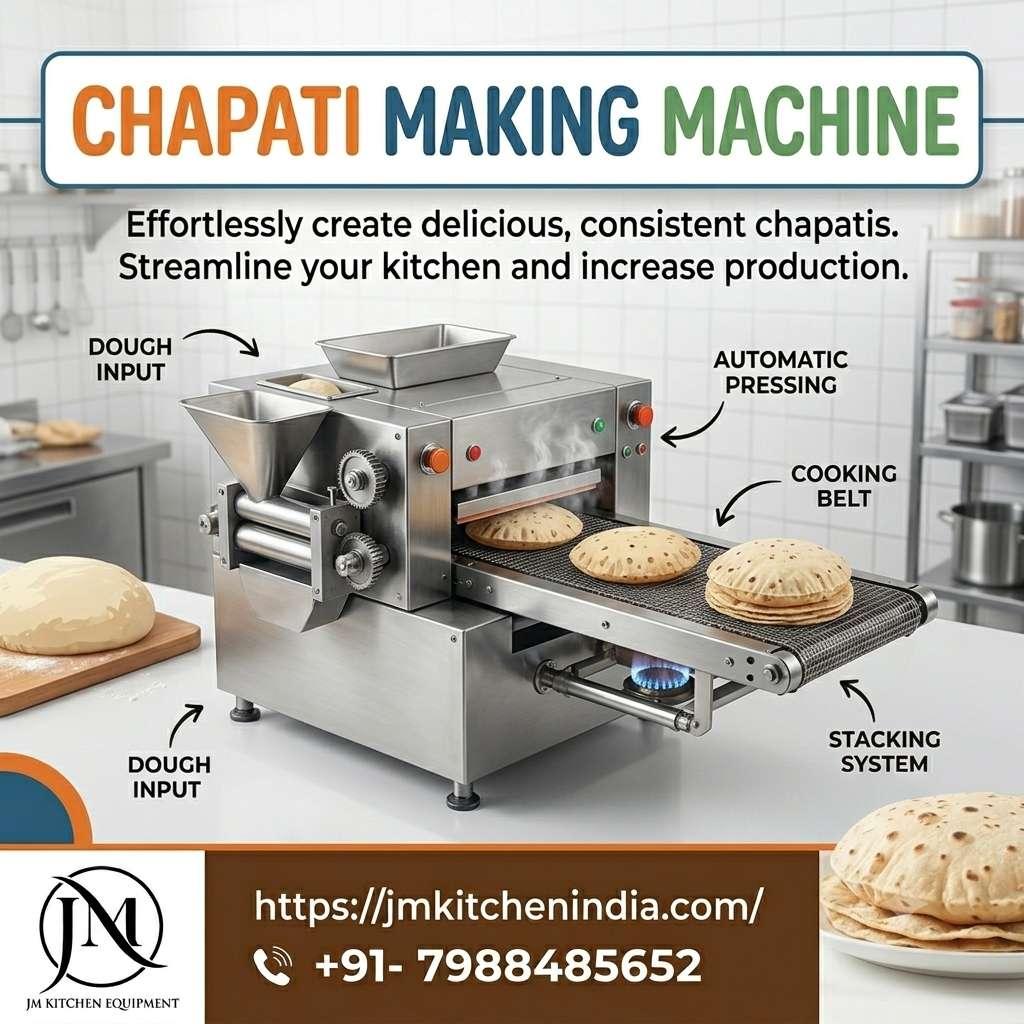
Chapati is a regular part of meals in many Indian restaurants, hotels, canteens, catering businesses, and institutional kitchens. Preparing a large number of chapatis by hand can take considerable time and requires several workers, especially during busy meal hours. As food businesses grow, maintaining the same speed and consistency can become challenging. This is where a Chapati Making Machine can make a practical difference.
Modern chapati-making machines are designed to support high-volume food production while reducing manual effort. JM Kitchen Equipment offers commercial chapati-making solutions designed for demanding environments such as restaurants, hotels, hostels, canteens, catering services, temples, and other large kitchens. Its listed commercial models are designed for continuous production and can produce hundreds of chapatis per hour.
1. Faster Chapati Production
One of the biggest advantages of using a Chapati Making Machine is the improvement in production speed. In a busy restaurant or hotel, hundreds of chapatis may need to be prepared within a short period. Depending on the model and operating conditions, a commercial machine can produce chapatis at a much faster and more consistent rate than manual preparation.
For example, JM Kitchen Equipment lists commercial models with production capacity of up to 500 chapatis per hour. This type of output can be useful for kitchens that regularly handle large orders, buffet services, catering requirements, or peak meal periods.
2. Reduces Manual Labour
Traditional chapati preparation involves multiple steps, including dough preparation, portioning, rolling, cooking, and handling. When all these tasks are performed manually, a restaurant may need several workers dedicated to chapati production.
A Chapati Making Machine helps reduce the amount of repetitive manual work involved in the process. Staff can spend more time on other important kitchen activities such as food preparation, cooking, cleaning, plating, and order management. This can help restaurants organize their kitchen staff more efficiently.
3. Consistent Size and Shape
Consistency is important in a professional kitchen. Customers generally expect the food served to them to have a similar appearance and quality each time they visit.
Manual chapati preparation can sometimes result in differences in size, thickness, and shape because the process depends on individual workers. A machine provides greater uniformity by following the same operating process for every batch.
JM Kitchen Equipment's listed automatic models are designed to produce consistently shaped chapatis, including a stated 4-inch output for its featured machines.
4. Helpful During Peak Hours
Restaurants and hotels often experience their highest workload during breakfast, lunch, and dinner service. Preparing chapatis manually during these periods can put additional pressure on kitchen staff.
With a Chapati Making Machine, businesses can maintain a steady production flow and prepare larger quantities in less time. This can be particularly useful for hotels with buffet services, restaurants serving Indian meals, large canteens, and catering companies handling bulk orders.
5. Better Use of Kitchen Space and Workflow
A commercial kitchen needs an organized workflow. Equipment placement, movement between workstations, and access to cooking areas all affect daily operations.
A suitable chapati machine can become a dedicated production station within the kitchen. When properly positioned, it can help create a smoother sequence between dough preparation, chapati production, cooking, and serving.
JM Kitchen Equipment provides customized commercial kitchen solutions based on kitchen size, production requirements, workflow, and business needs, which can help businesses plan equipment placement more effectively.
6. Useful for Different Types of Food Businesses
The need for large-scale chapati production is not limited to restaurants. Hotels, hostels, canteens, catering companies, cloud kitchens, institutional kitchens, and other food-service businesses may also require equipment capable of handling regular bulk production.
JM Kitchen Equipment lists its automatic chapati machines for applications including industrial canteens, hostels, army messes, catering services, temples, and restaurants. This makes the equipment suitable for businesses where chapatis are prepared in significant quantities every day.
7. Improved Production Consistency
A busy kitchen needs predictable production. When the process depends entirely on manual labour, output may vary depending on staff availability, workload, and experience.
Automation can make the production process more structured. A commercial machine can help maintain a regular production rate, allowing kitchen managers to plan preparation according to expected demand.
For restaurants and hotels, this can be particularly useful when large numbers of guests need to be served within a limited time.
8. Durable Construction for Commercial Use
Commercial kitchen equipment needs to withstand frequent use. JM Kitchen Equipment's listed chapati machines feature stainless steel construction and cast-iron heating plates. The company also describes its machines as designed for high-output commercial applications and easy maintenance.
Durable construction is important because restaurant and hotel equipment may operate for several hours each day. Choosing equipment designed specifically for commercial use can therefore be more suitable than relying on equipment intended for occasional household cooking.
9. Easier Operation and Maintenance
Modern commercial machines are increasingly designed with user-friendly controls and accessible components. JM Kitchen Equipment's featured automatic chapati machine includes a touchscreen interface, PLC control, emergency stop functionality, cleaning panels, and lockable wheels. Its commercial model also includes a digital control panel and is described as having low maintenance requirements.
Easy operation can help kitchen staff learn the equipment more quickly, while accessible cleaning and maintenance areas can make regular upkeep more convenient.
10. Supports Growing Food Businesses
As a restaurant or hotel grows, its kitchen production requirements usually increase as well. Equipment that can handle larger quantities can help businesses manage increased demand without relying entirely on additional manual labour.
A Chapati Making Machine can therefore be considered as part of a long-term commercial kitchen setup. It can support restaurants expanding their customer base, hotels increasing buffet capacity, catering businesses accepting larger orders, and canteens serving more people.
Why Choose JM Kitchen Equipment?
JM Kitchen Equipment provides commercial kitchen equipment along with design, manufacturing, installation, testing, maintenance, and technical support services. The company serves restaurants, hotels, cafés, bakeries, cloud kitchens, catering businesses, industrial kitchens, and other food-service operations.
Its chapati machine range is part of a wider commercial kitchen equipment portfolio that includes restaurant kitchen equipment, hotel kitchen equipment, bakery equipment, commercial refrigeration, commercial induction equipment, and stainless steel kitchen equipment.
Conclusion
For restaurants and hotels that prepare large quantities of chapatis every day, automation can simplify production and reduce repetitive manual work. A Chapati Making Machine can help improve production speed, maintain more consistent chapati sizes, support peak-hour operations, and make better use of kitchen staff.
The right machine should always be selected according to production volume, available space, power requirements, menu needs, and the expected workload. With suitable equipment and proper installation, businesses can create a more organized and productive commercial kitchen. JM Kitchen Equipment provides commercial chapati-making solutions along with broader kitchen planning, installation, and support services for professional food businesses.

 English
 Arabic
 Spanish
 Portuguese
 Deutsch
 Turkish
 Dutch
Dutch
 Italiano
 Russian
 Romaian
 Portuguese (Brazil)
 Greek
Greek
 Bengali